![Vilous | Housepecker [+Full & HD Version Artwork, and Spoiler of comic EP4!]](https://img5.xaiju.com/storage/6/dz/lf/d38796-019e8709-6113-76cd-8031-b06d1f6822d4.png)
![Vilous | Housepecker [+Full & HD Version Artwork, and Spoiler of comic EP4!]](https://img5.xaiju.com/storage/3/pz/pe/d38796-019e8709-6117-701b-810a-da9cfe52e2c7.png)

Hello Vilous fans! Today we take a look at a new Talyxian species creature known as the "Housepecker"! But don't be confused by the name which sounds like a woodpecker, it is actually a large, terrible, nasty monster! The Talyxian biome contains many oddities, and this one is no exception~!
And a part of information about this creature is related to the future storyline of the ongoing Vilous manga episode 4. Here, this is a bonus entry for pre-viewing and pre-reading the unblocked version with the comic reveal later!
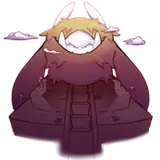
The housepecker (ヤツツキ) is an aggressive Talyxian creature which has a body seemingly formed out of a large aggregate of insects and worms, all clinging together.
They are very huge, featuring a pitch-black body, a sharp beak, many legs, and a stout belly. They are triggered by physical stimulus, attacking anything that touches them, and swallowing it whole.
They exhibit the natures of both red Talyxian and black Talyxian, and have some similarities to both the Mountain leeches and Talyxian-Stalkers.
The housepecker’s anatomy is majorly dominated by its head (including its mouths), neck, hands & feet, and abdomen. In its abdomen, there can be found undigested gluey materials, Talyxian parasites, and Hizomi-Nonbon hanging around their belly.
When removing the abdomen from views of the housepecker, we can see that its head is extremely large in comparison to its body.
Its head has a long beak: sharp along the upper beak and flat along the head section. The head is connected to a long neck-like part that folds flat like a bellows or accordion.
The housepeckers are colorful: their stomach is grey, the muscle tissue around the stomach is red, and the lining of their mouth and ink sack (near the anus) are dark purple. The remaining flesh/shell of the creature is mostly a smoky black.
Other Talyxian plants and creatures in the forest will prey on the housepecker, choosing to feast upon the abdominal sections. Because of this, it is common to find housepeckers lacking abdominal sections.
Housepeckers do not chew their food, instead they swallow prey whole. Like a great serpent, only severing the head and neck from the main body will render this creature harmless. The removal of the abdomen does not dissuade the housepecker from hunting enemies and eating them, it only stops the digestion and production of the abdominal products.
The housepecker beak actually is able to regenerate, growing from a head stump, but fully regrowing the neck will take considerable time to heal itself, being more complex to replace than a beak or leg lost in combat. With the housepecker regeneration ability to consider, the only permanent way to combat these creatures is to salt the sliced wounds of the neck. This reliably halts any regrowth and firmly slays the housepecker.
Housepeckers have eight legs, usually only using four at a time, and hold the remaining legs against their chest as backups or assisting limbs when needed.
Their sturdy legs feature two claws a piece, enabling the housepecker to drag itself and its heavy abdomen along the ground. These claws also assist in the movement over cliffs and difficult footholds.
Housepeckers do not fully digest their swallowed prey. Instead, the food collects in their abdomen and stomachs to be converted into extra body parts. This becomes blubbery, undigested gluey materials that hang on the surface of the abdomen. They are often in the process of undergoing putrefaction or fermentation.
When the housepecker has eaten enough prey to feature these gluey materials on its abdomen, it will leave globs of black substance along its path.
The lumps left behind are the remnants of creatures eaten by the housepecker, each converted into Talyxian body parts. One form they can take is featured in Ep4 - The Twelve Plainswalkers as a black slime-like creature.
The taxological boundaries of the Talyxian species are quite different from Eltus, thus ecology of their predation, digestion, life and death has not been clarified.
When an Eltus is eaten by a Talyxian, the majority of the Eltus dies and their body is either dissolved or converts into a Hizomi-Nonbon, but it is uncertain if this concept of death applies to Talyxian creatures.
Similarly, it is not known exactly how far the Eltus concept of life and death applies in the case of when Tayxianization (the conversion of Eltus organs into Talyxian ones) occurs inside the body of Eltus.
The housepecker’s abdominal organisms will continue to ingest independently until they are incorporated again into the housepecker's body or are absorbed into another Talyxian creature, be it through assimilation or consumption.
This part is often targeted mainly by other Talyxian creatures for predation.
Housepecker body parts make for very fertile seedbeds for Talyxian plants, so Eltus prefer to exterminate and remove any remains found near private housing.
The separated parts of the housepecker are able to telecommunicate with each other, including the main body. In this way, when any part senses the presence of nearby Eltus, they can act as a homing beacon and summon the housepecker to it.
Housepeckers have a very wide sphere of activity among the animal-shaped Talyxian races. When their abdomen is small, they can run at a fairly fast speed in the forest and plains.
They don't live in any specific territories, they just constantly roam around and eat like tuna.
Once a housepecker has ingested enough prey to gain a sizable belly, its movement is much more arduous, requiring greater kinetic energy to travel places. This allows it to be more easily hunted by other Talyxians and the enormous abdominal section makes the perfect target for catching and peeling off. Curiously, this predation does not seem to be driven by any need for nutrients, but rather a gluttonous greed. In this way, a full belly of prey is more a burden than a benefit to the housepecker.
It is possible that the housepecker plays a role in the circulation, expansion, and recycling of the Talyxian biome forest coverage. With their extensive range of travel, random feeding behavior, and scattering of undigested or parsitic Talyxian organisms, the housepeckers support both their own species’ survival, and the Talyxian biome itself.
Similar to the basic ecology of the red Talyxian, housepeckers exhibit a strong preference for Eltus creatures. In this way, when a housepecker finds a village or a carriage on its way it will shove its beak inside to swallow Eltus people. The name of ‘Housepecker’ is derived from this action.
Because the housepecker does not have a chewing ability, it avoids fighting other Talyxian creatures that would prove difficult to best, such as a large herd of Dondokos and Actinia. In regards to the natural enemies of the housepecker, the main body section of the housepecker is not preyed upon by many creatures or Eltus. Instead the collected undigested material found on its abdomen attracts Talyxian predators such as Talyxian-Stalkers, leaving the main body untouched in most situations.
The Talyxian wolves (Talyxian-Associator wild species) can be said to be the greatest natural enemy of the housepecker, mainly because they can separate the housepecker head and neck from the main body, which is involved in the Housepecker's ability to eat.
The main countermeasure against the Housepecker is cutting off their head and body with a sword; like Talyxian wolves do.
But this can prove difficult without a large enough number of people and experienced fighters, so it is more practical to block up all the holes in the house with stones or relocate to a place where the housepecker can't climb.
Due to its strong parasitic effect, it is regarded as a dangerous creature in Gold Ring and the trade & importing of them and their parts is prohibited. In particular, the handling of their undigested materials requires careful treatment.