Épaulement--"Inside the Tutu."
Added 2019-07-17 13:00:00 +0000 UTCOk, a little something for you lovers of ballet.
A new addition to my page: "Inside the Tutu" posts for ballet nerds about things that you might notice or not, but are interesting to explain to the layman.
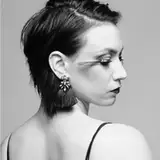
Épaulement (literally, "shouldering") refers to the tilt of the shoulders and head.
I do it without thinking about it now, but there is an extensive protocol regarding what to do with one's shoulders and head that pertains to every exercise that exists in classical ballet.
When I was 15, I got some very good advice from my ballet teacher. She told me that if I wanted to look like a professional ballet dancer, the best way is to watch dancers who look like they're professional--and then figure out what it is that makes them different from everyone else in the class.
These movements or inclinations of the head are one of those things. Épaulement even dictates where you look, which leads one to see the history breathing in ballet to this day: modesty is baked into the technique--because looking directly at the audience is not part of épaulement. You look at your arm. You look down to the right. But those moments--when we look directly at the audience--those moments are stolen from the choreography, and are gifts given at the sole discretion of the dancer.
I chose to write about this for you, dear followers, because the tendu exercise is an excellent technical example of épaulement. For example: When I am facing the diagonal (croisée), the shoulder tilt & head tilt & gaze are downstage--to the front (another nifty term: "downstage" refers to the front or audience- or orchestra-adjacent end of the stage because stages used to be "raked"--tilted toward the audience, instead of modern theaters, in which the seats are in tiers, so that, thankfully, we don't have to pirouette on our toes on a tilted platform anymore. Gelsey Kirkland writes fascinatingly on the jarring transition when the NYCB leaves New York for Russia, where, at that time, the stages were still raked. But I digress). I remember being taught this by being instructed to look over my imaginary tutu when we were young and that sort of thing was still yet to be imagined (ok, it's still fun to imagine you're always wearing a tutu), and down. When I switch to "en face" (facing the front), the head is inclined toward the "working leg" when going forwards (the tendu foot comes from 5th position behind and stops in front of the other foot in 5th), and away from the working leg when going backwards. This changes one's balance a bit. Going backwards is harder, because there's a slight lean away from the working leg, which is more challenging because it requires more elongation and a slight displacement of weight.
The second exercise in this video has lots more épaulement in more complicated situations. But you will notice that I almost never look straight at the audience...not yet.
...because that's coming next, in the next progression of the Ballet Burlesque project, when I unleash myself into improvisation! And then...looking directly at the audience becomes a tool you can use, a weapon almost, because it's so rare.
And why is that? Épaulement.