(198X) Factbook entries
Added 2025-04-18 22:50:49 +0000 UTCI've mentioned a few times before that one of the things I want to bundle alongside the army books, for 1.0, is a CIA World Atlas-style publication full of lore entries: a sort of catchall for anything not relevant to the army books, with a general focus on civilian affairs; somewhat of a justification of why you're fighting, as well as a wellspring for creative work like custom scenarios. It currently lacks a proper name; so far my collaborators and I have been calling it the "factbook".
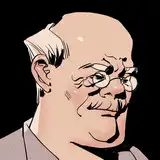
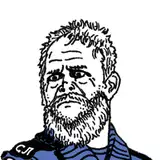
Some (if not all) of the entries in it are accompanied by ink sketches. The styles of these will vary somewhat. I figure I'll start posting these (and their associated entries) here as I make them. To start things off, here are some sketches and entries from the different Federal states:
 Vansans think of the rest of us as underdeveloped peasants. Langporters think of the rest of Vansa as a bunch of cavemen. Hard to find a bigger city. Right smack in the middle of Oid; gathering all the goods on the Sea of Lights and shitting its own down river, canal, and railroad to the Sea of Masts. Everything, everyone, and every idea passes through it. You could make a case for it as a vertical slice for the world. You want it? It’s yours. Just gotta find it—and in a mound of centuries like Langport, that’s rarely easy.
If the dikes were ever blasted open, and the sea came in to reclaim its lost bed, all its millions would drown. They laugh about it. Hey, man, it’s not gonna happen. This is the nerve center of Oid, didn’t you know? If someone takes us out, the rest of the world drops dead.
Like it wasn’t tried already.
-Rayleigh Irving, Federal Intelligence
 You can visit the Stateholder-General whenever he’s not sitting in at the Tulip Houses. Go right up to his desk—if he’s not seeing one of the throng of petitioners already—and talk shop about your problems. No appointments, no passes. Just wait your turn in line and come back later if he waves the lot of you off.
I first heard about it in school, when I was eight. I was convinced it was bullshit. My old man said you couldn’t get within a kilometer of the Regent in the old country. Just seeing him was something special. That was with a disarmed people, too—one already distrusted for their natural weapons. Here there’s a gun on every hip.
If you think about it, it makes sense. Nobody would shoot the Stateholder-General. The rest of the people sleeping on 11 Arsenal Street’s floor to bother him would tear the assassin into little pieces.
Well. Nobody would do it again, because they did.
-Marcel Laurent, Federal Marshal
 On my fourteenth birthday, like any Federal boy, I was given my first sidearm. No more a wooden “jimmy”, a dummy pistol—but the real thing. Proof I could be trusted, and trust myself. Usually, it’s a heirloom gun, one with a few generations on it. You wear it for special occasions; get yourself something more modern for daily carry. My family had no heritage; I was the first of us with any roots in the Intermarium. So I got a new one, an Emerald hammerless in seven-six-five. Cheap, but we didn’t have a lot of money.
My old man’s pockets were squeezed pretty hard that week. As soon as my party was over we packed our bags and took the railshaker to Gunbed. He wanted to raise me right, in the ways of the new country, and that meant a pilgrimage when I was young.
Looking up the staircase to the muzzle, flanked by streams of humanity rolling up and down, my head swam. The smell of long-burnt sulfur and dry iron; the tramp of a thousand feet on the reinforced staircase. Not for the faint of heart. Old people spend the whole year climbing their stairs, slowly, once a day, to get ready for it. A mountain, complete with water-hawkers at its foot.
You get your mug. Fill it with black powder, cannon-coarse. Hold it level as you climb. Reach the muzzle—don’t look down; don’t look inside. Men have fallen in even with the guardrail. It eats up the light. The smell of burnt powder made me start breathing through my mouth. Pour your mug in there (don’t throw it in, asshole; the fragments fall downrange). Go on down before the crowd pushes you.
We came pretty late. The Firing, and its celebrations, were at midnight on the same day—the last day of the year. People come a week early; the deeper your powder sits, the luckier you’ll be that year. First pours to bigwigs and dignitaries. All of the rest of Gunbed exists to fuck tourists and pilgrims out of their money for that one week. The rest of the time the city sits torpid, like the Gun. Waiting for its task.
The Firing: a yellow column of flame and smoke. You hear it inside you first. A one-second sunrise and a monstrous cloud. There are a pair of enormous hydraulic cylinders on top of the Great Gun. It’s not enough to cycle them.
-Marcel Laurent, Federal Marshal
 ALL OF OID DRIVES AN EZEL.
Since its introduction, Dic Automotive’s EZEL has outsold every import car line—both inside and outside the Federation. It’s easy to see why. High-technology engineering gives the EZEL the room, fuel economy, and power at the wheels to outdo any of the most modern subcompacts—foreign or domestic.
AS MUCH GOOD AS YOU CAN FIT IN A SUBCOMPACT.
Open up one of its four doors and you’ll find all the good things an EZEL can offer you. Four-wheel independent suspension, robust all-wheel drive, remarkable fuel efficiency, and power steering. And a design that YOU can rely on—with rugged systems, no-nonsense layout, and a complimentary toolkit, jack, and operator’s repair manual.
FOUR DOORS — FOUR WHEELS — SIX CYLINDERS.
Our traditional inline-four engine has propelled millions of EZELs across Oid. But to roam the longest highways, we’ve heard your calls for more speed. Order your EZEL this year, and opt into a powerful new V-6 engine—zero to 100 km/h in ten seconds.
AND ALL OF THAT FOR FOUR-FIFTHS AN IMPORT’S PRICE.*
*Based on most recent manufacturers’ reported retail deliveries.
-Full-page ad in THE LANGPORT BROADSIDE
 Dic Soupcan is a name most Intermarine boys learn before they do Hendrik van Veldjen—for if we love anything more than freedom, it's good business. You already know the classic story printed on every can: a founding hand-in-hand with the infant Confederacy, feeding the nascent States-Army’s soldiers with durable canned goods. Nobody seems to bat an eye when they see the same name on toilet seats, biocomputers, and tank powerpacks—nor that the general store, where they buy groceries and scoop nine-mil rounds by the pound from wooden barrels, carries the same name.
In the Ebon Forest they’d call it an “asset clique”. What started as a soup cannery kept branching out into everything profitable; buying up poor industries, hooking them together, and making a killing off of the growth. A sizable chunk of Federal oil, water, and chemical pipelines are Dic Soupcan products: governed by Dic Soupcan valves and logic controllers, and guarded by Dic Soupcan tanks.
What about the man himself? It’s not normal that a business this big should be so opaque at the top. Yet Dic Soupcan, the company, keeps its directoral affairs to itself. Official bulletins, changes in policy, and so on still bear the classic quill signature. I say: with three hundred years of brand image behind him, he’s a great favorite. He’ll never die.
-Rayleigh Irving, Federal Intelligence
 “Edge star” — A rule or feature, necessary only because of the bad behavior of a participant. Named for the embossed edge stars on Federal coinage, introduced to deter edge shaving.
-Adje’s World Slang, 198X Edition
 The Canton Mountains—”Kantonbergen”, if you’re a Lowlander—are so named for a reason. They carve up the mountains: each canton, a powerful city-state or alliance of small cities, plus whatever towns fall under its sphere of influence. Each and every one of them looks to itself for the basics: its own army, its own money, its own border control. Frankly, you can barely call the whole thing a “state”. Cydoland proper is little more than two piles of sworn oaths: one between the cantons, and one to the rest of the Intermarium.
And the Confederate Council, I suppose—but what a joke! Go ahead and try to impose terms on sovereign cities. Best the old whitebeards can do is make recommendations.
-Rayleigh Irving, Federal Intelligence
 Cydoland is a miner’s state. No two ways about it: the mountains are some of the richest on Oid. The Federation is built on Cydoland’s ores. It’s a matter of cultural identity. The mountains reward the brave and the resourceful.
I won’t go into detail about the big mining firms; those are pretty much the same, the nation over. What tourists marvel at, rather, are our “bootleg” mines. Funny, that: the enormous pits in the earth are a forgettable eyesore, but a hole in the ground someone dug on the mountainside is worth paying to see.
It’s a simple operation. You’re a goatherd, or a country electrician, or something like that. You figure you want some extra money on the side. Get two of your friends together, have some drinks, and drive a shaft into the hillside. The mountains are kind: they have a lot of little deposits close to the surface, just for people like you. Coal, mostly—have your friends lower you in, fill up your cart, and keep at it until you’re tired.
Bootleg coal, from someone you know, is usually cheaper than the industry stuff. If you’re digging, it’s free. Well—no such thing as a free lunch. Every now and again a tunnel collapses. But it was your choice to dig the damn thing.
-Rayleigh Irving, Federal Intelligence

It’s not something a proud Cydolander will readily admit, but we’re big on tourism. We’ve got beautiful mountains, clear crisp air, ski resorts. Big money in Langport blows off steam here. It adds years to your life.
The big summer event in any canton—the one that draws in crowds and money—is the Shooter’s Festival. All of them have one. A long time ago it was a formal militia drill: long hot days firing at bullseyes, with scores tallied and prizes given to the best. Over time it became a sport, and then a matter of cantonal pride. Your best shots wear the city colors at the Grotehaven fest—in front of half the Federation’s cameras.
More than anything else, it’s an opportunity to get drunk and spend money. Make your bets; play a million carnie games; stuff your face. Vernon, the artillery manufacturer, makes a kind of grilled pork sausage with spiced ketchup and fries: it’s become the traditional audience food. It’s got to be responsible for at least ten of my kilos.
-Rayleigh Irving, Federal Intelligence
 Cydoland is home to the largest lupar community in the Intermarium. Figures: just across the Hackensack is their country; the misted country; the dark country. Cross-border raids are a fact of life—once just by bare-chested clan warriors, and now also by uniformed troops. Sometimes they come with the intent to stay.
Blackschanz canton is the first stop by defectors from the Regency. For most of them, it’s where they settle down. Densely wooded, mountainous, cold and misty—a little slice of home; even its delegates to the Confederate Council are lupar. If you’re an ecologist, you’d call it part of the Ebon Forest proper. The inhabitants take it to heart.
My old man stayed there for a little, when he jumped the border. But not for long. They might hate the Regency, but they brought all its customs with them. The same choking etiquette. Better housing, but only because there’s less of them to crowd together. Shot through with royal agents.
We left the mountains and the forest for good. It hurt the old dog a lot to live on the plains. Didn’t feel right at first. But he wanted a clean break for us—for me, when I was born. Wanted me to live like a flat-face.
Funny how I found my way back there...
-Marcel Laurent, Federal Marshal
 Road Switcher, Type 67
Consolidated Locomotive Works
Photograph courtesy of the Vansa & Sumpkassel Road.
A pile of well-formed steel. Sitting in the middle ground between dockyard freightcar-movers and the big interstate railshakers means you can find Sixty-Sevens anywhere, whether caked in soot or freshly painted. She does the job whether she's wearing a red-and-black dress or overalls.
See, machines are like animals in more than just your moral obligation to them. The smallest forms, like insects, are specialized. All fine. But the bigger they get, the more they ought to do. An ugly diesel box, like what the dogfaces build, would have sufficed for freight hauling. But it'd shit exhaust fumes all over your neighborhood on passenger runs, and it'd leave nothing for the eye. When a Sixty-Seven raises her pantograph she leaves nothing but water vapor and captivated imaginations in her wake. And unlike a purely electric machine, she thinks nothing of hopping off grid—on oil or coal-firing, buyer's choice—when the time and place calls for it.
Nor is she as worried about electromagnetic pulses.
-Rayleigh Irving, Federal Intelligence