The war room stood in the basilica’s shadow, a sacristy turned to command by urgency alone. Planks over trestles made the table; a broken saint’s bracket held the map of Macedonia. The lamps burned low, their smoke clinging to the smell of incense and sweat.
Constantine braced his hands on the table’s edge, steadying himself. The air was heavy with the mingled scents, and outside the open doors the distant clatter of the encamped army echoed against stone.
The familiar circle waited around the map‑table: Sphrantzes with his quill; Loredan’s fingers drumming in half‑armour; Condulmer’s rosary ticking; Hunyadi, newly scarred, watchful; de Croÿ restless; Thomas taut, Andreas impassive beside him; Branković silent in the shadows with his cane.
Sphrantzes cleared his throat. Constantine drew breath and spoke. “We stand at a crossroads. Thessaloniki is ours once more. The cross flies above its ramparts. The enemy has been dealt a mighty blow and driven from Macedonia.” There were faint nods around the table; it was no small feat. “But,” Constantine continued, “these victories have cost us dearly.” He glanced to Sphrantzes.
George unrolled the list: dead and wounded by the thousand, powder nearly gone, supply lines thin as thread. His voice bounced off the marble.
Hunyadi’s jaw tightened at the mention of fallen knights. Thomas looked down, blinking hard.
Loredan spoke first. “Thessaloniki is secured,” he said, voice measured. “The Turk has been humbled, for now. Perhaps enough to bring him to terms. Our scouts report no fresh Ottoman army or fleet nearby; Murad’s forces are scattered, licking their wounds. We hold the advantage. We should consider peace while fortune favors us.”
Hunyadi uncrossed his arms. “Peace now?” The edge in his voice was unmistakable. “The beast is wounded, yes, but that’s when it’s most dangerous. Give them time and they’ll rebuild. Better we press our advantage and finish this while we can.”
His dark eyes swept the table. “Every mile we push them back now is one less mile they can reclaim.”
Loredan shook his head. “Press to where, Lord Hunyadi? To Constantinople? To Edirne? We are at the limits of our strength. We have neither food nor powder for a march into Thrace. We’ve achieved our aims here. If we go further, we risk overextending and losing everything we’ve gained.”
Hunyadi’s shoulders tensed. “Venice’s aims, perhaps. You have your ports and trade, so you’re ready to quit.” His words were sharp. “But some of us didn’t cross swords with the Turk for spices and silk. We came to break his power. If we stop now, with the Turk on his heels, we waste the blood already shed.”
Loredan’s face flushed at the insinuation of cowardice or greed. “Mind your tongue,” he snapped. “No one has fought lightly in this campaign. But I will not march them into ruin on a whim. Prudence is not cowardice, Hungarian.”
“Enough,” Cardinal Condulmer interjected firmly, raising a hand. “We are Christian allies, not enemies. Save your ire for the infidel.” The rebuke in his tone was gentle but brooked no dissent. Slowly, the tension ebbed; Hunyadi rolled his neck and stepped back, while Loredan exhaled and loosened his grip on the table’s edge.
Constantine nodded gratefully to the Cardinal and spoke in a calm, clear voice. “No one here doubts the valor or sacrifice of any nation.” He looked between Hunyadi and Loredan. “We have all paid in blood and treasure. That is exactly why we must choose our next step carefully. One misstep could cost everything.”
The papal legate inclined his head. “Just so. Holy Father Eugene IV entrusted us with this crusade not for glory alone but for the survival of Christendom. If a truce can secure that survival, even for a time, we must consider it.”
At that, Prince Thomas stepped forward. Grief and frustration sharpened his young features. “Secure Christendom, for how long?” Thomas shot back. “Until the court settles on which boy wears the signet? These will be terms written in salt. The moment a son finds his footing, he’ll wash them away.” He turned to Constantine. “Brother, John lies murdered. Demetrios still defiles our throne. Will a truce mend that? Would John want us to halt now?”
A troubled hush fell. At the mention of the late Emperor John VIII, Constantine and Thomas’s brother, slain in the coup, several men crossed themselves or looked down. Thomas’s words hung in the air, heavy with raw pain.
General Andreas answered, his voice steady and low. “I loved John as much as any of us,” he said. “But I will not sacrifice the living to avenge the dead without hope of success.” He gestured to the parchment of losses. “Look at our condition, Prince Thomas. Our powder is nearly gone. Many of our soldiers are wounded or exhausted. Autumn is at hand, if we push much further, winter will catch us far from home.” Andreas put a firm hand on Thomas’s arm. “Your brother would not thank us for throwing away the army, and the empire, with reckless ambition. We have gained more this year than anyone dreamed possible. Let us secure that, lest we lose it all trying to grasp more.”
Thomas’s throat worked. For a moment it seemed he might argue again, but the fire in his eyes dimmed, tempered by the undeniable logic in Andreas’s words. He stepped back, shoulders sagging in defeat. “John would never forgive cowardice,” he murmured bitterly, though the fight had drained from his tone.
Branković’s voice came, rough and calm. “Nor would he forgive folly,” the Serbian despot added. “I have made peace with the Turk before,” Branković said, voice gravelled. “Regencies breed bold border lords, and empty treasuries. That is when they pay dearly for quiet. Take coin and ground now; make them bind themselves while the knife‑counting lasts.”
All eyes gradually returned to Constantine. The decision was his to make. He drew a slow breath, feeling the gaze of each ally upon him. He thought of John, of the oath he had made at his coronation to reclaim the empire. He also thought of the faces of his soldiers, gaunt with fatigue, and of the devastated villages they had passed. At last, he straightened.
“We will seek a truce,” Constantine said quietly. Thomas closed his eyes, but he said nothing. Hunyadi’s lips tightened, yet he offered no protest. Around the table, men exhaled as if a great weight had been shifted. “A breathing space to hold what we’ve taken and draw breath for the next strike. The Turk will be met again, and so will the traitor Demetrios. For now we regroup and consolidate, powder, bread, coin, walls. Their princes and Beys will quarrel over Murad’s shadow; let them bleed one another. When they are spent and we are ready, we will choose the ground and strike the last blow.”
There were nods of agreement. Relief, disappointment, and lingering uncertainty mingled on the faces surrounding him. But the hardest part, choosing to pause the holy war, was done.
Cardinal Condulmer gave a brisk, businesslike nod. “Then let us define our terms.” He gestured to Sphrantzes. The secretary unfurled a fresh sheet, quill poised.
One by one, the allied leaders outlined their conditions. Constantine would keep central Macedonia and Thessaly. Branković claimed Niš and Vranje for Serbia. Loredan, on behalf of Venice, demanded expanded trade rights and partial control of Thessaloniki’s harbor, the cession of Demetrias to Venice, and an exclusion of Genoese merchants from Thessaloniki. When Hunyadi spoke for Hungary, he noted that King Sigismund was dead and the kingdom unstable. He required the return of all Hungarian captives, and a pledge that no Ottoman army would cross north of the Danube, a fixed boundary to safeguard Hungary’s frontier. He also pressed for a hefty war indemnity in gold to pay his soldiers and secure his realm. Jean de Croÿ of Burgundy requested repayment of his Duke’s expenses and a suitable ceremonial title for his service. Finally, Cardinal Condulmer presented the Church’s terms: protection for Christian worship in any lands remaining under Ottoman rule, a tithe of ten percent of the indemnity to the Church, and, he insisted, a pledge from all allies that none would seek a separate peace with the enemy.
Sphrantzes’s quill scratched rapidly, recording each point in Greek and Latin. When the list was complete, they reviewed it swiftly. The terms were bold and uncompromising: broad territories, heavy gold, and safeguards to hem the Ottomans in. To open the bargaining, Loredan proposed five hundred thousand gold ducats. Several brows climbed.
“They will never pay so much,” Jean de Croÿ muttered.
“They can,” Loredan replied, thin smile steady. “We know, vaguely, but enough, what flows through their customs and treasuries. Our factors hear every tariff; our ledgers catch the shadow of their coin. Murad was the richest monarch by a wide margin. His sons inherit coffers, farms, and dues enough to cover this, if they value quiet.” He tapped the map. “We ask high and settle lower. Not a copper less than three hundred thousand.”
After brief debate, they agreed: three hundred thousand would be the minimum price of peace.
The Cardinal allowed himself a small satisfied smile. These terms would make quite the parchment indeed. Hunyadi gave a reluctant grunt of assent. He still looked as if he would rather bleed the Turks on the battlefield than wring coin from them, but when Condulmer quietly mentioned that Pope Eugene was prepared to name him Athleta Christi, Champion of Christ, for his valor, the Hungarian general’s hard expression softened a fraction. The prospect of such honor helped salve the sting of stopping short of total victory.
With consensus reached, they moved to action. Couriers were summoned and wax seals prepared.
By candlelight, Constantine dictated a formal letter to Murad’s grand vizier. Under Cardinal Condulmer’s watch, both the imperial chrysobull seal and the papal seal were affixed to the document; Rome’s hand would be plain in the making of this peace. They would meet in the city of Serres within Ottoman-held territory to exchange these terms and arrange a swap of prisoners. It was agreed that the allied army would march with most of its strength toward Serres as well, not to attack, but to underscore their resolve and be ready should the Ottomans show any treachery or reject the offer.
As the council adjourned, dusk was falling outside. The last sunbeams through the doors caught motes of dust swirling where heated debate had given way to fragile hope. Constantine rolled up the parchment of terms and passed it to Sphrantzes for safekeeping. “See it delivered safely,” he instructed. The secretary bowed, clutching it as if it were a sacred relic.
By nightfall, the word had run the courtyards: Serres. Not tomorrow, but soon. A truce was to be sought. Some men reacted with visible relief; there were hushed prayers of thanks from battle-weary infantrymen grateful for the chance to live. Others, especially among the more zealous knights, muttered that they had come all this way only to sheathe their swords before final victory. Still, tents were struck and wagons loaded with a kind of cautious optimism. They would march again, but perhaps toward peace instead of battle.
A few days later, when the wheels were mended, horses shod, and the guns coaxed onto their limbers, the army formed under Thessaloniki’s walls. A lean garrison stayed behind to hold the city; the rest stood to the road.
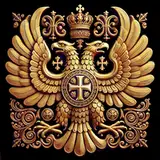
At first light, the column stepped off toward Serres. Constantine rode at the head, the double‑headed eagle lifting in the sea breeze.
Standards bristled over the long column; truce banners rode boxed in a courier cart. Word had already gone ahead to the Grand Vizier: parleys at Serres, under the walls and under arms. And if the Divan would not answer, the guns would.
They marched at a steady pace toward a city in Turkish hands, toward an answer that would not wait.
Author’s Note :
Time to consolidate! This chapter’s truce is loosely inspired by the 1444 Edirne–Szeged settlement between Sultan Murad II and King Vladislaus, brokered on the Ottoman side by the same Grand Vizier, Çandarlı Halil Pasha. in this timeline the Ottoman position is markedly more precarious, hence the steeper terms.
Alexander the Smoker
2025-08-20 00:56:00 +0000 UTCAndy Worcester
2025-08-19 23:47:30 +0000 UTCMax Müller
2025-08-19 20:58:57 +0000 UTCKirra
2025-08-19 16:19:09 +0000 UTCThePolarParadox
2025-08-19 13:59:40 +0000 UTCRENAISSANSE SI
2025-08-19 11:59:28 +0000 UTCRENAISSANSE SI
2025-08-19 11:59:08 +0000 UTCRENAISSANSE SI
2025-08-19 11:37:35 +0000 UTCRENAISSANSE SI
2025-08-19 11:29:22 +0000 UTCRENAISSANSE SI
2025-08-19 11:29:12 +0000 UTCRENAISSANSE SI
2025-08-19 11:26:48 +0000 UTCRENAISSANSE SI
2025-08-19 11:25:26 +0000 UTCRENAISSANSE SI
2025-08-19 11:23:55 +0000 UTCRENAISSANSE SI
2025-08-19 11:21:37 +0000 UTCRENAISSANSE SI
2025-08-19 11:20:16 +0000 UTCSir Baka
2025-08-19 09:46:25 +0000 UTCde la Fouchardiere
2025-08-19 07:55:50 +0000 UTCpls don't ban me
2025-08-19 06:46:33 +0000 UTCpls don't ban me
2025-08-19 06:41:58 +0000 UTCVuk Stefanovic
2025-08-19 04:20:13 +0000 UTCrussell marsh
2025-08-19 02:50:52 +0000 UTCKirra
2025-08-19 00:55:47 +0000 UTCElaine
2025-08-19 00:43:09 +0000 UTCAndy Worcester
2025-08-19 00:35:45 +0000 UTCDavada
2025-08-19 00:11:50 +0000 UTCHugo23
2025-08-19 00:09:59 +0000 UTCHugo23
2025-08-19 00:08:40 +0000 UTCZayari
2025-08-18 23:55:08 +0000 UTCioshf fikry
2025-08-18 23:52:31 +0000 UTCVelyndin1989
2025-08-18 23:45:44 +0000 UTCIsaac
2025-08-18 23:42:15 +0000 UTC