The harbor of Glarentza bustled with energy as Constantine stood at the prow of his flagship, surveying the small fleet preparing to depart. The salty tang of the sea filled the air, mingling with the scents of oiled ropes and tarred wood. Sailors moved with purpose, their voices blending into a chorus of shouts and commands. Behind him, Captain Andreas, his ever-loyal commander, tightened the straps of his weathered armor.
“Are you ready, my Despot?” Andreas asked, his steely gaze meeting Constantine’s. “Zakynthos awaits.”
Constantine nodded. His heart thrummed with a mixture of anticipation and unease. “Ready as I’ll ever be, Andreas. Let’s show them the Palaiologos name still carries weight.”
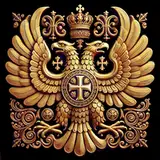
As the sails unfurled and the fleet slipped out of the port, the cheers of the gathered townsfolk echoed across the waters. Hundreds had come to the harbor, their voices a mixture of hope and loyalty, calling blessings and prayers for victory. Men and women waved the Byzantine banners, the twin-headed eagle emblazoned in gold catching the morning light. Children ran alongside the shoreline, shouting with excitement as the ships glided into the open sea.
Constantine turned briefly to look back at the scene. For all the challenges ahead, the sight stirred something deep within him—pride and a sense of duty to these people who believed in him. “Look at the people, Andreas; they expect us to bring them hope,” he murmured.
“And we will, my Despot,” Andreas replied firmly, his tone carrying the conviction of a seasoned soldier.
As the fleet slipped out of the port, Constantine turned his thoughts to the mission ahead. Stylianos, the Orthodox priest who had beckoned them to Zakynthos, had promised a warm reception and an opportunity to strengthen his foothold in the region. With the forces of Carlo II Tocco stretched thin, this island was ripe for liberation.
The journey to Zakynthos was swift. After a few hours, the island emerged on the horizon, its hills dotted with olive groves and white-walled houses. The small fort at Bochali stood sentinel over the main town, a modest bastion manned by Tocco’s remnants. It was here that the fleet anchored, their arrival greeted by Stylianos and a crowd of Orthodox faithful waving Byzantine banners.
"Your Imperial Highness," Stylianos called, bowing low as Constantine stepped onto the docks. "Zakynthos welcomes its true ruler."
The words filled Constantine with a sense of pride, though he masked it with a gracious nod. "Father Stylianos, your hospitality honors us. Let us make this a day of renewal for Zakynthos."
The townsfolk cheered as the small garrison, faced with overwhelming odds, surrendered without a fight. The defenders, numbering fewer than two dozen, filed out of the small fort at Bochali under the watchful eyes of Constantine’s troops. Their captain, a grizzled Italian mercenary with a hardened expression, laid his sword at Constantine’s feet.
"You have my sword, Despot," he said, his voice measured, betraying no fear. "I fought for coin, not for loyalty. If you’ll have me, I’ll fight for you now."
Constantine studied the man, noting the scars that marked his face and hands. This was not someone who sought allegiance lightly. "Serve faithfully," he said, returning the man’s blade, "and you’ll find yourself well rewarded under the Palaiologos standard."
Among the other soldiers, the story was different. The majority were local Orthodox Greeks who showed little hesitation in abandoning their service to Tocco. Many knelt before Constantine, pledging their loyalty with tears in their eyes.
"We have waited for this day, Despot," one young soldier said fervently. "To serve a ruler of our own faith and blood is a blessing. Tocco’s time here was an occupation, not governance."
Constantine raised the man to his feet, clasping his shoulder. "You are home now," he said, his voice resonant with authority. "Rise, and together, we will restore this island to its rightful place."
Over the next two days, Constantine worked to solidify his position on Zakynthos. He participated in a grand ceremony at the town’s church, where Stylianos was formally appointed as Orthodox bishop of the island. The procession was modest yet moving, with the townspeople crowding the streets, their faces lit with hope as they watched Constantine place a richly bound Greek Bible into Stylianos’s hands.
"This is not just a book," Constantine declared to the crowd. "It is a symbol of our shared faith and the strength that binds us together. Let this be the foundation of our renewal."
Stylianos, overwhelmed by the gesture, bowed deeply. "May God grant you wisdom and strength, Despot. Zakynthos will flourish under your guidance."
A simple yet heartfelt celebration followed the ceremony. The local nobles and clergy, now loyal to Constantine, shared a table with him, presenting gifts of local wine, currants, and olive oil. Stylianos, his face flushed with gratitude and pride, raised a toast.
"To a future where Zakynthos thrives under the wings of the double-headed eagle," he proclaimed, his voice carrying through the hall. The crowd erupted in cheers, glasses raised high.
Constantine, seated at the head of the table, took a moment to soak in the scene. These were small victories, but they carried weight. Each smile, each cheer, was a reminder of the trust these people placed in him.
Stylianos leaned close, his voice low yet earnest. "Cephalonia lies too within your grasp, my lord. Tocco’s forces are few, weakened by civil war and the Ottomans. If you strike now, you could take it before the Venetians surely do."
Captain Andreas chimed in, nodding approvingly. "He’s right. Tocco is a spent force. The question is whether the reward outweighs the risk."
Constantine sipped his wine, weighing their words carefully. "Cephalonia is tempting," he admitted, his tone measured. "But I will not overextend our forces. Besides, Rome awaits us."
On the third morning, Constantine bid farewell to Zakynthos, leaving behind a contingent of 100 soldiers to maintain order. Stylianos promised to identify young Orthodox men for training in Glarentza, a move both practical and symbolic. The small fleet set sail for Corfu, the Ionian breeze carrying them northwest.
Corfu, with its Venetian overlords, loomed as an intriguing waypoint. Constantine marveled at its fortifications as the fleet docked briefly, memories of his past visit to Ragusa surfacing. He stayed only long enough to restock supplies, careful not to draw Venetian ire.
The journey to Otranto was uneventful but filled with reflection. As the fleet crossed the Adriatic, Constantine stood at the bow, staring into the horizon. The Italian coast emerged at dusk, the harbor of Otranto glowing with lamplight.
The fleet departed Otranto under the cover of dawn, the golden light painting the Adriatic in hues of fire and sapphire. Constantine stood at the prow, his thoughts drifting between anticipation and preparation. Though their ultimate destination was Rome, Naples—a prominent hub of Mediterranean commerce and power—was another necessary stop along the way. The city, with its layers of history and intrigue, promised both opportunities and challenges during their brief sojourn.
"Naples has its complexities," George Sphrantzes remarked beside him, his tone as steady as the sea breeze. "Queen Joanna II rules there—an astute woman, though her court is tangled with intrigues. Our visit, however brief, might yield some advantage."
Constantine nodded, his mind racing with the details George had shared.
The sea was calm, a rare blessing, and by the second day, the towering cliffs of Naples came into view, crowned by the sprawling city. The port below was a frenzy of activity, a living organism fueled by trade and ambition. Ships of all sizes lined the docks, their hulls loaded with spices, silks, and metals. Merchant ships and fishing vessels jostled for space, their crews shouting orders in a symphony of Italian, Greek, and even Arabic.
Constantine’s ships, flying the Palaiologos banner, glided in with purpose, the golden double-headed eagle catching the fading sunlight. Dockworkers paused their tasks, their attention drawn to the unfamiliar sight. Some exchanged curious glances, while others pointed toward the approaching ships, whispers of speculation rippling through the crowd.
"A city that never sleeps," Constantine murmured as he stood at the prow, his sharp gaze taking in the controlled chaos below.
The phrase lingered in his mind, stirring a memory from a lifetime that now felt distant. He thought of New York, the city of his birth—a place just as alive, its streets humming with energy at all hours.
For a brief moment, he felt the ache of dissonance, the pull of the modern world he’d left behind. New York’s lights had been electric, its streets paved and structured, but the essence of human ambition—the drive that fueled both cities—was the same. He drew in a breath, the salty Mediterranean air grounding him in the present.
George Sphrantzes, standing at his side, nodded. "Naples thrives on its trade, my lord. A gateway to the Mediterranean and beyond. But such life comes with its own troubles."
Constantine’s eyes shifted to a group of beggars huddled near the quayside, their gaunt faces a stark contrast to the grandeur of the merchant vessels. The mingling scents of brine, fish, and unwashed bodies reached him even at a distance, a reminder of the contrasts that defined great cities.
As the ship eased into its berth, Constantine took a steadying breath. "It is a city of contradictions," he said quietly.
An invitation arrived almost immediately. A herald clad in Neapolitan livery awaited Constantine as he disembarked, bowing deeply.
"Her Majesty, Queen Joanna, bids you welcome to Naples," the man announced with a flourish. "She extends an invitation to dine at the royal palace this evening in your honor."
Constantine exchanged a glance with George. "It seems we’ve made an impression before setting foot in her court," he murmured, then addressed the herald. "Inform Her Majesty that I accept with gratitude."
The royal palace was a testament to Angevin's splendor, its architecture blending Gothic elegance with Mediterranean charm. Constantine was escorted through gilded halls adorned with frescoes and tapestries, their vibrant colors narrating the glories of Naples’ past. The queen awaited him in the grand reception hall, a woman in her early sixties with an air of regality that belied the tumult of her reign.
"Despot Constantine Palaiologos," she greeted, rising from her throne. Her voice carried the weight of authority, softened by a cordial tone. "Your reputation precedes you. It is a pleasure to welcome you to my court."
Constantine bowed deeply, his robes flowing elegantly. "Your Majesty, the honor is mine. Your name echoes far and wide, a testament to your wisdom and resilience."
Joanna’s lips curved into a measured smile. "And yours is spoken of as a rising flame amidst the shadow of the Ottomans. Your victories give hope to many."
As formalities concluded, the queen gestured toward a small table where refreshments awaited. "I must commend your initiative in spreading knowledge," she continued. "Your books, especially the smaller ones, have found their way to my court. They are exquisite, particularly the Psalms. I often read them in my gardens."
Constantine inclined his head. "It brings me great joy to know that my humble efforts have reached such noble hands. Knowledge and faith must travel, Your Majesty, even when kingdoms falter."
The queen’s sharp eyes appraised him. "And travel they shall, with men like you to guide them."
Dinner was held in the great hall, a lavish affair with golden candelabras illuminating long tables laden with delicacies. Constantine dined at the queen’s right hand, conversing about their respective realms' challenges and triumphs. Yet, it was the undercurrents of the court that intrigued him most.
Across the room, George Sphrantzes engaged in a hushed conversation with Giovanni Caracciolo, known as Sergianni. The prime minister’s reputation as both lover and puppet master to the queen preceded him, and Constantine made a mental note to inquire later.
As the meal progressed, Joanna leaned closer to Constantine. "I have a proposal for you," she said, her voice low enough to ensure privacy. "Your books are in great demand here. I propose a direct trade agreement. Let Naples benefit from your wisdom without intermediaries."
Constantine seized the opportunity. "Your Majesty, such a partnership would be a privilege. I suggest we open a bookshop in Naples, akin to the one I established in Ragusa. It would not only provide direct access to these works but also solidify our trade."
Joanna’s eyes sparkled with intrigue. " A bookstore? That is an excellent idea. I shall provide the necessary permits and support."
As the evening drew to a close, the conversation turned to broader matters—the battle against the Ottomans, Emperor John's vision for uniting the Orthodox and Catholic churches, and the precarious balance of power in the Mediterranean.
The fleet set sail from Naples two days later, its departure as seamless as its arrival. Constantine reflected on the visit as the ship’s prow turned northward toward Ostia. He had secured more than trade agreements; he had established a bond with Naples, one that could bolster Byzantium’s waning influence.
Yet, as the Neapolitan coast slipped past, Constantine’s thoughts turned to Rome and the challenges awaiting him there. This journey was far from over.
Pearl of the Orient
2024-12-27 08:08:17 +0000 UTCBen Robbins
2024-12-25 21:15:57 +0000 UTCBellerophon
2024-12-06 19:37:26 +0000 UTCBobby Hill
2024-12-06 01:57:21 +0000 UTCGabriel Melnik
2024-12-05 22:34:29 +0000 UTCRENAISSANSE SI
2024-12-05 21:35:43 +0000 UTCRENAISSANSE SI
2024-12-05 21:29:40 +0000 UTCGopard
2024-12-05 21:19:43 +0000 UTCGopard
2024-12-05 21:05:21 +0000 UTCGabriel Melnik
2024-12-05 20:28:34 +0000 UTCRENAISSANSE SI
2024-12-05 17:49:40 +0000 UTCioshf fikry
2024-12-05 17:45:35 +0000 UTCRENAISSANSE SI
2024-12-05 14:50:54 +0000 UTC