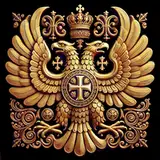
Battle of Chalandritsa (1431)
Date: Early Spring, 1431
Location: Chalandritsa, near Kalavryta, Despotate of the Morea
Result: Byzantine victory
Belligerents
| Byzantine Empire | Ottoman Empire |
| Commanders: | Commanders: |
| Despot Constantine Palaiologos | Turahan Bey |
Strength:
Byzantine Empire
- Infantry:
- 600 seasoned pike infantry
- 900 conscripted pike infantry
- 100 swordsmen
- Firearms and Artillery:
- 90 Pyrvelos marksmen (first flintlock muskets in history)
- 10 Drakos-class 9-pounder field cannons (first mobile field artillery)
- Cavalry:
- 50 light cavalry
Ottoman Empire
- Approximately 6,000 troops:
- Akıncı raiders (light cavalry)
- Sipahi cavalry (heavy cavalry)
Casualties and Losses
- Byzantine Empire: Minimal; exact numbers unknown
- Ottoman Empire: Approximately one-third of the forces killed or wounded
Background
In the early 15th century, the Byzantine Empire was in decline, beset by internal strife and external threats from the rising Ottoman Empire. The Despotate of the Morea, located on the Peloponnese peninsula, was a beacon of hope for Byzantium's resurgence. Upon arriving in Glarentza as co-Despot of the Morea, Despot Constantine Palaiologos embarked on an ambitious program of reform and innovation, aiming to revitalize the region economically, culturally, and militarily.
Constantine's Court of Scholars and Artisans
Recognizing the decline of Constantinople, Constantine invited scholars, philosophers, and artisans to Glarentza, transforming it into a hub of intellectual and technological advancement known as "The Miracle of Innovation in Glarentza". He established a court that attracted some of the most brilliant minds of the era, including:
- George Gemistos Plethon: A renowned philosopher who advocated for the revival of Hellenic philosophy and influenced Renaissance thought.
- Bessarion: A scholar and theologian
- Theophilus Dragas: A skilled Monk and relative of Constantine, overseeing the production of new technologies.
Ottoman Unawareness of Military Innovations
While Sultan Murad II was aware of Constantine's economic prosperity due to the printing press and increased trade, the Ottomans were unaware of the significant military innovations taking place in Glarentza. Murad II perceived the Despotate's wealth and potential alliances with Western powers as threats but did not anticipate the technological advancements that would soon challenge Ottoman military dominance.
Prelude to Conflict
- Murad's Directive: To reassert control and remind Constantine of his subordinate position, Murad II ordered Turahan Bey, a seasoned commander, to invade the Morea.
- Turahan's Objective: Conduct swift raids to terrorize the population, disrupt the economy, and compel the Morea to acknowledge Ottoman supremacy.
- Constantine's Strategy: Anticipating Ottoman aggression, Constantine prepared his technologically advanced army to confront the invaders, aiming to leverage his new weaponry and tactics to defend the Morea and showcase Byzantium's renewed strength.
### Ottoman Advance
Turahan Bey led an Ottoman force of approximately 6,000 troops into the Morea, comprising:
- Akıncı Raiders: Light cavalry skilled in rapid raids and harassment.
- Sipahi Cavalry: Elite heavy cavalry, forming the core of Ottoman military might.
They breached the weakened Hexamilion Wall, encountering little resistance due to its dilapidated state and insufficient garrison.
### Byzantine Mobilization
Upon learning of the invasion, Constantine swiftly mobilized his forces:
- Troop Assembly: Approximately 1,840 soldier, including seasoned professionals and conscripts.
- Innovative Weaponry: Equipped with the Pyrvelos muskets and Drakos-class mobile field artillery, both unprecedented in warfare.
- Leadership Team:
- George Sphrantzes: Trusted confidant and advisor.
- Captain Andreas: Experienced military commander.
Despotate of the Morea/Byzantine Empire
Infantry
- 600 Seasoned Pike Infantry: Professional soldiers equipped with long pikes and armor.
- 900 Conscripted Pike Infantry: Levied from local populations, less experienced.
- 100 Swordsmen: Agile infantry for close combat and flanking maneuvers.
Firearms and Artillery
- 90 Pyrvelos Marksmen:
- First flintlock muskets: Revolutionary firearms with fast reload times and improved reliability compared to the handguns of the era.
- Enabled coordinated volleys and increased infantry firepower.
- 10 Drakos-class Field Cannons:
- First mobile field artillery: 9-pounder cannons designed for rapid movement on the battlefield.
- Utilized canister shot for devastating effect against enemy troops.
Cavalry
- 50 Light Cavalry: Employed for reconnaissance, skirmishing, and rapid response.
- Akıncı Raiders: Light cavalry specializing in swift raids and harassment tactics.
- Sipahi Cavalry: Heavy cavalry units, armored and equipped for powerful charges.
Battlefield Overview
- Location: Open plains near Chalandritsa, suitable for cavalry movements and the deployment of new Byzantine tactics.
- Byzantine Formation:
- Center: Seasoned pike infantry with Drakos-class cannons positioned behind them.
- Right Flank: Conscripted pike infantry.
- Left Flank: Conscripted pike infantry.
- Rear: Pyrvelos marksmen, Swordsmen and Light cavalry positioned for flexible support and rapid redeployment.
### Initial Engagement
1. Ottoman Skirmishing:
- The Akıncı targeted the Byzantine right flank with archery and swift hit-and-run tactics.
- Conscripted infantry showed signs of faltering under the pressure.
2. Byzantine Countermeasures:
- Light cavalry and Swordsman moved to support the right flank.
### Main Ottoman Assault
1. Sipahi Cavalry Charge:
- Turahan Bey ordered a decisive charge by the Sipahi heavy cavalry, aiming to break the Byzantine right flank and center.
- The Sipahi advanced in a tight formation, expecting to overpower the Byzantines with a traditional cavalry assault.
2. Byzantine Artillery Response:
- Constantine held his fire until the Sipahi were within optimal range.
- He ordered the Drakos-class cannons to fire canister shot.
- The mobility of the Drakos cannons allowed for precise positioning.
3. Impact of Canister Shot:
- The canister shot acted like a giant shotgun blast, devastating the front ranks of the Sipahi.
- Horses and riders were incapacitated en masse, halting the charge abruptly.
- The Sipahi, unaccustomed to facing such weaponry, suffered heavy casualties and chaos ensued.
4. Combined-Arms Tactics:
- Pyrvelos Marksmen fired into the disordered Ottoman ranks.
- Pike Infantry maintained formation, ready to repel any who reached their lines.
- The integration of infantry, firearms, and artillery was unprecedented and highly effective.
5. Ottoman Disarray and Retreat:
- The devastating effectiveness of Byzantine tactics led to panic among Ottoman troops.
- Turahan Bey, recognizing the futility of continued assault, ordered a general retreat.
- Byzantine Restraint:
- Constantine chose not to pursue aggressively, avoiding potential traps.
- Focused on securing the area and tending to the wounded.
- Ottoman Withdrawal:
- Turahan Bey's forces retreated from the Morea, leaving significant casualties behind.
- The Ottomans were forced to reassess their underestimation of Byzantine capabilities.
### Immediate Consequences
- Byzantine Victory:
- Achieved with minimal casualties.
- Boosted morale among troops and the populace.
- Validated Constantine's military innovations and leadership.
- Ottoman Losses:
- Approximately one-third of the forces were killed or wounded.
- Psychological impact of facing unknown weaponry was significant.
- Shift in Military Dynamics:
- The battle showcased the potential of firearms and mobile artillery.
- Ottoman commanders realized the need to adapt to new technologies.
- Temporary Deterrence:
- Ottoman forces refrained from immediate further incursions into the Morea.
- Allowed Constantine time to strengthen defenses and continue reforms.
- Intelligence and Adaptation:
- Turahan Bey reported to Sultan Murad II about the Byzantine military innovations.
- Marked the beginning of a new era of war campaigns.
### Military Innovation
- First Use of Flintlock Muskets:
- The Pyrvelos muskets revolutionized infantry warfare.
- Enabled disciplined volleys and increased rate of fire.
- Introduction of Mobile Field Artillery:
- The Drakos-class cannons allowed for tactical flexibility.
- Mobility on the battlefield was a significant advantage.
- First Use of Canister Shot:
- Transformed cannons into highly effective anti-personnel weapons.
- Proved devastating against massed enemy troops, particularly cavalry.
- Combined-Arms Tactics:
- The integration of infantry, firearms, and artillery became known as the Tagma formation.
- Set a precedent for future military strategies in Europe and the Middle East.
### Influence on Warfare
- Transformation of European and Middle Eastern Warfare:
- The battle demonstrated the effectiveness of new military technologies.
- Sparked interest in similar innovations across Europe.
- Emergence of Similar Formations:
- Inspired the development of new military formations, such as the Condottiero Phalanx in Italy.
- These formations incorporated firearms and mobile artillery, altering traditional combat roles.
### Cultural and Intellectual Impact
- Byzantine Renaissance:
- The success at Chalandritsa reinforced the cultural and intellectual revival initiated in Glarentza.
- Encouraged further investment in scholarship and innovation.
### Shift in Power Dynamics
- Challenge to Ottoman Supremacy:
- Undermined the perception of Ottoman invincibility.
- Encouraged other states to adopt innovative military technologies.
- Encouragement of Reforms:
- Validated Constantine's approach of embracing innovation.
- Other leaders began to prioritize technological advancement in their strategies.
## Legacy
- Foundation for Modern Military Tactics:
- Influenced the widespread adoption of firearms and artillery in armies.
- Paved the way for the evolution from medieval to early modern warfare.
- Arms Race:
- Initiated a regional arms race, with powers seeking to develop similar technologies.
- Accelerated advancements in military science and engineering.
- Historical Recognition:
- Remembered as a pivotal moment in military history.
- Symbolized the potential of innovation to alter the course of conflicts.
- Cultural Renaissance:
- The intellectual movement in Glarentza had lasting effects on European thought.
- Contributed to the progression of the Renaissance beyond Morea.
RENAISSANSE SI
2024-11-02 14:53:50 +0000 UTCBruhdude
2024-10-30 13:32:33 +0000 UTC