[COLUMN] James Gunn's Creature Commandos Takes the Measure of a Monster | by Darren Mooney
Added 2024-12-09 15:00:17 +0000 UTC
Note: This piece contains spoilers for the first two episodes of Creature Commandos, streaming on Max now. While arguably a “minor work” from one of the best comic book filmmakers working today, it’s pretty darn good. It’s handily the second-best superhero film or show of the year so far, Kraven permitting. If you want to watch those two episodes blind, feel free to bookmark and come back.
Creature Commandos is technically a soft launch for what James Gunn has described as the first chapter of the new DC cinematic universe, “Gods and Monsters.” However, it also feels like something of a coda to Gunn’s earlier work.
Next year, Gunn will launch the new shared universe with Superman. That film has a lot riding on it. While Gunn has a long and distinguished history making movies about comic book characters, Superman is the first time that he has been tasked with both launching a shared universe to the mainstream public and handling a truly iconic character. Indeed, Superman is so core to the DC brand that the character appears in the ident before every episode of Creature Commandos.
While nobody has seen Superman yet, and while Gunn is an artist with a strong enough sensibility that the film is likely to be recognizable as his own work, it seems safe to assume that Gunn will handle the iconic character in a somewhat different register than he did Guardians of the Galaxy or The Suicide Squad. Indeed, Gunn himself has conceded that “it's not like Superman is going to have exactly the same vibe as a Guardians movie. It's actually quite different.”
In contrast, Creature Commandos is of a piece with Gunn’s earlier superhero work. It is in continuity with The Suicide Squad and Peacemaker, its premise anchored in the fallout of Leota Adebayo (Danielle Brooks) exposing the metahuman task force operated by her mother, Amanda Waller (Viola Davis), at the end of Peacemaker. This forces Waller to “arguably circumvent” a Congressional ruling banning the use of humans on such a team by using “beings that aren’t human.”
Like The Suicide Squad, Creature Commandos is also very conceptually similar to Gunn’s work with Guardians of the Galaxy. It is another story about a band of outcasts, misfits and monsters reluctantly thrown together on a team, forced to work together to protect a world (or a galaxy) that both fears and hates them. Creature Commandos, built around “Task Force M – ‘M’ for Monsters”, is recognizable as part of that larger corpus of work.
It is possible to be dismissive of this, to suggest that Gunn is a filmmaker and storyteller who has a reliable template that he steadfastly employs. These stories are populated with abusive paternal figures, whether literal fathers like Auggie Smith (Robert Patrick) in Peacemaker or Thanos (Josh Brolin) in Guardians of the Galaxy or mad scientists like the High Evolutionary (Chukwudi Iwuji) in Guardians of the Galaxy, Vol. 3 and the Thinker (Peter Capaldi) in The Suicide Squad.
Of course, such criticisms tend to obscure the simple fact that Gunn is very good at constructing these sorts of narrative. On a level of pure craft, Gunn is easily one of the best writers and directors telling these stories in film and television, demonstrating a strong understanding of the fundamental mechanics of superhero storytelling. There is a cleanness to Gunn’s storytelling that is often missing in a genre that is often defined by confused test screenings and hastily-assembled reshoots.

Gunn wrote every episode of Creature Commandos. He has spoken about the importance of figuring out the narrative at the scripting stage, of writing and rewriting. He has also promised that no future DC movie will enter production without a finished script, which is less a recommendation of this new shared universe than a condemnation of the state of modern franchise filmmaking. Gunn is, to put it frankly, just better at this sort of stuff than most of his contemporaries, so his work tends to hold up.
Even setting all of that aside, one of the strengths of a good writer lies in their ability to work within their own particular interests to find new ideas and fresh angles. Storytellers inevitably iterate over the same ideas over their career: Steven Spielberg’s anxiety over his own legacy, Christopher Nolan’s obsession with time, Greta Gerwig’s preoccupation with female authorship. However, because these storytellers get older and because the world changes, there are always fresh avenues to explore.
As such, Creature Commandos offers a more complicated take on Gunn’s failed parental figures. Many of the parents in the show are sincere and affectionate. Victor Frankenstein (Peter Serafinowicz) clearly cares about the Bride (Indira Varma), even if their romantic relationship is an abuse of power. Myron Mazursky (Gregg Henry) devotes his life to minimizing and alleviating the suffering felt by his daughter, Nina (Zoë Chao). However, Creature Commandos is still the story of people who have been made into monsters.
Still, there is arguably a subtle shift in these paternal dynamics in Creature Commandos. The team is lead by Rick Flag Sr. (Frank Grillo), the father of the character Rick Flag (Joel Kinnaman), who was murdered by Peacemaker (John Cena) in The Suicide Squad. The season premiere of Creature Commandos frames Flag as a father haunted by his failure to protect his own son. Waller makes a brief aside about his son, and he opens up to Princess Ilana Rostovic (Maria Bakalova) about his guilt.
“I joined the military mostly just to make money so I could support him,” Flag confesses. “Eighteen years later, he joined the military because he loved our country and he wanted to make it a better place. Boy was an improvement on me in every way.” Without delving into specifics and spoilers, as the season progresses, several other members of the team come to be defined by their own failures to protect children. It’s an interesting shift in Gunn’s point of view, demonstrating the room for variance in approaching these recurring themes and ideas.
However, there is also another clear perspective shift in the season’s two-episode premiere. Creature Commandos is a show about the question of what it means to classify somebody as “subhuman.” This is one of the tenants of fascism, and a depressingly common part of modern political discourse. Gunn is very acutely aware of this; it’s no coincidence that the team’s heart is arguably the “sweet, mechanical innocence” of the Nazi-killing G.I. Robot (Sean Gunn).
The show’s second episode, “The Tourmaline Necklace”, focuses on the Bride. The Bride is a popular public domain character, who first appeared as the monster’s resurrected mate in Mary Shelley’s classic gothic horror but who arguably became a popular icon unto herself with James Whale’s The Bride of Frankenstein. Shelley’s Frankenstein is one of the most popular reproductive horrors ever written, a story about what happens when men try to assert control over the creation of life.
It is no surprise that Frankenstein should feel like a timely text. As demonstrated by films like The Apartment, Cuckoo, The First Omen and even Alien: Romulus, there is a palpable anxiety in popular culture about the erosion of women’s rights to assert control over their own reproductive organs. Creature Commandos exists in conversation with this anxiety about women’s choice, in much the same way as Peacemaker was a show that explored the foul tentacles of white supremacy.
This is obvious from the outset of the show. The inciting incident in Creature Commandos is an attack on the fictional Eastern European nation of Pokolistan by a group of disaffected young men branding themselves “the Sons of Themyscira”, making nonsense complaints like, “All over the world, our rights as men are being denigrated.” They are pathetic. “What a bunch of clowns,” Flag responds to press coverage. Waller counters, “Dangerous clowns.”

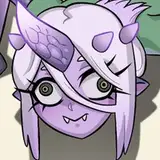
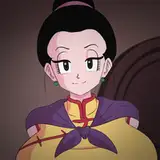
Gunn’s thematic interests are also reflected in his choice of protagonist. While the concept of Creature Commandos dates back to November 1980, the modern iteration of the team is largely defined by its relationship to Frankenstein’s monster. While the original monster, now going by the alias Eric Frankenstein (David Harbour), appears as a regular character in Creature Commandos, Gunn sidelines him to focus instead on the Bride, who serves as de facto team leader alongside Flag.
Flashing back to her creation, Creature Commandos casts the Bride as a woman whose existence is dictated entirely by men: by Victor and by Eric. Her body is quite literally not her own, stitched together from a collection of cadavers to provide Eric Frankenstein with a lover because “the monster demands a mate!” It is a very literal manifestation of the increasingly prevalent argument that women’s bodies are not their own, but exist solely for the pleasure and satisfaction of men.
Creature Commandos is very explicit in underscoring the importance of a woman’s control of her own reproductive rights. “When a baby is born, she has known her mother’s womb – and therefore her mother intimately – for nine months,” Victor tells Eric as the Bride becomes self-aware, a woman created exclusively by one man for the pleasure of another man. “The womb is one’s tether to the universe, to the fragile social system of humanity.”
Eric refuses to see the Bride as a person. She is denied even a name. He grows frustrated with the rudimentary attention that Victor pays to her social development. “Why is this drudgery so important?” Eric demands. Victor counters, “You want a bride who can speak, don’t you?” Eric protests, “Words get in the way in truth, drowning out the caterwaul of one’s heart.” That is a very eloquent way of saying “no.”
Eric sees the Bride as an object that exists for his own pleasure. “Why won’t she let me touch her?” he demands after trying to grab her in the castle bedroom. “You made her for me. She is to love me.” He comes to resent that the Bride grows attached to Victor, even as that is a clear response to Victor’s decision to treat her as a person. There is something very timely in this portrayal of the monster as a man who feels entitled to a woman’s love and grows violent in his attempts to assert control of her body.
However, part of the strength of Creature Commandos is the way in which this character beat and back story resonates with the larger themes of the series and with Gunn’s filmography. Eric’s denial of the Bride’s personal autonomy and his refusal to see her as a human being is a very similar worldview to that expressed by the Sons of Themyscira, but it’s also just a more overt manifestation of the impersonal political philosophy employed by Waller to treat these people as slaves.
Indeed, there is something very interesting in positioning Creature Commandos right before Superman. Implicit in the myth of the superhero is the idea that some individuals are inherently superior to others. This is part of the thorniness of the genre. To its credit, Creature Commandos interrogates the uncomfortable implication of such thoughts. If some people are classified as inherently superior to others, then it stands to reason that there must also be those who are inferior. That should be terrifying and unsettling.
These are all different expressions of the same idea, a theme that crystalizes across Gunn’s body of work: the horror of denying personhood to other individuals. That horror can be individual, as with Rocket (Sean Gunn, Bradley Cooper) in Guardians of the Galaxy, Vol. 3. It can also be cultural, as expressed in Auggie Smith’s racism in Peacemaker. Part of the beauty of Creature Commandos is the way that the show ties these ideas together into what feels like a cohesive humanist statement.
Gunn just wrapped filming on the second season of Peacemaker and has plans for a second season of Creature Commandos, so this thread of his work will continue. However, as the filmmaker transitions into the role of studio chief responsible for one of the most iconic brands in popular culture, Creature Commandos feels like a fitting grace note to a thread of his filmography over the past decade, harmonizing the writer and director’s approach to character with a broader worldview.
Shared universes are built on worse.
Comments
I'm a little behind to the article but a great write up Darren. I've seen the first 3 eps and its really fantastic.
Tyler King
2024-12-17 16:14:19 +0000 UTCAnd also a clip that was posted with the actor’s enthusiastic consent and which is very much about the absurdity of what these scenes involve.
Darren Mooney
2024-12-11 18:08:57 +0000 UTCIronically some of his detractors are very Qanon-esque. As for the actual series seeing how people online react to a clip of the voice actors recording for the sex scene makes Soderbergh all the more correct for his stance on sex scenes in superheroes media. Many people seem alienated toward sex scenes in media.
Jesus
2024-12-11 15:25:11 +0000 UTCGunn's arc is interesting, because it demonstrates something that I think a lot of the arguments about "cancel" and/or "accountability" culture miss. Which is that, generally, if you are both good enough at what you do, are willing to apologise for your mistakes, and have put the work in, it's entirely possible to recover. (Which underscores the "grifter" nature of the pipeline you mentioned. There's a reason that Zachary Levi is whining that he can't get hired for his political views while critics - myself included - are like, "Clint Eastwood is a modern American master and you should watch his latest film." If you can create a grievance, it spares you having to develop your talent and/or personality.)
Darren Mooney
2024-12-11 10:11:25 +0000 UTCIn hindsight it’s fortunate that Gunn didn’t fall into the the grifter pipeline when he got fired from Guardians 3.
Jesus
2024-12-10 23:23:02 +0000 UTCIndeed it does, and I can't wait for the elder Rick Flagg's and Peacemaker's first encounter.
Brian S
2024-12-09 17:14:42 +0000 UTCI’ve started rewatching “Peacemaker”, prompted by “Creature Commandos.” It still rules.
Darren Mooney
2024-12-09 17:08:45 +0000 UTCA fan who actively thinks about the media he consumes as more than just a set of interconnected and recognisable signifiers.
Darren Mooney
2024-12-09 17:07:45 +0000 UTCGunn generally strikes me as a writer with a very keen sense of balance. He has a clear affection for the sillier and schlockier elements of superhero and horror media, but is also willing to pick at the threads that make them up. He loves writing comedic and self aware dialogue, but doesn't let it stop his work from being earnest when it needs to be. It's the energy of an enthusiastic fan, but specifically a fan who really cares about things because of the ideas in them, not just the surface level aesthetics.
Jack Philipson
2024-12-09 15:49:34 +0000 UTCThanks for another excellent article, Darren. You hit the nail on the head when describing Gunn's work: the tone, narrative, and ideas are consistent in their vision; even if all his jokes, narrative beats. etc. don't always land, or perhaps mine the same ideas/messages a little too often or are a little on the nose, they always feel organic and earned. I liked the first two episodes, though I don't consider them groundbreaking. I will certainly watch the rest of the series, and I'm excited for Peacemaker season 2. I'm also really excited for the Sons of Themyscira to reach the titular island and watch the fun ensue.
Brian S
2024-12-09 15:38:52 +0000 UTC