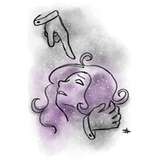
Inherent, Intimate D/s
Added 2024-01-26 21:11:02 +0000 UTC(My heat is finally back on and I was able to finish this in time :) I hope you enjoy it! I think there's a lot more to explore here and would love to do more in another essay.)
Inherent Intimate D/s by sleepingirl
There is a quality of experience you can achieve with hypnosis that straddles the line between a very private kind of intimacy and edgy D/s. Hypnosis, operating at least partially in the abstract, is well-suited to create emotional sensations that are very difficult to describe -- and that abstraction is partially what lends it its power. In this essay, we will explore this different kind of tone.
Inherent Power Exchange
We know that a hypnosis scene can be done in a way that satisfies power-neutral partners. We have archetypes of the hypnotist/subject relationship that can work well in any D/s configuration, even with the hypnotist as the submissive. But every kink activity has aspects to it that include a natural amount of power exchange -- and working with those qualities can create really exciting experiences.
For example, rope bondage generally includes some restriction of motion -- control is taken away from the bottom. In impact play, a bottom consensually allows pain and discomfort to be inflicted in ways they don’t necessarily have control over.
Hypnosis has inherent qualities and capabilities like this too. Certainly we can think of things like hypnotic bondage, or the tendency for subjects to become physically/mentally passive, or even things like encouraging obedience or changing a person through goal-oriented brainwashing. But while those are common D/s activities within hypnosis, we might think of them as “add-ons” to a scene, or ingredients that come with hypnosis (even though they may happen spontaneously or automatically for many kinky people who play with hypnosis).
This article is most interested with things that hypnosis does or can do that are more inherent than that, and especially things that create a powerful sense of private intimacy. For example, we can say with confidence that hypnosis operates off of and affects the whole of someone’s identity, even parts of themselves that they are not aware of.
Intimate Truisms
In Erickson’s model of hypnosis, there are certain principles that he would call a “truism”: a statement that is true about the nature of trance, suggestion, or psychology that in and of itself is suggestive. For example, telling a subject that people forget things all the time without even thinking about them is a very common set-up for hypnotic amnesia (whether direct or indirect); it’s true, and simply saying that evokes a context that can more easily allow for this natural forgetting to occur.
These little inherent, intimate power exchanges of hypnosis also function like truisms. There are no “throw away” suggestions when you are hypnotizing someone -- every statement that you make will evoke some kind of response, processing, feeling, emotion. So to build off of the example above, what do you think it would feel like to someone if you suggested to them, “Hypnotizing you touches every part of who you are; parts you are familiar with and parts that you are not even aware of”?
Certainly, feeling this fully requires a level of trust and vulnerability that is not necessarily even wanted in all hypnotic relationships. Later, we will explore some considerations with this.
But for now, let’s think of other examples of intimate truisms that straddle this line. Hypnosis involves:
- Touching parts of a person’s mind that they are not aware of
- Observing, utilizing, or controlling unconscious behaviors and beliefs
- Affecting a person’s identity and memories by the simple truth of playing with them
- Seeing, creating, and utilizing responses in someone that most other people do not ever see
- Hypnotizing someone in a way that no one else -- including other people or the subject themselves -- can do
- Giving someone something that they desire
What Is Intimate or D/s About These?
Power exchange thrives on activities that create an imbalance of control. In physical activities this can be very visible; in hypnosis it may be more philosophical or hard to define. We can think about this in a few different ways.
- Control over visibility of the self
- Control over access or touch to inner places/parts/worlds/experience
- Control over being changed
An imbalance of any of these is akin to things like blindfolding or bondage, and you can even use these metaphors. A subject is blind to things about themselves that they are not aware of, whether those are unconscious patterns or processes, parts of their own identity, or responses they are having that they can only have the inner experience of. A subject is bound helpless to being subtly changed by the interaction you are having with them and the creation of new memories. And the hypnotist has more access to or control over these parts.
These are things we often try to downplay, especially as we use hypnosis in pick-up play or settings that should not contain overt D/s. But when we do have opportunities to explore a relationship like this, we may want to get away from this habit and instead spend the time on emphasizing the D/s or intimacy that is inherent in our play. Especially in longer-term partnerships or with someone who has a lot of trance experience, it can be easy to take things for granted and gloss over some of the powerful parts of hypnosis itself.
Hypnosis where D/s feels inherent can transform every trance into something punchy and strong. Instead of agonizing over what kinky themes to include in your play or how to exude dominance, reframing hypnosis within a partnership as an expression of intimate control can allow you and your partner to slow down and enjoy even the simplest trance triggers.
Be Selective and Careful
Before we get into more specifics, it is important to acknowledge that playing with these concepts is NOT for every scene or partnership. In the same way that you would be very selective about playing with intensely romantic emotions or brainwashing, you should engage in this only when you are in a relationship that fits them.
Most people are not used to being vulnerable in a way that is conducive to suggestions like this, and playing with vulnerability has risks. At best it can feel out of place and awkward, at worst it can feel very uncomfortable or create emotional attachments that are unwanted. And all of this requires a level of buy-in from both partners -- it is not easy to jump into sincere intimacy, and a lot of people will have a knee-jerk reaction of avoiding it. Timing and tone matters -- gently introducing these concepts when this intimacy is known to be desired is usually best. Reassurance that it’s a safe space to feel D/s or emotional responses strongly can be helpful.
You should also be very aware of any time you are using language or concepts that evoke a sense of “exclusivity,” and much of this can do that. You may not directly be saying “Only I know how to hypnotize you and everyone else fails” but think very carefully about what you are implying with the language you do use. It is complicated to walk the line between interpersonal intimacy of partnered trance and exclusivity -- and many times it is not an issue -- but if it’s something you want to be really cautious of, you can use more “you” focused or general/passive language: “In hypnosis, there are parts of yourself that you allow to be seen and touched that you yourself can’t affect alone” as opposed to “I am the person who can reach in and change the deepest beliefs that you have.” Of course, D/s can also thrive on certain types of exclusivity or private grammar between partners -- this is an extremely personal nuance to the relationship that you need to consider. (As always, trying to mitigate things like this does not prevent attachment issues.)
Specifics
In this section, we’ll go more in depth about the categories of these innate D/s qualities. When it comes to incorporating these concepts into your scenes, there are two main parts: a shift of your own mindset, and the way that that affects how you hypnotize someone. Changing your perspective will naturally shift the way that you behave, and a lot of how you might intentionally incorporate this style of intimacy is just about acknowledging what you are thinking about, doing, and observing.
In general, narrating these things verbally is a great technique for improvisational hypnosis and can build stronger rapport. Especially in D/s or established relationships, subjects tend to want to hear what their hypnotist is thinking, what they want, and what their perspective is on the trance. Hypnosis on some level can be described as a kind of shared hallucination where both partners are ideally connecting in this sort of out-of-reality experience. It requires a lot of buy-in and comfort that it’s even OK to buy into it. A hypnotist who acts like an unfeeling, trance-giving robot can’t hit the same highs with an intimate partner because they themselves aren’t sharing their perspective for their partner to see, feel, and buy into.
- Control Over Visibility
To be seen is to be known, and vice versa. This is a powerful idea that extends far beyond being physically exposed. In hypnosis, having your identity and desires revealed can create very intense D/s and profound rapport.
Someone who is being hypnotized is allowing themselves in parts and in whole to be seen, especially in ways that most other people do not see them. Even someone who gets hypnotized a lot or by a lot of people is going to respond uniquely to the way that you hypnotize them and reveal unique things. Simply telling someone that you are seeing them wholly can be very intense.
Here are some examples:
- Their intimate physical trance responses: what their face looks like, the way their breath changes, subtle motions or lack of motion
- The way they respond to your suggestions directly: gasps, verbal responses, twitches, the actual response itself (such as what they do as you transform them); the manner in which they take the suggestions and what it makes them do
- Revealed excitement or desires over the topics, activities, words you introduce
You can think of all of these in different contexts, but one of the most powerful ways to look at this is in terms of things that comprise your partner’s identity. Who they are in and out of hypnosis, what they want, how they represent themselves, what they believe and think, what is important to them, their memories and experiences. To learn someone is to learn all facets of them and to honor that as something that is important and often difficult. We often put on different faces for different people and it is intimate both to learn the face they put on for you as well as to coax them and acknowledge as they open up parts they are not used to sharing.
While on their own these are powerful pieces to play with, more power imbalance exists in how you have more vision than they do over these things in a scene. This could be:
- Things they are not aware of
- Things they forget
- Mechanisms of their mind that you know better than they do
A person is not generally aware of all of their internal and external trance responses, even someone who feels that they are hyperfixated on their own experience. (Perhaps especially -- someone who is quickly scanning their experience over and over or someone who is focusing very hard is going to miss certain things about their physical or internal responses.) Pacing or narrating what you observe while acknowledging that creates a power dynamic: “I can see things about you better than you can see yourself right now.” This can hit an edge of submission sometimes and allow a person to sink into accepting that they can’t be aware of their entire experience, which can create a good environment for more unconscious responses in general.
Sometimes there is a feeling of pressure for the subject to take stock of their entire perception of trance -- whether that comes from the “Am I in trance yet?” checking response or even a feeling of nervousness or excitement. Amnesia is a related topic to explore -- especially in longer trances, the feeling that it is OK to let go of “recording” the exact experience can help someone achieve broad amnesiac phenomena. And for the most part, a subject will not have perfect recollection of an entire trance. This in and of itself is a bit of power exchange -- you as the hypnotist get to observe the full trance from a more aware perspective and may remember things your partner does not. Playing with suggested amnesia can broaden this power imbalance as well, and you can amplify it by talking about how things your partner forgets are secrets that you get to keep from them, choosing what to reveal or keeping it for yourself.
In general this is a very nice framing for power imbalance and applies to all sorts of things you understand about your partner’s experience. Perhaps over time you notice patterns in the way they respond or little trance habits or signals of desire that they are making unconsciously. “I know more about you than you do, and especially about this experience that is so important to you” is a very powerful sentiment.
- Control over access/touch
Parts of a person being more visible to you than them can also imply that you have greater access over those parts. That access could look like changes, which we’ll talk about in the next section, but it could also imply the general capability to affect, play with, and touch things in a person.
What we mean by this is that not only can we often see someone’s deep desires, we have control over stoking those desires, giving them a taste (or more) of what they want, and using those desires for our own purposes. Being a person who can fulfill and utilize someone else’s fantasies creates an inherent power dynamic.
This applies to all other things we can see as well: even the act of making someone respond unconsciously creates deep control over parts of a person’s mind that they themselves can’t affect. This acknowledgement -- even in very subtle situations, where for example you are eliciting unconscious gasps, twitches, eye flutters -- can help someone feel more submissive or objectified. “I can do things to you and make you respond in ways that you cannot always control and things that you can’t even be fully aware of” is for many subjects a trance experience that is resonant to their fantasies.
This is an excellent area to play in the abstract, as well. You can take this concept as a suggestion in and of itself and tell your partner that you are reaching inside of them to touch the things they can’t touch, to caress and stroke inner places that they themselves don’t have access to. There’s an obvious sexual metaphor here, and making suggestions like these will often create automatic internal and external responses that are further convincing of your control of their unconscious parts.
In general, many subjects struggle with the feeling that they can’t fully let go into a trance, and sometimes this is based on how much they feel like they need to “help” the hypnotist. Creating experiences for someone that emphasize when they don’t have to or even can’t “help” can be key to relaxing this urge. This is part of long-term teaching for subjects too -- learning how parts of their trances are things that are unconscious (something unaffectable and of which they are unaware).
- Control Over Change
Brainwashing is classic hypnotic D/s. It brings to mind obedience training and slow transformation into submission. It’s well-explored that having that kind of control over someone -- just the ability to change them in and of itself, regardless of goals -- is an exciting power dynamic to put focus on, but you can play with very small transformations and still get an intense punch of D/s.
So much of our focus in education is on “cleaning up” what we do that we really downplay the reality of every interaction we have with someone necessarily changing them. You are always adding to the complexity of a person with every conversation and every scene, every suggestion and every response they make.
While emphasizing this explicitly is definitely power play, just keeping it in mind can make you a safer player. Always think about the long term effects even of your pick-up play or bounded short term scenes. How are you affecting them? How will the memory and experience of this suggestion/scene affect the next one, even if it’s with someone who isn’t you? Are they learning something? Are there complexities they’ll need to work out? How have you changed the nuance and connotations of words, phrases, or themes of play for them? How are their unconscious responses transforming?
And of course, invoking these changes verbally creates power. Especially if you see someone’s response change -- for example, the way they go into trance the first time you hypnotize them to the second, third, etc -- you can point out those changes and take responsibility (and credit) for them. Someone who you play with who learns how to have more intense experiences of hypnosis, of transformative or role enacting suggestions, of physical responses is doing so at least partially because of you.
There is a kind of sweet helplessness in how your partner can’t control these changes. And the deeper you make them, the harder that can hit, even contextually: instead of seeing a change in someone’s behavior as part of their growth, think about how it is a change in their entire identity and self. This can work well with “bounded” changes -- changes to how someone experiences certain suggestions in hypnosis are changes to that aspect of them. It of course can also work with more broad changes to how a person views themselves at all times or behavioral changes that extend past the trance. Both of these give you opportunities to tease your partner about it later: “You know I have control over you because I changed this thing about who you are.”