The PS2 Fossil Record - Rumble Racing
Added 2021-12-22 03:00:01 +0000 UTCArcade racing games used to be a pretty big business. Sega built a name for itself off games like Hang-on and Outrun. Namco's Ridge Racer was a bright burning flame during the PS1's reign as the dominant console. Even now Mario Kart is consistently one of the highest selling games of any given generation. Unfortunately, Mario Kart is kind of it for arcade racing games now. The sea change to the racing genre with the rise of Gran Turismo is hard to undersell. Over the decades since, we've seen games that were successful in the genre like Burnout inevitably have their development resources shifted to games that are easier to market as realistic such as Need for Speed. The promise of dozens if not hundreds of real cars and sometimes tracks has supplanted the chaotic racing games of old. That's a real shame, and in many ways the PS2 launch is right before we start to see that shift. Between Rumble Racing, Midnight Club, Ridge Racer V, and the first of many times a Gran Turismo game would come out hella late, the racing field was open and the core options on offer were mostly games about the thrill of speed rather than accurately modeled gearshifts.
Rumble Racing was one of EA's last stabs at this kind of arcadey racer. For years afterwards they'd pursue the EA Sports BIG branding and produce SSX and a pile of knockoffs of their own game until they effectively cratered that market. Rumble Racing, however, represents that specific “more cars, jumps, and chaos” style that was a late ‘90s institution. At the time it would have been mostly unremarkable. It definitely has stylings in line with the later San Francisco Rush games, sort of a Rush 2049 without the futuristic stylings. If you didn't play those, that means a huge emphasis on jumps and boosting, a lot of barrel rolling and flipping the car to accumulate boost in this case. It's a very simple pick up and play game, although the controls can be curiously fiddly. There's also Mario Kart-esque weapons for spice but for the time it's an extremely standard game. The fact that a throwback to this kind of game would be considered extremely weird is a bit of a shame, it's still a very approachable genre but there's not many options to get into it.
As an individual work, Rumble Racing gives off a curiously anonymous, workmanlike quality. There is nothing wrong with it as a game, it just had any and all distinguishing features sanded down, relative to its contemporaries. It lacks Ridge Racer's sense of overwhelmingly ‘90s style. It lacks Rush's name recognition. It lacks Midnight Club's overwhelmingly early ‘00s "I just saw The Fast and the Furious" style. It's a game where it feels like its design document/pitch document must have been a marketing plan. Couple dozen non-licensed cars, 4 or so circuits of 3 to 4 tracks. The trick system is slightly more controllable than its contemporaries but it's not quite enough of an identity to hang the entire game on, and it’s too underemphasized and simplistic to really make the game stand out. It’s fun and it gives the player an excuse to seek out any and all routes to ramping the car and getting air, but there just isn’t much to it other than how many flips or rolls you think you can pull off once you’re in the air. There’s no points or meaningful chaining. Simple can be good, certainly, but it lacks that something to make it a standout feature.
One of the problems with being so by the numbers is that it makes smaller flaws that competing games don't have stand out. In this case it's that the tracks are just kinda too long. Even in the first circuit there will be courses that push into two and a half to three minutes per lap when run well. They aren't reaaaallly varied enough to support that, and a nine minute race at what's supposed to be a breakneck pace is just draining if it works and tedious if it doesn’t. These don't totally sink the game but they stand out more than they would if the game had a bigger unique design to cling to. Part of the advantage of innovating is that even if you fall down in some area you at least have something that your competitors don't offer. Rumble Racing doesn't really have that. It has to live and die by execution and unless you're starved for a racing game to play in April of 2001 on your new PS2 there just isn't much going for it. I get the sense that was probably not something they considered concerning at the time. Rumble Racing was a game made in an almost disposable sense, as far as its publisher was concerned. If it did well enough it'd see a sequel that'd be the same but more, if it did poorly it'd be forgotten. It's a bit sad but it was common then, and only has grown less common because games have become platforms to sell and iterate eternally.
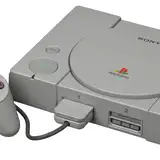
The PS2 controller here is used exactly as every PS2 racing game did. The pressure sensitive face buttons determine how fast you'll go. The action is obviously meant to emulate a gas pedal but the button lacks reasonable ways to give feedback. Mostly you'll get what feel like arbitrarily differing degrees of speed unless you mash really hard. I've essentially been waiting for something to do this because the entire premise of these buttons is so obnoxious even modern PlayStation controllers dropped this. Racing games did this constantly, and while it made sense on paper, actually controlling it was a nightmare. The game uses the left analog stick for steering; there's essentially nothing remarkable about this, even most PS1 racers instituted that relatively early. To my best estimation this game is a PS2 game because it was a largely untapped market. These kinds of games show up because they can draw in eyes that don't have a lot of options.
Rumble Racing is a shining example of being unremarkable, and in all other aspects being neither shining nor a logical exemplar. It has aged into being interesting because it is like a late era dinosaur fossil. There was no way of knowing how endangered the genre was going to be at the time. I'd love for arcade racers to come back, enough for it to once again be uninteresting, but there isn't much hope of that. At its time it was a game built on disposability. It was replaced, but its replacements weren't. It's okay to be unremarkable, but the sad way its entire genre sunk soon after still leaves it with a bit of a melancholy to my eyes.