Star Ocean the Second Story - Joyous Experimental Ambition
Added 2021-12-02 23:00:03 +0000 UTCThis is an essay I was basically destined to write the second I chose to actually do any sort of project like this, but the announcement of Star Ocean: The Divine Force and some gentle prodding from a friend has pushed it to the front of my priorities list. Star Ocean: The Second Story is one of my favorite games ever, a complete car crash of strange subsystems by a development team with utterly unbridled ambition. It represents the PlayStation era of JRPGs at their absolute best. Experimental, with a lot of gorgeous art and music, never quite managing to make complete sense but so utterly compelling in how it's constructed that even if the plot never resolves perfectly, it's still been joyous to watch play out. The destination never mattered, it was the many ways you could have the journey.
That's a lot of contextless rhapsodizing though. Let's dial back. Star Ocean: The Second Story is a game developed by tri-Ace (yes that is how that's capitalized officially), a company which split off from a company called Wolf Team in 1995 right as it was sold to Namco and became Tales Studio. Wolf Team was kind of known for producing a lot of things with a few common threads: impressive aesthetics, technical prowess, deeply flawed, niche as anything. Wolf Team was some sort of sister company/subsidiary to Nihon Telenet but the documentation on that company in English is kind of sparse and difficult to fully comprehend. Suffice to say that under that guise they made a number of weird games for old Japanese PC formats, though they weren't above doing console work as well. Wolf Team would ultimately split during the development of Tales of Phantasia, allegedly in part due to demands made by publisher Namco about changes to the finished game. The part that left would become a few different things but most relevant to this article, tri-Ace. The first game they'd put out was Star Ocean for the Super Famicom. At the time no one tried localizing this because it was a huge expensive RPG when the system was soon to be made irrelevant by the recently released Sega Saturn and PlayStation, not to mention its publisher had no Western branches at the time of its release. Nevertheless Star Ocean was a game well within the legacy of being incredibly technologically impressive, ambitious and obviously ripped apart by the limits of technology. It was published by Enix, one of the biggest names in Japanese publishing entirely on the back of Dragon Quest, and seems to have been a decent hit because lo and behold tri-Ace's next game was Star Ocean: The Second Story. Thankfully by this point Enix had re-opened its American branch and the game would see release in North America officially in May of 1999.
History lesson's over though, what was the resultant product? Star Ocean 2 is an odd game because it's so built around the optional. The player has a choice of two protagonists: space federation rookie Claude or fantasy planet elf Rena. Claude crash lands on Rena's planet and gets embroiled in a prophecy about the fate of that planet when all he wants to do is get back to space. He's basically a missing Star Trek cadet. Rena's much more wrapped up in the fate of her planet for fairly obvious reasons. These two are your only required party members. You have eight character slots and 14 possible party members, many of which have strange unlock conditions and/or are mutually exclusive and simply won't join if someone else is in the party. You can totally just turn people away though and end the game with only Claude and Rena. This setup of course also means plenty of quests, character beats, and even towns are entirely optional. The game thus doesn't have much in the way of typical JRPG character interaction, instead having to put that in modular scenes called Private Actions which allow the player to send every character into town individually to do... whatever they feel like doing. Honestly I'd like this idea to be pursued even in games with more defined and linear plots because it gives a lot of information about a character's interests that doesn't really come up otherwise, but that's neither here nor there. The actual plot is largely independent of the characters since it must inevitably be driven by Claude and Rena. It's sparse in a relative sense but it works.
This odd sort of freedom extends elsewhere too. Character development is curiously open—while characters have a defined set of abilities and equippable weapons, they also have non-combat skill specializations, and a player who doesn't know how to min-max them will likely spend much of the game giving characters a lot of unrelated skills for the passive bonuses they confer. In that time they'll probably run into the specialty system, the wildly opaque crafting system, the natural talents decided at character generation that can also be obtained through use, and a million not strictly necessary but altogether fun subsystems. There's something fun about these because ignoring all of them would make the game less interesting and catastrophically more difficult, but the game is built in such a way as to not require the player to know how to use any specific one of them. A knowledgeable player can min-max for pickpocketing and have endgame level equipment in the first few hours, but a new player just buying up skills that seem useful will find they are materially rewarded despite not knowing the intricacies of these systems. It's a curious and clever system because it leaves so much more in the player's hands than you'd expect for a JRPG of this era. This isn't even touching on things that are useful in very specific applications unrelated to the difficulty. Crafting can be very useful for setting characters up to get specific endings too, of which the game has dozens of modular scenes pairing up different characters based on who they have the strongest relationship with and who in the pairing likes the other more. You can end up with a lot of very strange combinations and while none of these scenes is more than 20 seconds, there's something nice about a game acknowledging the pairings the player has made even if it can't do much.
I think that's the core of why I love Star Ocean 2, and also what the series could never really do again as budgets got higher and went into more art assets, voice acting, etc. You couldn't afford as much to make content that players could be locked out of, or only see in replays. In Star Ocean 3, quite aside from its other flaws I don't have time for right now, you have a mostly defined party and get to pick something like two final ones out of a pool of four. It feels vestigial, like it might as well not have been there. There's no real sense of player customization in that setup, it's more like you're just choosing which loss to take. There's also just no way to reward doing things in strange orders or going off the beaten path in that setup. Star Ocean 2 has a character that even the game considers "hidden" named Opera. Opera is hidden because the only way to get her is to follow a chain of seemingly unrelated events that starts with running into a three-eyed man in one of the first few towns and requires going into a seemingly unrelated dungeon not long after. Where most JRPGs then and now are designed in the sense of putting their most interesting content into a setup that relies on "you must see this," Star Ocean 2 developed interest around what you never saw. Just to bring this home, Claude and Rena both have characters only they can recruit; replayability was a designed-in factor from a direction few JRPGs did at the time. Star Ocean 2 combined the sense of direction and purpose of a JRPG with the sense of customization and player agency that WRPGs were specializing in by that point in a way I didn't even realize I wanted at the time. I understand why it could never be that again—the more budgets increase the more it's hard to justify a focus on optional content. Even the much talked up freedom of WRPGs gradually but steadily scaled back over the following years; a game couldn't afford to be "about" its optional content and built to that scale without becoming a scoping boondoggle.
That's why I cherish this kind of game from this time though. We see modern games take on aspects of the retro, but they can't afford to be the same thing, and they can't be made in the same contexts. So I really want to celebrate Star Ocean 2 for what it was, a brief shining period where the JRPG was huge, a high budget game was still relatively speaking cheap to make, and a company could afford to make essentially unabashed Star Trek fan fiction meets a normal JRPG plot and sell it. At no other time or place could Star Ocean 2 have been made, and no other company would have made it. No one concerned with polish or balance would have made it so you could get to level 100 by counterfeiting level up items. No one concerned with accurately reflecting character relationships would have made this cause the entire party to think less of each other, no one concerned with logic would have made it so you could fix this by having them all read books written by each other. No one concerned with not being cryptic would have set out challenges for this kind of overpowered party unlockable only by talking to one specific person in a 20 minute window in the middle of the first disc, or having the entire party play instruments together in order to fight the bonus bosses hidden deep within the bonus dungeon. Star Ocean 2 isn't sprawling like an Elder Scrolls game, it's a deceptively deep lake. It's a game that becomes more interesting as it’s obsessed over. In many ways this means it was the ideal game for a kid in the late 90s who had one JRPG to keep them entertained for months. Maybe this time I'll recruit space Indiana Jones, it turns out he sucks but for some reason he's holding the best armor in the game in his private inventory and not wearing it. It's a game of limited scope but incredible amounts of party and character build depth and variety, dozens of events for strange combinations of characters.
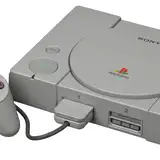
Does this make the game cryptic and sometimes unapproachable? Oh definitely. Yet it doesn't matter, it's okay for a game to be this particular kind of weird. Years and years of highly variable sequel quality hasn't managed to squelch the brand loyalty built by this one game into the deepest part of my brain. On some level, any Star Ocean game existing releases endorphins into my brain simply for how out of left field this game felt in 1999. I haven't even dived into how much its extraordinarily 90s art direction gels with me, how its music is impressive even in the packed field of PS1 JRPGs. If you have any love for the era and skipped this, I'd say it's worth going into and seeing what you end up getting out of it. If nothing else your first playthrough will probably be different enough from my last to be worth talking about.