Oddities - Ore no Ryouri
Added 2021-12-01 03:00:02 +0000 UTCIt used to be that the weirdest games came from Japan, and the even weirdester games never left the country. We've largely moved past that period, both because the weirdest moderate budget excesses of the PS1 and PS2 eras are long in the rear view and because the market for localizations of niche games has kinda been able to saturate the number of available weird games to import. Still, some of these oddities had unexpected legacies due to the ways they acquired Western acknowledgment. One taste of something can inspire a long obsession if it's presented right. Ore no Ryouri managed to find an English legacy in something of an odd way and I think there's a lot worth talking about there.
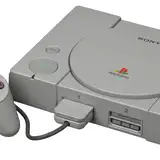
Ore no Ryouri (something like "My Cooking") is a PS1 game made by a company you've never heard of called Argent and published by Sony Computer Entertainment Inc back when the Japanese side of Sony's game division had independence and published bizarre low budget experiments with impressive regularity. Unlike something like Parappa the Rapper this particular experiment was deemed unfit for Western export. It didn't have the immediate marketing zing of "a rapping game," it didn’t have an obvious genre, and it required a controller with analog sticks that much of the then-current potential userbase of the system lacked. In short, it just wasn't something they wanted to take a risk on. That said, Ore no Ryouri was almost instantly understandable to a hardcore player, it had largely visual tutorials and an excellently communicated sense of urgency. It was kind of the ideal "play for 15 minutes'' game, so it ended up on a few demo discs of the era. In my particular case it was on the PlayStation Underground "disc magazine", a curious largely-forgotten arm of Sony's ad campaigns that might merit an article just reminiscing at some point. Aside from demos for future games that were definitely intended for U.S. release at the time, these would sometimes have import sections to fill them out, odd little games that were sufficiently understandable as to be playable even without knowledge of the language. I'm convinced some of these were meant to see if they got a particularly strong response, but I'm not actually aware if any of them actually did get ultimately localized. That said, Ore no Ryouri found its U.S. fanbase primarily on the back of this curious practice.
So what exactly was Ore no Ryouri? It's a restaurant simulator. Players are given a number of short minigames performed with the Dual Shock's analog sticks; do them well and do them fast because you have a constant inflow of customers who are ready to leave if you take too long and will register complaints if you don't do your job well. These minigames kind of have degrees of importance and complexity. Pouring someone a drink can be done within a second or two and is all about avoiding giving the drink much head or spilling it. Then you'll get more complex tasks like making ramen or burgers—these involve a preparation step like chopping meat or vegetables, a cooking step where they just have to be left cooking while you do other things while making sure you don't lose track and overcook, and a final step that's usually saucing or seasoning. None of these minigames take more than 5 seconds and the player is graded on each step on a scale of one to ten. These minigames are all also on timers, because customers won't wait around forever.
As the orders pile up things can get frantic. Once you've satisfied enough customers to raise a satisfaction meter you'll be challenged by another chef. These battles now function almost like a competitive puzzle game like Puzzle League or Puyo Puyo. If you resolve a number of orders together you drop "garbage" minigames on the opponent, things like thieves, dine and dashers, and cockroach crushing. Failing to do these quickly takes a huge hit to your place on the satisfaction meter, drop too low or end the showdown lower than your opponent and it's game over. These are pretty quick but they're a lot of fun, and the mini-games altering every stage as you go to different restaurants is nice too, and keeps the whole thing fresh. If it'd been released officially in the West it probably would be a cult classic.
I say that, but it kinda is a cult classic, in a weird way. Like it's something of a deep cut but it has a weird legacy here. The indie series "Cook, Serve, Delicious" is acknowledged as having grown out of a fangame based off that very demo. "Cook, Serve, Delicious" is its own beast, but the DNA of Ore no Ryouri is evident just by viewing them side-by-side. These kinds of inspirations are a proud legacy of the weird games of yesteryear, from a fan game called Ore no Ryomi to a full series all its own that carries on ideas from a forgotten little gem. There's often an emphasis in revivals of these properties on getting the originators back to "do it right" under the original name, and that can be nice, but new blood can synthesize new ideas and ways of looking at something. “Cook, Serve, Delicious” may be its own work, but it shows the beauty of dusting off an old idea and trying your own hand at it. You can find the concepts and ideas experimented on in critical and commercial failures blossoming forth in later successes if you just go looking. Thankfully, it isn't even always a corporate story, it's just the passion that can be inspired by one fresh concept that draws in the right people to really keep it going into the future.
Ore no Ryouri is the kind of game I dearly miss if I'm being honest; it's the kind of experiment that could happen when video games hadn't fully transformed into the same boom-bust cycle Hollywood has, where most titles from a major publisher have so much money riding on them they can't afford to be modestly budgeted with modest returns. The indie world captures some of that spirit as this has made clear, but in many ways it's beholden to the kind of works that come from a business formed by those of the most ardent passion. That's a story for another day though. Ore no Ryouri is still as fun as it was when it first came out, when it first appeared on a demo disc more than 20 years ago. If you can lay hands on it, it's still intuitive and a good way to mess around for 10 minutes. You might lose badly the first time, but it'll be frantic and simplistic enough that it's a good time even if you neither speak nor read Japanese.