Oddities - Blood Will Tell
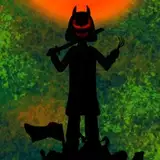
Added 2021-10-29 02:01:00 +0000 UTCSega of the mid 00s was a tragic company to watch, desperately latching on to whatever new identity it could in the wake of its utter destruction as a hardware company, but still retaining a glut of talented developers capable of producing unexpected gems. I want to highlight a weird little game they made, a licensed game even, from this period. Released in the west as Blood Will Tell it's only when you see the title screen you realize what a pedigree it has as its true English title is "Blood Will Tell: Tezuka Osamu's Dororo".
If you aren't aware of Tezuka, he is manga royalty, the size and strength of his pedigree is difficult to state. His most famous creation would have to be Astro Boy (Tetsuwan Atom) and that's likely the thing most Americans would associate him with but his works were sprawling and vast. From his perfectionist outlaw doctor BlackJack to the sprawling and incomplete Phoenix to the lesser known but still popular in the west Kimba the White Lion (Jungle Taitei). Among his more odd works was a manga called Dororo, Dororo is about a young man named Hyakkimaru whose father makes a deal with 48 demons just prior to his birth, these demons promise him power in exchange for his son's body and so upon his birth almost every piece of him has been stolen by demons and he is abandoned in a barrel to float down a river barely recognizable as human. A kindly doctor finds him and keeps him alive, spending years crafting prosthetics for him. When he grows up he decides to find and kill these demons in order to recover his body parts, followed by the young thief Dororo. How does that go? Depends on the adaptation, Tezuka's manga concludes but it kinda doesn't really finish, just implying that it essentially took Hyakkimaru his entire life to fulfill his goal and concluding on the note that he gave the titular Dororo his sword at the conclusion of their time together. This ending is unsatisfying enough that I don't think any adaptation has ever retained it, the manga was originally cancelled and an ending seemingly hastily put in another magazine as the TV adaptaiton ran to give it some kind of conclusion. Don't quote me on that though since I'm not intimately familiar with the subject. Suffice to say Tezuka's ending, such as it is, is essentially never retained. The original 1969 anime goes one way, the 2019 anime goes another (while making some wide swings with the premise to tell a more cohesive story) and Blood Will Tell has its own version of events.
This game, like many adaptations, draws from the immediately compelling premise and some of the more well known plot arcs, and crafts them to suit its needs. The concept of 48 major battles with demons is actually really well suited to a game adaptation and BWT gives it a cool structure. In every adaptation, when Hyakkimaru defeats a demon he immediately spontaneously regrows that body part, forcing out the prosthetic, in this case each of these body parts offers some sort of tangible benefit to Hyakkimaru, but the critical path of the game won't actually have you fighting all 48 demons. Many of them are hidden throughout the levels, requiring minor puzzle solving and exploration to find. It's legitimately a brilliant way to adapt the source material especially given the original story never fully established what body parts were missing and didn't have climactic showdowns to adapt to get them all back. The major story battles tend to adapt events from the manga aside from the game's original ending section, but the side fights can be smaller affairs. There's also something fun about seeing what you'll get from any given fight. Story fights might afford you one of Hyakkimaru's legs allowing him to run faster, but other fights might afford you very odd parts like his inner ear allowing him to recover from being knocked down better. In general each part feels like a substantial enough improvement that it's exciting just to find the bosses and take them back.
The structure here really is key because mechanically the game's mostly very simple. Hyakkimaru has a fairly limited combo tree that, while expandible, can feel pretty awkward to use. The thing is though that it honestly doesn't really matter? Like the action isn't bad it's just simple, the things around it though dress it up enough that it's still fun. Gameplay systems that intermingle like this are so strong because each individual part doesn't have to be incredible and they can still come together to be better than any individual piece. In general the fights are designed well enough that Hyakkimaro's moveset seems appropriate to them. The art isn't entirely faithful to Tezuka's work but it works well on its own terms as well. Blood Will Tell essentially manages to comfortably exude the charm of a b-tier budgeted game from the PS2 era. The kind of game made by a decently sized team with a decently sized budget using very well understood tenets of game design with a good understanding of how to get the most of its ingredients. In this way it may have aged into being more charming than it was on release.
Blood Will Tell is interesting in part because it's a reminder of how many ways that adaptations can be reshaped to fit a new medium. Because of the approach Sega's WOW studio took with it you'd almost think it was tailor built to be a video game, and the generally insubstantial nature of the source narrative with its hasty conclusion afforded creative freedom to the developer. Adaptation's a tricky business but the best ones always feel so at home in the new medium you can't imagine them any other way. That's the praise I can offer Blood Will Tell, while it's not my preferred version of the story per se (that's probably the 2019 anime) it's so at home as a video game it really feels perfect that way. The game has the typical clunky mechanics of a mid-era PS2 game but it's so charming in how it has bent this classic story into the video game mold that I can't help but feel very fond of it. It's not perfect but it has a very unique style that counts for a lot when we look at a console's library retrospectively, especially one with as many oddities on it as the PS2.