Machismo and the Marketing Masculinizing of the Video Game Hobby
Added 2021-09-22 02:01:00 +0000 UTCNOTE: I would like to preface this essay with a few things. I'm a cishet white guy which will color my observations, though I am trying to be observant of something I consider to be unnerving about the medium I love. I would also like to make clear that this is a U.S. centered analysis since that's the marketing I saw. I am not an expert but hopefully for anyone who reads this this essay can act as a piece of the puzzle on how the marketing and culture of video games became what it is.
Video games have an image problem, but because they've had an image problem for so long they have an audience problem too. Quite aside from the lionization of the nerd into a self-selecting group of gatekeepers there has, at least since the late 80s, been an attempt to convince people that would not otherwise self identify as nerds that video games are a pursuit of masculinity. This represents a repackaging of how things are marketed to men and how toxic masculinity is reinforced because it makes capitalism easier. I'm not sure I can do any of these subjects justice, but I want to touch on them.
To see where these attitudes came from and how they've evolved we have to do a sort of rundown of how games have been marketed over the years. Old arcade games are, almost by nature, skill challenges. Get better at the game or it spits you back out and tells you to pay more if you want to try again. The levers of player psychology focused on competition at least since Pong and even games that were primarily single player encouraged it via high score tables. You may feel you've mastered this game, but hey someone just beat your score, spend another coin taking the high score back. Now I'm not exactly a gender studies expert, typically competitive drive is societally considered a masculinized activity but I'd say this is pretty agnostic of gender. People tend to like demonstrating their skills, so I would not consider this the titular machismo lie here. That said, it sets the stage. It would be wrong to say that this flavor of competition, often reflected in sports, is not typically socialized in young boys quite heavily. In the 70s and early 80s though, video games had not yet become something considered a masculine activity, they had an appeal that hadn't yet been codified in marketing so there was not yet a push to make them easier to market in this way. They were marketed almost as "so new you have to try them to see what the fuss is about".
Following the late 70s-early 80s Atari boom and bust in the U.S. video games were essentially marketing poison here. Famously Nintendo redesigned the NES to not look like a video game system and sold it with a useless toy robot to convince retailers they weren't going to lose their shirts on it. The very first NES ads from 1985 are relatively agnostic though tellingly they show two white boys, that said they don't really focus too much in any direction. There's a feeling that it's not entirely clear what audience this will sell to.
In the 1990s video game marketing left behind its "fun for the whole family", "the latest technology" and "the hip new thing" marketing schemes that had characterized much of the 70s and early 80s and started producing an edgier sort of output. Video games were now a differentiator young boys used to mark them as seperate from girls. Marketing has often preferred marketing to boys for a variety of reasons I'm not fit to go into but probably near all of which end up having a big arrow to the word patriarchy drawn from them. In any case, the die was cast, video games were a boys toy as far as marketing and thus parents were concerned. Honestly this probably traces back at least to the Zapper if not earlier (though admittedly, per its designer, the Zapper was not seen as masculine per se, it was seen as American "Americans in general are interested in gun.")
https://i.kinja-img.com/gawker-media/image/upload/1477062788022065325.jpg (image credit kotaku)
That said, you couldn't just say something was for boys, you had to hardwire in stereotypes about what boys liked, the already burgeoning industry of assuming technology was inherently masculine was on their side, but marketing needed games to be seen as FOR BOYS. Marketing also needed something else though, they needed games to be hard enough that renting them would not give you a decent shot at completing them. This actually isn't new to the 90s though, many NES games were impossibly hard, they were even sometimes marketed as the hardest game around, but the marketing logical consequent, that beating them meant you were tough was not as emphasized. A difficult game was sold on being difficult to master, you were getting more game for your money. In that way this aspect of marketing directly correlates not with the machismo marketing of the 90s onward, but the "over 100 hours of gameplay" on the back of a PlayStation RPG box you might also see in the late 90s. The idea of hard games as masculinity assertion is therefore proven, rather than merely inferred, to exist entirely as a marketing convenience. You can market hard games to different types of people, those with "traditionally" masculine or feminine interests, by changing some jargon. Still, boys remain a market of preference for many companies and so this was not a priority.
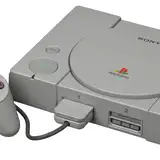
The PS1 era was the home of the most patronizingly GAMES ARE FOR BOYS marketing. Where Super Nintendo and Genesis ads contented themselves with a more general GAMES ARE GROSS AND YOUR PARENTS WILL HATE THEM that's coded to marketing to boys, the late 90s became the period where games were "growing up" and by growing up here it is meant that they were now for 14 year old boys. On some level the facet counteracting this was the rise of genres that were inherently less twitch focused and thus marketing in general had not yet successfully masculinized. The JRPGs of the era had a huge fandom among girls as far as I was able to observe and this would ultimately contribute to its falling out of favor among male enthusiasts in the 00s, but that's another story for another post that'll probably be half a defense of Kingdom Hearts (and some condemnation of its failings). Suffice to say the explosion of new genres kept the amount of "Tomb Raider have boob and you can control her" marketing in somewhat check. Still, in the struggle to make game's "legitimate" one of the key points that had to be made was that they were now for people who wanted to think of themselves as adult men.
This sets the stage for something video games marketing has essentially never left completely. The form has changed over the last 20 years, but the audience calcified. Video Games as a prestige product are marketed as for 13-40 year old males unless they are specifically going against the grain. In the PS2 era we see this happening, the Japanese RPG with its preponderence of character archetypes popular among teenagers of all genders and preferences falls out of favor. It has too many fans that are girls, that might make the teenage boys feel gay, a horrifying taboo. As an aside, while I did not have the experience of being a queer teenager, I can speak to the queerphobias that were common in the initial falling out of favor of most any game with an anime influenced aesthetic as I definitely heard that discussion. Rising to take their place would be games about being a man who is either extremely angry, or extremely stoic. In the 00s the lofty standard of the video game protagonist became Kratos from God of War, and Master Chief from Halo. Protagonists that can work, but which are most beloved by the cis teenage boy and the cis teenage boy at heart.
Now though non-character based games needed a way to sell themselves to this same prized demographic. What do we do here? We harken back to being the hardest game around. We imply that your capacity to beat this game is a measure of your being a man. The same way a heavy weight sells itself, a hard game sells itself. I can't exactly ignore the elephant in the room here, much of this falls on a combination of two kinds of games I dearly love. This kind of marketing was partly brought into being by Devil May Cry, a game whose genre was given by Capcom as "Stylish Hard Action." It was truly brought to the forefront by Dark Souls (not Demon's Souls which had both a smaller and a less defined by difficulty marketing push). However, while Character Action games have largely moved away from this, attempting to emphasize their accessibility, the subgenre spawned from the Souls games doubled down. PREPARE TO DIE the back of the original Dark Souls box proudly proclaims. Immediately a word of mouth about how this game doesn't "hold your hand" (that most hated phrase that not so coincidentally calls to mind a gesture of human kindness) it forces you to "GIT GUD". This marketing is catnip for the masculine inclined who feel unconfident in their own assertions of masculinity. I can show I don't need help, that I am tough and obstinate, and I don't have to risk anything because the game will just let me try again indefinitely and hand me a full supply of healing items. I can mock people who decide they don't have time to learn and practice this. I can assert that I'm tough.
Fiction allows us to live other lives in controlled environments, but marketing wants you to consider your choice of fiction a part of the self. Certainly the elements of fiction select for its audience, and the audience's choice of fiction can reflect internal prejudices, but this is a more insidious thing. This is marketing attempting to sell itself as identity signifier. This fiction is not something you enjoy, it is part of you, you must continue to purchase it when it shows up or risk losing a part of you. This is the true danger of marketing to children and why it is legislated, and this is the why of hard games attempting to hardwire themselves into a certain toxic culture. Here I can speak with some authority, toxic masculinity is a mindset that requires you constantly assert your masculinity. To conform to the ideal not passively but actively, no matter how unhealthy or nonsensical the proposed challenge. It's like being hazed in some sense, constantly pressured to make certain choices or risk failing an unseen test because your sense of masculinity is tacitly taught to you as something that must be proven in your every choice and action.
And so as we enter the early 2020s we are in a stew of these kinds of games along with their newest expression that's still a good 10 years old, the sad dad game. The sad dad game and its intermingling with the prestige media archetype is probably its own essay, but suffice to say the many ways a game can market itself to protect the identity of men too scared to admit their own fear are still many and plenty of games don't limit themselves to just one of these. The AAA industry is perhaps more married to these than ever, but I'll again save that for the sad dads essay. Culture is self-reinforcing and I don't see much change to this in the big budget spheres any time soon. I wish I had a less somber pronunciation to leave here, but I can only speak of the industry that is.