Today's Blind reads is more of a Mini ABD , So I hope you enjoy. 
For the past months, I notice or maybe I assume that a few artist don't know how they could study their Reference. Like how many people truly know how to breakdown their images or what to look for. So I wanted to imagine just how I could explain or direct those that do struggle with this.  Knowing I can see shapes and can identify them in a way that will help me make things easier for myself-- I have to also be mindful of the fact that that isn't the case for every artist. So I need to show that in a way that will also be self explanatory but, even if it isn't , it should raise questions and send sparks to those artist still. But why is the step important to me within my process? Why do I think skipping this step could make or break my art?
At this point in most artist art journeys we should know what a cube, sphere, and pyramids is (other 3D shapes) and how to make them. Plus art, like math, science and etc is a language-- so understand the art language you'll be about to translate all shapes ( flat, unidentifiable and 3D) to look like anything. Even when using simple lines ( stick man) artist should be able to make things that are easily identifiable to the human eye. So even if you do not have
Hyperphantasia to make things a bit more clear for you --- this step can not be skipped at least while you still learning.
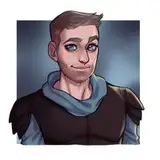
The next thing is breaking down the smaller details. This step was bit harder to explain in my opinion but, I thought about the poly work do when making 3D models. By using triangles and diamonds to form a 3 Dimensional shape -- you can achieve a specifically look and map out certain details . For example, in the images with leon (Leo), I rounded out the sharper/pointy angles I create using the triangles. This is also helps with identify the where you should highlight and apply shadow.
 Now I had to figure out how to explain both poly + lighting and shadows because again you can use them to map those details. Now after identifying where the light hits a model. The best way to do so is gradient, and remember that the highest point usually is the brightest.
 Now a lot of people would also want learn how to further push their breakdown. I would always mention the step (1) Stickman method, Next breaking down the smaller details ( nose, mouth, eyes, eye mask and etc) by using the poly method, then defining those poly shapes and translating them into 3 Dimensional shapes to flesh out those details.
  After making cleaner line work, this is where I would use and can apply the light and shadow mapping I did the under layers. I will say I feel like I'm skipping a few step that aren't so self explanatory. But, as I get through 2025 I will have better notes and ways to explain. Hopefully those that us my ABD will leave me notes or even have questions so I can properly improve.