A Fairly Reasonable Crashout (RWBY Adam SI) ch 19 (DEFUNCT TO CH 51)
Added 2025-05-12 09:29:48 +0000 UTCShe yawned. Medea Argonid sat up with a grunt, scratching the back of her neck with blunt, callused fingertips. Her nails rasped over the sl
She yawned.
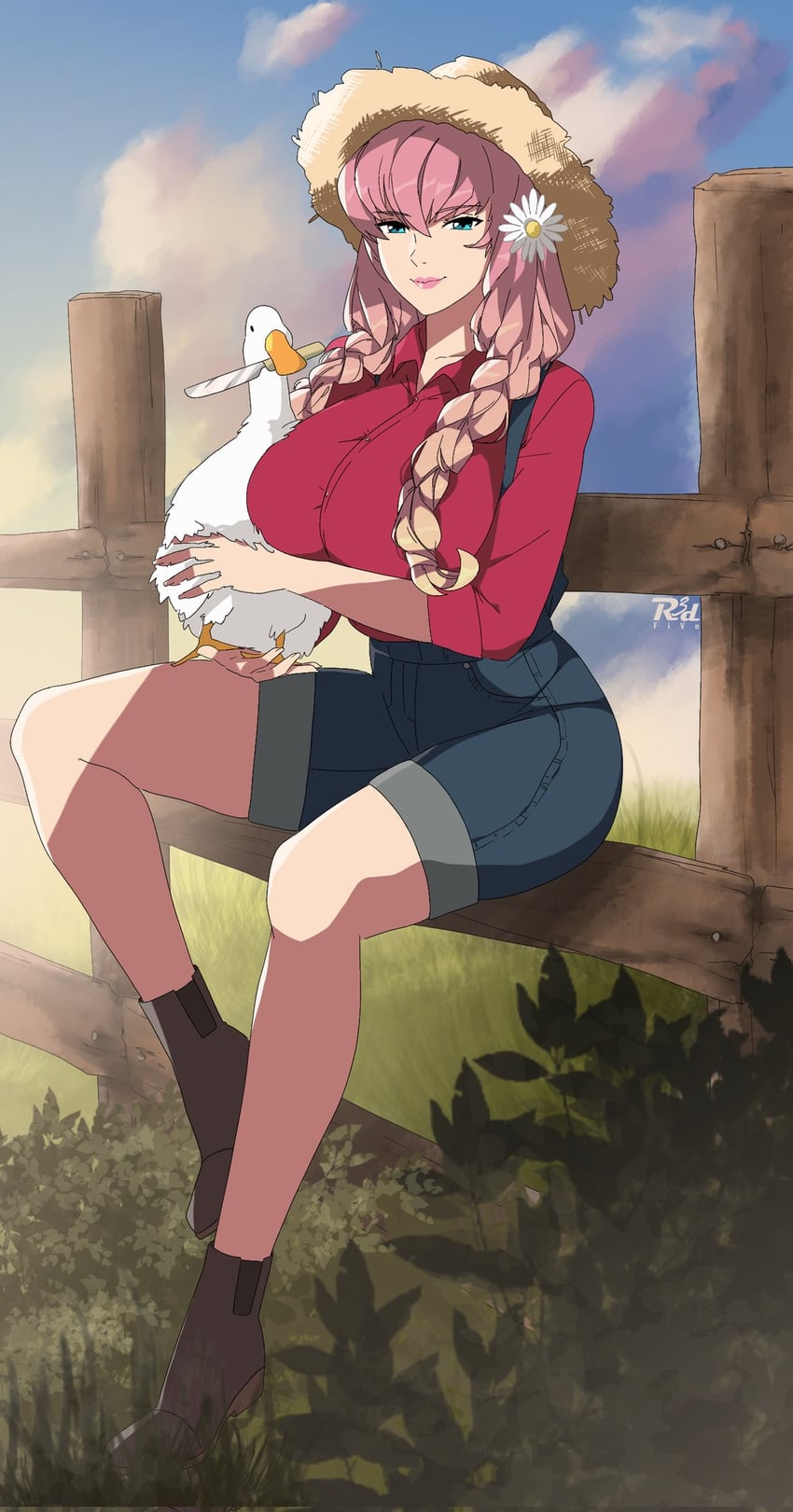
Medea Argonid sat up with a grunt, scratching the back of her neck with blunt, callused fingertips. Her nails rasped over the sleep-slick stubble along her nape, and the cot beneath her gave a creak like it resented being disturbed. Wood groaned, canvas shifted, and her body—built like the statues in the old temples, hips wide, thighs thick and strong as tree roots, arms corded with muscle beneath sun-burnt skin—stretched out of sleep like a beast rousing from winter.
The mirror above the washbasin caught her in the slant of first light, the kind that slipped in slow through crooked shutters. It laid stripes across her bare shoulders, the long, muscled curve of her back, and slightly paunchy stomach. Not round, no. But not as flat as it used to be.
She frowned.
The lines were deepening when they were still youthful. Gods damn it. She still had one thing to hold on to however. Her hair was still red, gloriously red, defiant red. She grunted and began combing through it with her fingers, tugging out the knots until she hissed. She twisted it tight into a long braid, binding it with the same rawhide she'd used for the last ten years—blackened, sweat-glossed, still holding.
She reached for the jug beside the door and drank deep. Rainwater, still cool from the barrel, sharp with the taste of tin and damp leaves. She wiped her mouth on the back of her hand, pulled on her shirt—worn cotton, loose, half-buttoned, clinging where it stuck to her chest, nipples stiff in the morning chill.
No bra, not yet anyway.
She glanced at herself back in the mirror. "You still got it, girl," she told herself. "You're still you. You're still hot."
She grinned, throwing finger guns at her reflection, before turning out of her room.
Barefoot, she padded down the stairs. Argos stirred on the rug by the hearth, lifting his massive head just long enough to acknowledge her existence.
"Morning, you lazy bastard," she muttered, ruffling one of his ears as she passed.
He huffed and slumped back into his dream. "I'll feed you after the mail," she called back."
A doggish yawn was his reply.
The house smelled like oil and woodsmoke, like her late husband's boots and her own sweat pressed into the floorboards. The farmhouse had stood for three generations, grey as bone, patched with iron and stubbornness. It didn't love her, not exactly—but it hadn't thrown her out either.
It had belonged to him but it was hers now, an inheritance from a man who had everything he could ask for but nothing that satisfied him. And it would stay hers unless she gave it to someone or died.
Outside, the air was still cool, the kind of cool that wouldn't last past breakfast. She stepped onto the porch, the boards shifting under her weight.
She lingered there, letting the morning wrap around her like an old blanket. The air smelled of dew and earth and of poplars sweating sap.
And sheep.
Thunk.
Again. The dull knock of some idiot lamb crashing into the paddock gate like freedom would greet it on the other side.
"Fucking sheep," she muttered, and made her way toward the mailbox down by the low stone wall, kicking a few loose pebbles as she walked.
The box, dented and leaning, squeaked open. Inside, the usual: order forms for wheat, bacon, and dry goods. Every single one addressed to her husband, like city folk couldn't bring themselves to deal with a Faunus widow. It was easier for them, she supposed, to pretend he was still alive and she was just the housekeeper.
She shook her head and shuffled through the rest.
Then her fingers stopped. A new envelope.
She smiled.
Cream paper, hand-folded. She opened it carefully, thumb brushing the ink like it might smudge.
Dear Auntie,
I'm married now. Pasiphae. She's about yay height and one hell of a cook.
I'm finalizing the paperwork to get us both out of Nicolasburg.
I hope to see you soon.
—Adam Taurus
Medea huffed softly, smile lopsided.
Ercole's boy. She hadn't seen either of them in years. More Ercole than Adam, an only picture of him was a red-faced toddler smashing his face into a berry pie.
She folded the letter neatly and slid it into the pocket of her shirt. She wanted to reply. She wouldn't, not yet. But she wanted to.
Another envelope caught her eye.
The smile dropped off her face like ash.
Thick cream paper. Wax-sealed in deep red. She knew the sigil—an old Argonid crest, a ship on black waves.
Her lips curled. But she opened it anyway.
You will vacate our family's ancestral property immediately.
That it should fall into the hands of a faunus witch is a disgrace to everything the Argonid name once stood for.
We know the truth.
If the legal avenues continue to fail us, we will pursue other means.
Be smart. Leave!
—Pelias Argonid
Her fingers tightened slowly until the page crackled. The paper crumpled in on itself, her knuckles whitening as she clenched it into a fist.
She turned, stepped back inside, walked straight to the stove, and dropped the letter into the iron maw.
Whuff.
The paper curled and flared, blackening like a moth. She watched until nothing was left but ash.
She didn't spit. She didn't curse. She just stood there until the flames shrank back into themselves.
Then she stepped back outside.
The sun had risen higher. The fields glistened. Rows of green unfurled before her—lettuces trembling in the wind, roots drinking deep. She moved to the shed, took her hoe, slung it over her shoulder, and headed toward the eastern plot.
"Ho there, Medea!"
A voice, rough as bark, cut across the fence line.
She stopped and turned, hand shielding her eyes.
Old man Hunter trudged up the dirt path, wide-brimmed hat low, gait unhurried. Mara followed behind, barefoot and sturdy, dress soaked through at the back with sweat. Then there was Lu—gangly and grimacing, arms crossed, dragging his heels like the earth owed him something.
Hunter grinned, wide and shameless. "Got any use for strong hands and a good back? This one," he thumbed toward his son, "eats like a king and works like a crippled mule. Time he earned his keep—with a wife."
Medea laughed, sharp and low, leaning on her hoe. Her shirt clung to her chest, braid brushing against her spine. "You offering him to me again, Hunter? Godsdamn. Trying to get the boy killed?"
She turned to Lu, grinning like a wolf.
"I'd eat him alive."
Hunter only grinned wider. "That's the point, Medea. You'd sharpen him up. You'd keep him from dying dumb."
Mara elbowed him hard. "You stop selling our son like he's a sack of potatoes."
Medea let her eyes linger on Lu. He stared off into the distance. Always away. Like the sky owed him a life he hadn't earned yet.
She nodded toward the fields. "I've got crops ripening. Week from now I'll need help. If his hands aren't too soft, he can bring them by."
Lu scowled. "Do I get a say?"
"You get a say when you start buying your own food," Mara snapped.
"I don't want to pick vegetables," he muttered. "I want to go to Atlas. Air conditioning. Real tech. Real life. Or even Vale."
Hunter cackled. "Atlas? You wouldn't last a week. They'd have you on trash duty in a minute." He snorted. "Vale is worse. You think they're going to entertain a talentless Mistrali peasant like you?"
"It's not like here," Mara said, quieter now. Her voice dropped, and for the first time, her eyes darted toward the treeline. "It's boring, sure. But you're safe. Vale is stuffy and Atlas ain't so good now. Trouble's afoot."
Medea blinked. "Troubles?"
The breeze paused.
Even the sheep had gone still.
No one answered.
"You don't know?" Mara asked, voice lilting with gentle disbelief.
Medea shook her head, sweat already starting to bead beneath her braid. "I don't really bother with the news. Too much damn noise."
"Oh, well," Hunter chuckled, brushing dust off his shirt, "you should come with us. We're heading to the town hall for some papers. You could check the news there. Might be something exciting for once."
Lu, arms folded, shifted his weight and spoke without looking up. "An Atlesian squadron got whalloped by miners. Whole detachment, gone. Supposedly the workers blew the mine as a last fuck you."
He winced as Mara immediately elbowed his ribs. "Lu, language," she hissed.
Medea barely heard her.
Miners?
She straightened. The hoe in her hand felt suddenly foreign. "Did they say the name of the mine?" she asked, voice quieter now, something tightening just behind her ribs.
Hunter scratched his jaw. "Somewhere up north… Nicolasburg, I think."
Her world stopped turning.
The hoe hit the dirt with a dull thunk. Her boots were already moving before it settled in the soil.
Nicolasburg.
Ercole.
Adam.
Her boys.
Her blood.
"Let me change," she said.
"We'll wait," Hunter nodded.
She stormed back into the house, boots pounding across the floorboards like a threat. Argos jolted up from the hearth with a low grunt, tail swishing, head cocked. He knew that pace. That scent. The hard, bitter thrum of blood rising.
"Nicolasburg," Medea muttered, voice hoarse, teeth grit.
The last time she saw of Ercole, she was warning him about going to Atlas for work. But he pushed on anyway, for his family. Adam was newly born, and he needed to support his family.
That was many many years ago now.
She threw open the wardrobe. Gone was the idle plodding of the morning, the lazy indulgence of bare feet and unbuttoned shirts. Her hands moved fast, yanking linen and denim aside until she found something clean, something tougher—fitted work pants, canvas-dyed deep brown, reinforced at the knees. A fresh shirt, sleeveless, tight across her chest, buttons strained. Her boots went back on with practiced violence, laces cinched.
She paused, eyeing a piece of cloth buried behind the workwear. Velvet-thick folds of deep blue shimmered faintly beneath the dust. She reached in, fingers brushing against the fine embroidery—threaded gold, stars and olive leaves stitched along the hem like a night sky clinging to dusk.
She shook her head.
Now was not the time for old memories.
She turned out of her room.
Argos greeted her.
"You're staying," she said without looking at him. "Keep the damn place alive. And if Pelias comes sniffing, you take a piece of him."
The dog gave a short, furious huff.
She knelt, grabbed his head, and pressed her brow to his. "I'll be back soon."
She grabbed her coat and stepped out the door.
Hunter was still there, mouth half-open mid-comment. Mara looked startled. Lu, sulking, kicked a stone and muttered something under his breath.
"Let's go. Town hall. Now."
Cius was waking.
Stone-paved streets rang with the clatter of hooves and wheels, carts stacked high with crates of lemons, olives, and clay jugs clinking like chimes. Linen awnings rippled overhead, strung between archways and columned verandas where flower pots hung in lazy defiance of gravity. The buildings—pale limestone and sun-dulled marble—climbed the hillside in a scatter of red-tiled roofs and vine-choked balconies. Their shapes weren't planned, they grew, layer by uneven layer, like the town itself had been poured over the earth and left to settle.
Southern Mistrali architecture dominated the eye: fluted columns crowned with laurel-carved capitals, mosaic floors glimpsed through open courtyard gates, frescoes in fading ochre and lapis peeking through grime like buried myths. Even the newer structures bent to the old rhythms—slanted arches, wide courtyards, and shaded porticoes built to drink in wind and spill out heat.
The Wall loomed beyond it all—curved in a broken crescent along the inland edge of the town, half-choked in ivy, its stones older than maps, older than the Kingdom. It wrapped around Cius like a crooked, sheltering arm. Beyond it lay the Mistrali Wilds: dark, dense, alive. And dangerous.
And in the other direction, the sea.
Between buildings, the curve of the coast gleamed like a blade laid flat—blue, endless, smelling of salt and iron and old stories. Stone staircases slick with moss ran down to the harbor where small sailboats rocked in the tide, white cloths stretched between masts like laundry hung by giants. You could taste the sea in Cius. On the olives. In the bread. In the air.
And in the rhythm of its people.
Humans and Faunus moved side by side. A lion Faunus in a sweat-darkened vest stood behind his fish cart, weighing a sea bream while a human woman bargained with one hand and pinched a sample with the other. A goat Faunus girl laughed with a baker's apprentice in front of a bread stall. A city guard leaned on his spear and chewed a fig without blinking at any of it.
To an Atlesian visitor, it would look like a fairytale—dangerously naive. But the truth was sharper. In the wilds, solidarity was survival. You didn't have the luxury of hating hands that helped haul water, till earth, or keep watch in the night. Grimm didn't check species before tearing your spine out.
In the wilds, you were meat. And if the meat wanted to survive, it should tolerate.
This wasn't utopia, not by any metric. There were towns where humans ruled everything and others where Faunus answered only to themselves. But along the coast, where sea and soil met, where old blood mixed with new, something else had formed—a kind of quiet, practical symbiosis.
Medea ignored all of it. The market stalls. The greetings. The looks.
"Wait up! Medea!" Hunter called, panting, trying to keep pace. "Gods, I'm not as young as I used to be!"
"My family is in there!" she shouted over her shoulder. "I need to know what's happened!"
The crowd thinned as she climbed the town hall steps two at a time. The din of Cius faded behind her like water pulling away from stone.
Out of the sea of antiquity that was Cius—its colonnades, its sun-blasted friezes and worn lion statues—only the town hall stood apart.
It had once been the seat of the Governors—the Argonids, her husband's kin. Back when southern men ruled in gold-threaded robes and drank pomegranate wine on high balconies while watching armies march below. Before the Color Revolution swept the world.
The Great War overturned the ancien regimes. The Song Dynasty fell in a storm of its own making—more violently even than the Eisfalks of Mantle. Sky Cloud Palace burned underneath the cries of Life, Liberty, and Expression.
Now, the Argonids a name on the history book, and the town hall wore the face of the future.
Steel beams reinforced old stone, new paint over old frescoes. And most importantly, a mini-tower that connected it to the larger and more expansive Cross Continental Towers, the telecommunications lifeblood of the modern age.
Medea didn't stop.
She hit the doors like a battering ram. They swung open with a crack, slamming into the interior walls. Her boots rang loud on marble tile.
And every head turned.
"Who's got a godsdamn update on Nicolasburg?" she barked, voice echoing through the hall.
A startled clerk—young, twitchy, dressed in ill-fitting office linen that made him look more like a student than a civil servant—rose halfway from behind a kiosk desk near the lobby wall. His eyes flicked between her and the guards at the side door, who wisely stayed where they were.
"Ma'am, uh, information's that way," he stammered, pointing with a quivering stylus. "End of the corridor, right side. Mistrali Herald archive section. They just got today's issue—hot off the comms."
Medea gave him a look that could peel paint, then stalked past without a word.
She turned the corner and saw it—Mistrali Herald, spelled out in curling script above a recessed archway lined with racks. A half-dozen civilians milled inside: two Faunus women whispering urgently over an open broadsheet, a courier thumbing through the classifieds, a silver-haired man adjusting his monocle as he read the headline aloud to no one.
Medea stalked past them all.
A fresh stack of papers lay spread like a sacrificial offering across the chipped table at the town hall's entrance, ink still sharp and wet enough to sting the nose. Medea stormed past the murmuring clusters of locals, snatched the top copy without a word, and flipped it open right there in the middle of the floor. Her fingers left damp smudges where they gripped the corners.
The front page was nothing but garbled city shit. Trade agreements. Dust tariff disputes. A headline about some Mantle magnate marrying a pop star. Garbage. She scanned for a hint of red ink, a bold block, a dateline. Anything. Nothing.
She flipped.
Second page. Editorial nonsense.
Flipped.
Crime blotter from Argus. Skimmed over it.
Flipped.
Back page. Sports. Ads. An opinion column about the state of society.
Flipped again. And again.
And then—tucked like a rot under the rind—she found it. Small print. Bottom corner. Not bold. Not front-page.
"SDC Under Investigation Following Nicolasburg Collapse — Sources confirm an Atlesian general has been relieved of duty after a catastrophic failure in command resulted in the loss of life and infrastructure in the northern mining settlement. The incident has prompted inquiries into the ongoing Faunus labor crisis. No survivor list has been released at this time."
That was it?
No names. No images. No body count. Just official smoke, scrubbed down and sanitized by the time it reached her little corner of nowhere.
"This tells me nothing," she growled, fingers tightening, crumpling the bottom of the page. She stared down at it, eyes dragging over the words like they might realign, offer something else if she looked long enough. But the silence gave no answers.
She held the paper to her chest and shut her eyes.
"Adam… Ercole… where are you?" she whispered.
No one answered.
Not even the wind.
+++
The sea had been calm for three days. The kind of stillness that made old sailors twitchy and gave greenhorns ideas about poetry. Endless blue stretched in every direction, the sky streaked with low, sullen clouds like bruises smeared thin over bone. No gulls flew this far out. The only sounds were the churn of the propeller, the occasional clang of a loose line, and the whisper of water splitting at the bow.
The Echo of Solitas was a roll-on, roll-off vessel—long, slow, ugly, and built for the kind of work no one talked about. She hauled cargo that didn't make it onto manifests. The kind of freight no port official looked at too closely. Cargo that wasn't always in crates. Cargo that sometimes breathed.
The crew knew better than to ask. The officers were paid not to care. The rest of the crew passed the time smoking, gambling, and pretending the hold didn't have extra shadows.
But for this sailor, he noticed. It was hard not to.
He'd seen shapes shifting under the tarps. Heard coughs that weren't mechanical. On quiet nights, when most of the deck was empty, he'd head down near the engines to smoke. That's where he caught glimpses of gold and green eyes watching from the dark. Huddled figures in thin coats, faces smudged with dirt, tails and ears tucked tight beneath ratty blankets. Always silent. Always watching.
Stowaways, technically. But they weren't there for free.
Someone had paid just enough to make it easier to look the other way. Refugees, maybe. Or escapees. Nobody said it out loud, but everyone knew.
Still, there was one among them the crewman couldn't ignore.
A woman.
Faunus, clearly—tiger-striped. Her hair was jet black, and skin a dark tan. She moved differently than the others. Didn't cower, didn't cling. She didn't even flinch when a container slammed too loud during the first rough night.
She was tall. Strong. Something about her squared shoulders made her look like she was still carrying something heavy. She wore a threadbare long coat that didn't fit right—probably stolen—and kept her distance from the others. When she did speak to them, they listened. She had the kind of quiet authority you don't earn unless you've made someone bleed for it.
Every day, after noon watch but before dusk, she'd climb up from the hold.
Not sneaking. Not asking. Just appearing on deck like smoke rising from the ship's belly. She'd stand by the starboard rail, arms folded, eyes scanning the horizon.
Always the same place.
Always the same stare.
The first time, the crewman had almost told her to shove off. Passengers—even silent ones—weren't allowed on deck during transit. But then she'd looked at him.
Not hostile. Not pleading. Just… looking.
And he backed off.
She had tiger eyes. Amber, sharp and narrow. Eyes that didn't blink fast and didn't miss a thing.
Today, he watched her again. She stood at the rail, the wind tossing her hair back Beneath the stillness, something in her seemed coiled.
She glanced back at him.
He froze.
He turned away.
+++
Sienna Khan took a deep breath.
Tigers are solitary creatures, spending most of their lives alone. Sienna shared that trait—not out of necessity, but by choice. Solitude gave her space to think, to plan, to stay composed.
The records at camp had shown that Adam's father was heading toward a Southern Mistrali town, Cius. When the explosion happened, he retreated to the only place that still held meaning for him: his family. Solitas held nothing for him anymore.
Her hands curled into fists, her nails biting into her palms as she bit her lip in frustration.
The Atlesians were investigating the situation, chaired by that one Councillor—Geyer. But the investigation was getting mired in red tape and bureaucratic delays. Sienna had no doubt that he was behind it.
Jacques Schnee.
Her mind flashed back to the speech he gave at the Atlesian Council Chambers. Just remembering it made her blood boil. It took everything in her not to start breaking things.
That slimy son of a bitch.
She inhaled deeply, her chest rising and falling as she forced herself to calm down.
Inhale. Exhale.
Relax.
Losing control wasn't an option—not here, not now. Especially not out in the open sea. Huntsmen and Huntresses were literal beacons for Grimm. An angry Huntress? That was like setting off fireworks in the night sky.
The humans aboard the ship mostly left her alone, save for one curious crewman who had been watching her for too long. She met his gaze and stared until he turned away.
Good.
The last thing she needed was more attention. She was already on edge, and the weight of being scrutinized only added to her growing unease.
Beneath that irritation, though, was something else—something far more unsettling. She felt lost. Her faith in the White Fang's current methods was shattered. How could she believe in their cause when it was clear their old ways weren't working?
Ghira's words echoed in her memory. Once, they had been a source of comfort, grounded in the belief that humans and faunus could be equals. Sienna had understood that his vision wasn't born from naivety, even if it seemed that way. It came from a place of pain and blood.
The Great War had devastated the world. Countless lives were lost. The old order had been overturned. In the aftermath, the faunus weren't granted freedom—they were exploited. They rebuilt the fields, repaired the cities, and performed the labor humans refused to do. Eventually, they revolted. And they won—not just their freedom, but a homeland. But the cost had been staggering. For every squad of humans they defeated, countless faunus had died. They were fierce fighters, yes, but ferocity only went so far against the technological superiority of their enemies.
It was from the ashes of the Great War, the Color Revolution, and the Faunus Rights Revolution that the White Fang was born. Its purpose was to bring change without bloodshed.
But that was then.
And this was now.
Sienna knew the White Fang needed something new. Something bold. Something violent. She had already made that choice—killing the Atlesian navy officer and a dozen others had only confirmed it. But she didn't want to kill for the sake of violence. She needed a plan. A strategy. Coherence before action.
She glanced down at her hands.
She didn't enjoy what she did.
But neither did she hate herself for it.
She felt… nothing.
A story came to mind—something a Faunus veteran had told her during the Revolution. His first kill had been a young Valean soldier. He stabbed him clean in the stomach and watched him die. The veteran had admitted he'd been so terrified afterward that his hands wouldn't stop shaking.
Sienna? She didn't shake. She didn't hesitate. She simply accepted the kill and moved on.
Should that disturb her?
She wasn't sure.
Was this who she was?
A murderer?
No.
Murderers killed because they wanted to. She killed because she had to. Those Atlesians? They had bombarded her people without mercy. Most of them were going to die from their injuries anyway.
This wasn't cruelty. This was justice.
It was for a righteous cause.
Was it wrong to fight for your people?
No.
It wasn't.
Sienna reached into her pocket and pulled out a photograph. It was from her younger days, a celebration of the White Fang's anniversary. Her thumb brushed over the image, tracing the faces of her younger self, Ghira, and Kali. They had seemed so towering back then, so invincible.
Now, they just looked like strangers.
She opened her fingers and let the wind take the picture.
No more.
No more of this.
She watched the photograph sail away, drifting to places unknown.
It was time to plan. Violence was the way forward—she had no doubts about that. But how? She needed to think of something before the next White Fang summit. Transporting Adam's unconscious body to his relatives wasn't her only purpose for heading south. The regional leaders were gathering to report their progress, and Sienna would be there. While the others wasted time droning on about their useless rallies, she would take the opportunity to make her position known.
This was her chance to move closer to the Supremo's seat.
She certainly had the fire for it. But not exactly the political capital or goodwill. She needed an argument that would propel her forward.
But how would she convince them? How would she frame her vision in a way they would follow, not out of fear, but out of belief?
Sienna closed her eyes and took a deliberate, measured breath.
Inhale. Exhale.
She needed clarity. Focus. The right answer was there, lingering just beyond her grasp, but it was as if her mind had to sift through the noise of the past to find it.
And the more she let herself think, the clearer the answer became.
She turned from the deck, the cool sea breeze brushing her face, and descended into the ship's interior. The corridors, dimly lit and utilitarian, felt almost claustrophobic. She passed by members of the crew, their tired gazes flicking toward her before retreating. Neither party acknowledged the other. She rounded corner after corner, her boots clicking against the metal floor, until she reached a compartment hidden deeper within the ship.
It wasn't luxurious, but it was spacious enough to serve its purpose. The room was quiet, filled with the soft breaths of her men and the refugees they had taken in. They rested on cots, their exhaustion palpable even in sleep. It was a rare moment of peace, and they clung to it.
At the far end, a cot stood apart from the others, surrounded by medical equipment. The occupant of the bed lay motionless, his chest rising and falling in a steady rhythm.
Adam Taurus.
He had been unconscious since Solitas. That much wasn't surprising.
Aura—the manifestation of one's soul, the very essence that gave Huntsmen and Huntresses their strength—was a finite resource. It could shield, empower, and grant extraordinary abilities, but depleting it came at a cost. And Adam had pushed himself far past his limits.
But he did.
When Huntsmen and Huntresses suffered aura breaks, there was a cool-off period where they were out of it. The symptoms could closely resemble death—even to the point where some mistaken them for corpses. But eventually, their aura would regenerate, slowly knitting together the damage and, in part, healing the body. It was why "double-tapping" an aura-broken Huntsman was a grim necessity on the battlefield. Only when their aura was completely obliterated, and their body left unprotected, did they truly fall.
In that one instance, demigods and demigoddesses were made mortal.
That aside, she had given her aura to the greedy bastard.
That implicated something to Sienna.
If that could be developed, if that raw potential could be refined and pushed to its limits, Adam Taurus could become a nightmare. A force unlike anything the world had ever seen. He was already dangerous enough as he was—a fighter who combined precision, skill, and unrelenting fury. But with a pool of aura this deep, he could outlast nearly any opponent. He could take hits that would kill others, keep fighting long after everyone else had fallen.
He could become unstoppable.
Already, he was healing, and healing fast.
He could become their future.
She wasn't even thinking about his potential uses on the battlefield. The man clearly had leadership potential. He had held together a town of ragtag, uneducated miners against the might of Atlas without breaking under the pressure, without losing his nerve. If she could get him on her side, have him testify before the White Fang Council…
The potential for change was enormous.
Hell, he didn't even have to speak to make her point.
She had seen it—the brand on his back. The Schnee snowflake, burned deep into his flesh, a permanent scar that spoke louder than any words ever could. It was a symbol of everything the Faunus had endured, a reminder of the chains they still fought to break. If the Council saw that, if they understood what he'd survived, there would be no debate. No argument. He could sway them without uttering a single word.
But first, he needed to wake up. He needed to recover, to become strong again. Only then would she approach him. Only then would she get him on her side—one way or another.
+++
Medea wandered into the street, dust clinging to the sweat on her neck, her braid stuck to the back of her shirt like a wet rope. Her boots struck the cobblestones in slow, heavy beats, though the sound barely registered. Her thoughts were louder—thundering behind her eyes.
The paper was a joke. The Atlesian wire reports were worse—recycled press statements, half-hearted updates, committee quotes drowning in formalism but void of substance. All they mentioned was the emergency Council session and the investigation chaired by Geyer. Useless. Words wasted, and not a single mention of survivors. Not even a proper casualty list. Just damage control.
If she wanted the truth—no, needed the truth—she'd have to go to Atlas. Maybe even Nicolasburg.
Her mouth twisted. No chance in hell they'd let a anyone let alone a faunus woman anywhere near the ruins of a shattered mining site. Especially one steeped in military disgrace and political rot. Even if she found a ship or paid her way onto one, Nicolasburg was in the far north—a frostbitten speck on the edge of nowhere.
And worse: she couldn't leave.
She spotted a bench half-swallowed by vines and dropped onto it like a stone. Her spine slumped, legs sprawled without care, elbows resting on her knees. Her boots scraped the dirt beneath as her hands hung limp between her thighs. Around her, Cius buzzed with the hum of ships arriving. Two children bickered over a rock. A young girl swooned as flowers were handed to her. Life went on.
But if Medea vanished, even for a week, that bastard Pelias would be on her land faster than mold on wet bread. He was already watching, circling. All he needed was an excuse—a whisper that she'd gone, or worse, died—and he'd slither in with forged papers and a lawyer trailing like a carrion bird.
She rubbed her brow, growling softly.
What the hell was she supposed to do?
She couldn't leave. She couldn't wait. She couldn't trust the official word. But sitting still felt impossible—not when Adam might be lying in some hospital bed too broken to move. Or worse—buried in rubble, uncounted, unnamed, forgotten.
And Ercole? Gods. The thought of him wandering injured and alone, after all that…
Her fists clenched.
No. She had to do something. Anything.
She could reach out to her contacts. There were people she still knew, though the idea of dragging them into family business made her stomach twist. There was her family, and then there was that world.
But what choice did she have?
She groaned, rubbing the back of her neck, sweat-damp fingers brushing over her braid.
Then came the sound of clattering wheels.
Clink. Rattle. Creak.
At first, she ignored it. Cius was busier now with more ships arriving—more traffic, more wagons, more cheap metal carts hauling who-knew-what from port to market. She hunched deeper into her slouch, boots splayed, braid sticking to her neck, her face set into the universal expression of someone too tired to care.
The cart got louder.
And slower.
Sienna Khan felt off.
She stood in the middle of the cobbled street, her golden eyes flicking from the colorful shopfronts to the mingling crowds of humans and Faunus. She hated how quiet it was. Not literally quiet—Cius hummed with the noise of arriving ships, merchants hawking wares, and children darting between carts—but quiet in the sense that no one was screaming. No one was fighting. No one looked like they wanted to kill each other.
Compared to Solitas, it was unnatural.
She tightened her grip on the cart's handle, the wood groaning faintly under her clawed fingers. Behind her, her crew shifted uneasily, muttering to one another in low voices.
"This can't be right," one of them said, voice hushed. "We must've taken a wrong turn… This place isn't real."
"It's real," Sienna snapped, though the words tasted bitter. "Keep moving."
The cart rattled forward, its squealing wheels cutting through the town's strange harmony. Sienna's ears twitched, catching snippets of conversations as they passed—a human baker chatting amiably with a Faunus customer, a pair of human children playing tag with a Faunus boy, a human florist handing a bouquet to a young Faunus woman. No tension. No fear. Just… coexistence.
Her stomach churned.
"This doesn't make sense," one of her crew muttered beside her. "Never seen anything like it. Not in Atlas at least."
But they didn't have time to waste gawking. She turned her focus back to the cart and its precious cargo. The slumped figure buried under blankets and straw shifted faintly, though he didn't stir. Bandages covered almost every inch of his pale skin, and his red hair stuck out in uneven tufts.
Medea exhaled sharply, rubbing her eyes as she slouched deeper into the bench. The cart rolled past her, its wheels clattering loud enough to make her ears twitch. She glanced up briefly, her brow furrowing at the sight of the black-clad Faunus crew. They looked utterly out of place, like predators lost in a meadow.
The tiger-striped woman at the front caught her attention for a moment. Medea's gaze flicked to the cart itself. Crates, sacks, and… something else. A body wrapped in blankets.
What?
What the fuck?
Medea blinked, sitting up straighter on the bench as the cart rattled closer. She waved a hand toward the tiger-striped woman at the front, her voice cutting through the buzz of the street.
"What the hell? Is he alright?"
Sienna stopped in her tracks, eyes narrowing as she took in the slouched woman with the sweat-slick braid and weary expression. She didn't recognize her—but something about the question, casual and cutting, scraped at the back of her nerves.
"He's fine," Sienna replied, her voice clipped. "As fine as anyone wrapped in bandages can be."
Medea's brow creased. She leaned forward, elbows on her knees, gaze flicking between Sienna and the cart. "Looks like he's seen better days."
Sienna's tail flicked once, sharply, but her expression didn't falter. "He's alive. That's all that matters."
"Uh-huh." Medea's tone was skeptical, her eyes lingering on the cart and the red-haired man. From a purely aesthetic's point of view, he looked rather nice. She turned back to Sienna. "You're a long way from… wherever you came from."
"And you're a little too curious."
Medea raised an eyebrow at that, a faint smirk tugging at the corner of her mouth. "Curiosity's a survival skill around here. You lot look like you've never been to Cius before." She gestured vaguely at the bustling street. "Lost?"
Sienna bristled, though she kept her composure. "We're fine."
One of Sienna's crew muttered behind her, "We're not fine. We've been walking in circles for an hour."
"Shut it," Sienna hissed over her shoulder before turning her attention back to Medea.
Medea chuckled softly, shaking her head. "You're definitely lost." She leaned back against the bench, crossing her arms. "Where are you trying to go?"
Sienna hesitated. She didn't trust this woman—her easy smirk, her too-sharp eyes—but something about the way she carried herself felt oddly familiar. Practical. Grounded. Maybe even… reliable.
Still, trust wasn't something Sienna handed out freely.
"That's none of your business," Sienna said flatly.
Medea shrugged. "Suit yourself, lady. But Cius isn't exactly laid out in a straight line. If you're looking for someone or something, you're better off asking for help than wandering around like a pack of lost dogs."
The crew shifted uncomfortably at the word "dogs," but Sienna didn't flinch. Instead, she studied Medea for a long moment, weighing her options.
Finally, she relented—just a little. "We're looking for someone."
"Not much to go on." Medea gestured vaguely toward the town hall down the street. "You'll want to check the registry there. They keep records of residents, visitors, all that."
"There are humans inside," one of Sienna's crew muttered darkly.
Medea raised an eyebrow. "There are humans everywhere. Welcome to Cius."
Sienna ignored the jab, her voice sharp but controlled. "We're not looking for a human. We're looking for this man's relative. He has an aunt here, apparently. Lives in Cius—married, we were told."
"Huh." Medea tilted her head, her smirk returning. "Related to him, huh? Must be an attractive aunt."
Sienna stared at her, unimpressed. "Right. Tell me, do you happen to know a Medea Taurus?"
Medea froze, her smirk vanishing as the words hit her like a hammer.
"...That's me."
Sienna blinked. For a moment, her fierce composure cracked, her eyes widening.
"What."
The two women stared at each other, the silence stretching awkwardly between them. Medea's gaze flicked to the cart again, her stomach twisting as realization dawned.
The bandaged man. The red hair.
Medea's breath caught in her throat, her mind racing as she stared at the unconscious figure in the cart.
"Adam?" she whispered, her voice barely audible. Then louder: "What happened to him?"
Sienna's lips pressed into a thin line. "Atlas."
Medea's fists clenched at her sides, her thoughts spiralling. Adam. Here. Broken. And these strangers had brought him to her doorstep.
"Why didn't you say something earlier?" Medea snapped, her frustration boiling over.
"You didn't exactly roll out the welcome mat," Sienna shot back, her tone sharp but not unkind. "And honestly? You're not what I expected."
Medea narrowed her eyes. "Yeah, well, you're not exactly what I expected either, lady."
Sienna's ears flicked sharply.
They stood there for a moment, tension crackling between them, before Medea let out a long breath and rubbed her temples.
"Alright. Let's get him back to my property," she said finally, her voice softening just a fraction. "We'll figure this out."
Sienna nodded, motioning for her crew to follow as they pushed the cart forward.
+++
"So, what the hell happened?"
It was still hard to believe that this woman—a crass, foul-mouthed old hag—could possibly be related to Adam. He was composed, concise, dignified.
His aunt, though...?
A literal country bumpkin.
They were inside her farmhouse now. Adam was upstairs, resting in one of the bedrooms, watched over by one of her men. Sienna and the others lounged in the living room of the expansive home. Despite its size, Sienna couldn't help but notice the signs of neglect: fields left untended, patches of wear and tear that begged for repairs.
Medea entered, carrying a tray of glasses filled with lemon iced tea. The ice clinked softly as she set it down, and the other Faunus, accustomed to the biting cold of Solitas, accepted the drinks eagerly. Sienna took one as well, though she only held it, her thoughts elsewhere.
"Nicolasburg happened," Sienna began, her voice steady but grim. She took a glass for herself, staring into it as if she could see the past swirling in the condensation. "As far as I know, it started as a pay dispute. By the time I got there, they were already in control of the town."
"By the time you got there?" Medea asked, her brow furrowed. She studied Sienna for a moment, then her eyes narrowed as realization struck. "Wait... you're White Fang."
"Guilty as charged," Sienna admitted with a faint shrug, her tone unapologetic. "But if you think we had anything to do with the uprising, you're wrong. I only learned about it days later."
"Bullshit," Medea snapped. "You're activists."
"It does sound unbelievable," Sienna conceded, her tone calm but resolute, "but it's the truth. When Adam wakes up, he can confirm it."
"That still doesn't explain why he looks like hammered shit," Medea shot back.
Sienna suppressed a groan, muttering under her breath. Gods, this woman. She couldn't fathom how Adam was related to someone so... coarse.
"As I said—Atlas happened," Sienna continued, her words slower now, her voice tightening. "A nearby town was inspired to rebel, and the Atlesian general didn't take kindly to that."
She set her glass down and leaned back, her eyes distant, as if the memories were clawing their way to the surface.
"When I got there, it was already a disaster. The mountain was smoking, split open like some festering wound. The valley below was on fire, the forest gone—just ash and embers. And your nephew..." She paused, her voice softening. "I found him in a body bag. I didn't see him fight, but if his aura was broken so badly it destroyed the infusion kit... that just means he fought like hell."
Medea's breath hitched, her face tightening. Her blood. Her family.
Sienna's gaze hardened, her voice growing sharp with conviction. "But I promise you this—we will get justice for Nicolasburg. Atlas will pay. And Jacques Schnee will pay."
Medea's eyes snapped to hers, disbelief flashing across her face.
"Really?" she asked, her voice laced with tentative skepticism. "And how do you plan on doing that?"
Sienna met Medea's gaze, unflinching, her voice steady as steel.
"By striking where it hurts most." Her fingers tapped lightly on the arm of her chair, her calm exterior betraying the fire simmering beneath. "Jacques Schnee thinks he's untouchable, sitting in his ivory tower, counting his blood money. But he's wrong. His empire is built on the backs of Faunus labor, on the suffering of our people. And we'll tear it down, piece by piece, starting with his supply lines."
Medea raised an eyebrow, skepticism etched on her face. "You're talking sabotage?"
"Sabotage, boycott, destruction—whatever it takes," Sienna replied coolly. "The uprisings in Solitas are proof enough that the people are ready to fight. Nicolasburg was the spark, and Atlas just poured gasoline on the fire."
Medea crossed her arms, leaning back against the wall. "You make it sound simple. But you're going against Atlas. Against the Schnee Dust Company. That's not just a giant—it's a damn monolith. And they don't just roll over."
She paused, her eyes narrowing. "And where does my nephew fit into this? Hmm?"
Sienna's lips pursed. Medea's tone turned colder.
"I'd like to believe you brought him all the way here out of the goodness of your heart," Medea said, her voice dripping with sarcasm. "But we both know this isn't that kind of world."
"No, I didn't," Sienna admitted plainly, her gaze steady. "When he wakes, I intend to secure his aid. He's incredibly powerful and leadership material. It would be a waste not to latch onto that."
Medea stared at her, her expression unreadable. Finally, she snorted. "At least you're honest. If you'd tried to lie, I would've kicked you out. Or worse."
"I owe him," Sienna replied firmly. "If he wants to be left alone, I'll respect his wishes."
And she would. But not before at least trying to convince him otherwise. It was worth a try, after all.
"Right. And where is Ercole? Pasiphae?" Medea asked suddenly, her tone shifting.
Sienna leaned back in her chair. "Ercole's still on his way here. He, Caestus, and Atlanta took a longer but cheaper route back. As for Pasiphae..."
Her voice faltered slightly, her gaze lowering. "She likely perished in the blast. We tried to climb the road toward Nicolasburg, but the ground itself felt unstable, and the fires..."
Medea pinched the bridge of her nose and sighed, her voice tired. "Figures. It's a damn curse in this family that our spouses die early."
Sienna blinked. "You're married?"
Medea nodded. "Yes. This house and property belonged to my husband. When he died, he bequeathed it to me."
"Goodness, how did you two even meet?" one of Sienna's men asked, curiosity getting the better of him.
Medea smiled faintly. "Oh, in Vale. We met adventuring. Back then, I was a newly licensed Huntress. He wanted to broaden his horizons."
A tale as old as timem surely, Sienna thought, glancing down at Medea's chest.
"Any children?" the same warrior asked tentatively.
Medea's smile faltered. Her hand drifted to her stomach, her fingers pressing there gently.
Oh.
"I'm so sorry," he said quickly, his face flushing with embarrassment.
Medea waved him off, laughing softly. "No, no, it's fine. I've come to terms with it." She tilted her head. "Rather polite for a hulking activist."
"Well, my mother raised me right," he said, scratching his chin awkwardly before sitting back down.
"I can see that," Medea replied gently. She turned to Sienna. "So, how long do you all plan to stay?"
Sienna considered this. "For as long as it takes for your nephew to wake up. I feel responsible for his well-being, after coming this far."
"What are you, his wife?" Medea quipped.
Sienna paused.
"Well, he's not exactly bad-looking..."
"I was joking."
"I wasn't."
The two women stared at each other.
Medea clicked her tongue. "I'd appreciate it if you didn't try to seduce my nephew."
"I won't," Sienna promised.
"That sounds like a lie."
"I'm not lying."
"Right."
The silence stretched between them before Medea clicked her tongue again, eyeing Sienna's group.
"I'm not exactly opposed to letting you all stay. Haven't had guests in a while anyway. But..." Her gaze lingered on them far too long, making Sienna shift uncomfortably.
"What is it?"
Medea smirked. "How do you all feel about fieldwork?"
Sienna frowned, her ears twitching at Medea's question. "Fieldwork?" she repeated, narrowing her eyes suspiciously.
Medea's smirk widened, her crooked grin practically radiating mischief. "You heard me. Fieldwork. You know—planting crops, pulling weeds, fixing fences, shoveling manure. That sort of thing." She gestured vaguely toward the window, where the fields outside swayed lazily in the humid breeze. "This place doesn't run itself, and since y'all seem to be planning on freeloading for a while, I figure it's only fair you earn your keep."
Sienna stared. "We are fighters, not farmhands."
Medea's golden eyes flicked to him, sharp and unimpressed. "The old Mistrali Legionnaires were not just soldiers but farmers and engineers too. If they can do it, so can you."
That was such a massive stretch, trying to compare either of them.
"Look here, chief, its simple. My house, my rules. You don't want to pitch in? Fine. There's the door." She jabbed a thumb over her shoulder. "You seriously don't expect me to host all of you while you pay nothing?"
That...was fair.
Sienna glanced around the room, taking in the exhausted, sweat-soaked faces of her comrades. None of them looked thrilled at the prospect of manual labor, but Medea had a point. They couldn't just sit around, draining her resources, while Adam recovered upstairs. And as much as she hated to admit it, the fields outside did need work. If nothing else, it would give them something to do while they waited.
"Fine," Sienna said at last, her tone reluctant. "We'll help." She shot Medea a pointed look. "But don't expect us to stick around and rebuild your entire farm. We're not here to save your livelihood."
Medea shrugged, unbothered. "Fair enough. I don't need you to save anything—just pull your weight while you're here." She pushed off the wall, heading for the door. "Now finish your tea and meet me outside. We've got a lot of ground to cover before sundown."
As Medea disappeared into the hallway, Sienna's men began muttering among themselves, their voices a mix of annoyance and resignation. The wolf faunus leaned closer to Sienna, his voice low. "Are we really doing this? We're White Fang, not... farmers."
Sienna shot him a look that silenced him immediately. "We're survivors," she said firmly. "And right now, survival means doing whatever it takes to stay alive. Even if that means getting our hands dirty."
The wolf faunus grumbled but said nothing more. The others followed suit, finishing their drinks in silence before reluctantly rising to their feet.
+++
The sun was still high in the sky when they stepped outside, the heat slamming into them like a solid wall. Medea was already there, leaning casually against a wooden post with her wide-brimmed straw hat tilted just enough to shield her. Beside her sat a rusted wheelbarrow, its paint long since peeled away, and an assortment of tools: hoes, shovels, and pitchforks. All bore the wear of years of hard use.
"Alright," Medea said, clapping her hands together with the smug energy of someone who wasn't about to lift a finger herself. "Let's get to it. You—" she pointed at the wolf faunus, who visibly flinched under her gaze, "—start clearing the weeds in the north field. And you two—" she gestured toward a pair of younger faunus, "—fix that busted fence by the chicken coop. The rest of you are with me in the south field."
Sienna folded her arms, her ears flickering irritably as she threw Medea a withering look. "And what exactly will you be doing?"
Medea grinned, her teeth flashing with amusement. "Supervising, of course."
By the time the sun dipped below the horizon, the group was thoroughly spent. Their hands were blistered, their clothes soaked in sweat and streaked with dirt, and their muscles screamed with aches they hadn't thought possible. Yet despite the grueling work, the fields bore the proof of their effort. The weeds were gone, the fences patched, and the long-neglected rows of crops bore newly planted seeds.
As they trudged back to the farmhouse, Sienna couldn't help but throw Medea a side-eye glare. The older woman walked alongside them, looking far too smug for someone who had spent most of the day barking orders with her arms crossed.
"You're enjoying this, aren't you?" Sienna muttered, her tone dry.
Medea smirked, that same infuriating grin plastered across her face. "Maybe a little. But hey, you all did good work. I might actually get this place back in shape faster than I thought."
"Don't get used to it," Sienna warned, her voice clipped. "We're leaving as soon as Adam's well enough to travel."
Medea's smirk faded slightly, replaced by a more serious look. "If he wants to travel with you," she shot back, her tone pointed. "He ain't your boytoy, Sienna. He ain't your errand boy either. He's his own man."
Sienna bristled slightly at the comment but said nothing. Medea wasn't wrong, of course, but there was more to Adam than even she could fully understand. There had to be. He'd said too many... interesting things—things too sharp, too calculated for someone who grew up in the mines. He didn't carry himself like a browbeaten faunus, beaten down by years of hard labor. He carried himself like someone with a plan.
"I'll try my hardest to convince him," Sienna said after a moment, shrugging off Medea's pointed tone. Then she clicked her tongue in annoyance, glancing down at her soaked and dirt-caked clothes. "Damn it, I'm disgusting."
"I've got some extra clothes you can borrow," Medea offered, her eyes flicking briefly over Sienna's lean frame. "No clue if they'll fit you, though."
"I'll make do," Sienna replied, refusing to dignify the not-so-subtle jab at their differing builds.
As they reached the porch, the two women sat down, the sun now a deep orange, sinking low in the sky. The others shuffled inside, too tired to do anything but collapse. Medea handed Sienna a glass of water, her sharp gaze softening slightly as she studied the tigress.
"So, White Fang, huh?" Medea said, breaking the silence. "How does a girl end up in that?"
Sienna leaned back, her ears twitching thoughtfully. It wasn't a question she was used to answering—not one she'd ever really shared before. For a moment, she hesitated, her claws lightly tapping against the glass she held.
"I was orphaned after the Great War," Sienna began, her voice steady but tinged with a distant sadness. "I don't even remember my parents. I was just a cub when they sent me to Menagerie as part of the relocation program for faunus children."
Medea nodded silently, her expression unreadable but attentive.
"I'm the new generation of Faunus," Sienna continued, her gaze fixed on the horizon, where the sun bled its last colors into the sky. "Born free. I never knew chains or a master's whip." Her voice softened. "But I can still feel the weight of it. The scars around our people."
Medea's eyes softened as she listened, her expression betraying a flicker of sympathy.
"I can't step aside," Sienna said, her voice hardening as her gaze shifted to Medea. "Not when our people are still treated as second-class citizens. Not when places like Nicolasburg exist."
Medea leaned back in her chair, exhaling slowly. "I get it," she said after a moment. "It's not easy, carrying all that on your shoulders. But it's a heavy road you're walking, chief. And it doesn't always lead where you think it will."
Sienna met her gaze, unflinching. "Maybe not. But I'll fight for it anyway."
The two women sat in silence for a while after that, the only sounds the distant chirping of crickets and the faint rustle of the fields in the evening breeze. For once, Medea didn't have a snarky comeback, and Sienna allowed herself a rare moment of quiet reflection.
Then, a crash echoed, followed by rapid, angry barks—and screaming.
Adam's screaming.
Before Sienna could respond, Medea shot up from her spot like a coiled spring and stormed inside.
Sienna followed, confused and agitated. "What the hell is going on?" she yelled, barely keeping up as the older woman shoved the farmhouse door open with enough force to make it slam against the wall.
Inside, Argos was in Adam's room, rigid at the foot of the bed, his barking relentless and desperate. The faunus guard Sienna had assigned to watch Adam hovered near the doorway, looking both exasperated and unnerved, flinching every time Adam screamed.
"I was just about to—" the guard stammered, but Medea silenced him with a sharp hiss.
Sienna pushed past her, narrowing her eyes at the scene. Behind her, others began filing in, their faces etched with equal parts concern and confusion.
"Sienna, we need to get the equipment back out!" someone called urgently.
Sienna ignored them, hurrying to Adam's side, her hands trembling as she tried to secure him. His body twisted and convulsed violently, his face contorted in agony.
"Leave him alone!" Medea barked, her voice cutting through the chaos like a whip. "Everyone, shut up!"
The room fell silent except for Adam's screams and the low growl still rumbling from Argos. Medea stepped forward, her expression grim, her movements deliberate as she approached the bed.
Without hesitation, she yanked the blanket off Adam.
The sight made Sienna's breath hitch.
On Adam's bare chest, just above his heart, was a black, throbbing growth that pulsed a deep, angry red. Tendrils of inky blackness stretched out beneath his skin like veins, writhing in time with the pulsations. The air around it shimmered faintly, radiating a sickly heat that made the room feel heavier.
"What the hell is that?" a faunus whispered, their voice trembling.
Medea's voice was tight, but steady as she answered. "Grimm."
She paused, her gaze fixed on the pulsating mark.
"A Nightmare Grimm."
+++
A/N: Vol 2 start.
Comments
More. MORE. More Hag-gling between Sienna and Medea please holy that's gonna be great. Can't wait to see what fresh new horrors await our protagonist, that's gonna be fun. Btw, and sorry if i just misunderstood or missed it, but what are/were Medea's faunus traits?
Quato
2025-05-12 17:13:27 +0000 UTCWhen bro crash out, bro really crash out
Feng Lengshun
2025-05-12 10:51:46 +0000 UTChttps://rwby.fandom.com/wiki/Nightmare These are nasty ass things, on god.
Pastah_Farian
2025-05-12 09:59:43 +0000 UTCDamn, Adam can't get even rest in his sleep
Tom Tat
2025-05-12 09:57:15 +0000 UTC