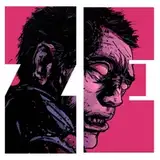
Zombie Exodus Novel, chapter 1, Abigail
Added 2018-12-08 02:29:44 +0000 UTCAbigail awoke in the apartment bedroom, news blaring on the television and the sound of a helicopter soaring outside. The party ended late last night from what she could remember in flashes of moments: drinking games, too-loud music, wild dancing. Her mouth tasted like mud and the Jameson whiskey hangover kicked the back of her head.
She stood up and had to sit back down. The room spun on a rollercoaster ride. Images of last night flashed in her mind like a slow-moving reel: chaos in the streets, her sister packing suitcases, and police cars lining up along the major avenues like makeshift border crossings.
On the TV, a middle-aged anchor with bloodshot eyes and a lit cigarette in his hand yelled the news. Smoking on TV? Abigail wondered if she was transported to the 1960s.
"The CDC via the White House has just announced over 20% of the world is infected with Virus Zeta. Reports from around the globe detail a massive spread of this lethal infection that attacks the brain and nervous system, quickly disabling the victim and in effect re-animating the body of the afflicted. Moments ago, we heard from Dr. Anthony Willis who has treated the infected and stated they show deterioration of the bone and muscles, a yellowing of the skin, lack of fine motor abilities described as a drunken walk, and inability to speak."
Abigail glanced around the apartment hoping to see Emma. She leaned over and pushed buttons on the remote until the volume on the TV lowered. Her eyes adjusted to the glowing box, and a moment later, the lights flickered overhead in quick flashes like Morse Code. The TV fizzled with static. She felt her fist clenching and her legs tense. Her body told her to move, to run. What’s the danger? she wondered and rubbed her hands together to calm down. Nothing else warned her of trouble, and the quiet of the room was only disturbed by the TV static and the helicopter outside.
And then everything returned to normal: the lights, the TV, her heartbeat.
She stood from the couch and peeked through the window blinds. Seven stories up, she peered down on the streets below and the crowds of people roaming the streets and running and fighting. A police cruiser skirted on the sidewalk. A military truck lie on its side, flames shooting from the engine block. A news helicopter circled in the air, beaming a spotlight on a pack of looters tearing down the window display of the convenience store opposite the apartment building.
She remembered—the infection. Only days ago she first learned of the outbreak. Emma came home from the ER that night flustered and panicked. Reports from her colleagues spoke of a highly contagious virus spreading through Asia and Australia like a forest fire in a gasoline-soaked wilderness.
The lights flickered, and the television set dimmed and cut off. Pale light streamed in through the windows, casting a golden glow through the air which faded in the recesses of the apartment. Footsteps erupted in the hallway, and Abigail rushed to the door. Somewhere across the room, she had picked up a five-pound weight Emma used to exercise. She pressed her ear to the hard wood surface of the door. Silence.
She felt something a second later, a sensation deep and intense, like that first time she held a gun in her hand. A nervous energy flowed through her muscles and tendons. She ran to the bedroom and dropped the weight on the bed. Next to it, a note lay in the middle of a pillow. Enough ambient light spilled in through the bedroom window to read it.
Abigail
Sorry for not being here when you woke up. I am heading out to get some things before we leave. You were sick, so I didn't wake you, but the city is getting worse, and we need to get out. Be ready when I'm back!
Emma
She remembered now, though the memories swirled in the haze of her mind. Emma left the apartment last night to gather supplies. Abigail punched the wall. Why did her sister always plan for the worst? Had she stayed here, she’d be safe, not out there with the infected.
She looked around for her cell phone in the typical places: near the wall charger, between the couch cushions, and next to the coffee maker. Nowhere.
Her heart pounded, and her headache lingered from the hangover. The back of her throat itched, and she wanted to return to the couch and sleep off this feeling. But she would not stop now, not until Emma was safe. Abigail was never the responsible one, but she looked out for her sister. That was her contribution to that thing called sisterhood. Emma paid the bills and kept the heat on. She worked while Abigail went to school for journalism and supported her when she changed careers. Abigail repaid all of that by watching Emma’s back, not from bad men (though she dated a few) and nothing as insidious as drugs.
Abigail dashed to the bathroom and threw open the medicine cabinet. The prescription bottle sat there lonely on the top shelf, and she pocketed it. Emma left without her medication and would need it soon. Years had passed since she saw Emma off her meds. First the delusions would start. They would ramp up until the hallucinations overtook reality. The personality changes switched her from a well-adjusting, caring nurse to an anti-social narcissist.
Emma was out there somewhere in a dying city, her gas tank on empty. She needed to be found.
Back to her bedroom Abigail ran. She threw open her closet and changed from yesterday’s clothes to her work uniform: jeans, flannel shirt, thick sweater, steel-tipped boots. She opened her backpack and spilled the contents on the floor, refilling it with items she would need to find her sister and be prepared for whatever challenge she faced. In went her carpentry tools, a spare change of clothes, her favorite hammer. Her boss gave her that tool when she took over her own crew. In it went, and she zipped the bag and moved to the kitchen. A sandwich, two aspirin, a bottle of water—she downed them in succession. She made two more sandwiches and packed them along with a half-dozen bottles of water and the rest of the aspirins.
She left the apartment and locked the door and deadbolt. Cold air flowed through the hallway. Overhead lights flickered and buzzed like fly zappers, and a haze-like fog hung in the air. She smelled burning soup, and then she spotted a figure. He stood outside 7A, Mr. Connors’s apartment, though the figure’s height towered her neighbor. He faced away from her and wore a brown tweed jacket and business slacks, though they were frayed at the ankles. In fact, one leg was bent inward just below the knee and rotated counterclockwise a half turn. How can he walk like that? Abigail wondered.
“Hey, sir,” she called from down the hall. “Do you have a cell phone I can use? It’s an emergency.”
The figure hobbled around, taking short, rapid steps until he faced her. Even at a distance, she saw the yellowing of his skin, the dark lesions, and the stretched skin and angled bones of the face. She knew in an instance he was infected.
The figure opened his mouth and lapped out a thin tongue, more alien than human, and let out a screech more animal than man. He hobbled forward on twisted legs and then he galloped toward her, hissing, arms raised and fingers extended.
“Hold it right there,” she yelled, but the man kept running, teeth gnashing so hard the clicks could be heard yards away.
Abigail felt the keys in her hands and slipped one into the doorknob. She looked back to the charging man. She felt no fear, but her hands shook and mouth went dry. Her heart raced. Her eyes narrowed. In her mind, she measured the distance, his speed, and the time it would take to unlock the door. She had to make a decision.
She dropped the backpack from her shoulder and slipped open the outer pocket. Her hand felt around inside and caught the smooth wooden handle of the hammer. She heard the footsteps—the clomp of one foot and a drag of the next. The strobe-like hallway light caught the yellow of his skin and the deep red of his eyes. Strings of saliva ran from lip to lip, only broken by the worm-like tongue. As he drew near, his back arched as an animal preparing for attack, and Abigail tensed in response.
She swung the hammer in an arc and caught the man’s cheek. The tool shook in her hand, and the man’s head twisted from the impact. Momentum carried him past her, and he hit the wall shoulder-first and bounced back a giant step. He did not fall. A splatter of blood smeared across the wall.
Abigail jumped back and turned, one foot forward like a boxer, and she raised the hammer with arm outstretched. “Get out of here. I know you’re sick, but…”
The man screeched, eclipsing her voice. He rotated his torso and craned his neck, and once he spotted Abigail again, his body rolled to face her. His mouth opened, but the jaw bone slacked on the side where she struck him as if falling at the hinge. Elongated teeth jutted up and out, piercing the nearby flesh. A single finger extended, the nail molted over into something like a fossil.
He better stop, Abigail thought. He has to stop. Why isn’t he stopping?
The man came again, this time faster.
Abigail was no fighter, not in the traditional sense, but a bar-room-brawl here or roughing-up-a-mugger there. Being one of the only women on a construction site taught you self-defense and toughened you. When the man swung, Abigail deked right and brought the hammer around. The flat face struck temple bone, and this time the man dropped. His eyes rolled back, and he folded at the waist. Gravity did the rest. He fell to his side, facing the ceiling, mouth in what looked to be an involuntarily chewing motion.
She grabbed her backpack and stepped back, holding it to her chest, and held her hammer up. There was a bounce to her step; she was ready to swing. What do I do now? Did I hurt him? Of course I did, but how bad?
Flat on the ground, the man stirred. He curled and straightened his legs and they swung out and pushed on the ground. He’s trying to stand, she thought in a curious way and a worried way. She did not want to kill the man, but as he struggled to stand, arms and legs rigged like a corpse, she knew the choices were to stop him or to run.
“Stay down. I’m calling the police. If you get up, I’ll…”
As she spoke, she realized the stupidity of her words. She had no phone. Threats meant nothing to this man.
With a burst of motion, he reached for her, and his clawed hand gripped her ankle. She yanked to pull free, but she dragged him along, his grip a vice which squeezed tighter and tighter. He opened his jaw and leaned in.
“Stop,” she yelled and hammered down on his wrist, smashing the forearm and splintering off a sliver of bone. She yelled again and lowered the weapon, breaking the arm. Up and down the hammer moved, pounding the arm that held her. The man pulled on her ankle, unfazed by the blows of the weapon. His mouth moved closer to her leg, mouth open, teeth exposed. She called for him to let her go, but the man cared little for commands. He was driven by something else.
She fell to the side, and with an angry shout, she drew back and flipped the hammer. She swung and pierced the side of the man’s head with the hammer’s claw. It stuck in his head with a thunk, and he groaned and loosened his grip. Abigail tugged on her leg. With no resistance, her ankle flew back, and she tumbled. The man lie still, the claw of the hammer still wedged in his skull.
She pushed her back to the wall and took a series of deep breaths until her heart calmed down.