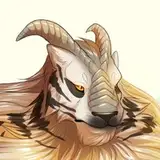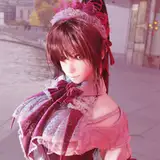
in the beginning of it all, the major gods were made from clay thrown on a potter's wheel and fired to life in the divine kiln. they were created in pairs, to embody complementary concepts and fill complementary purposes. none were good or evil, and each represented both positive and negative aspects of their domains. amongst them was ahmora, the god of the city, of science, law, and knowledge, but also of conservatism, stagnation, and detrimental perfectionism. he was paired with ubdyi, who embodies magic, the desert, intuition, and art, as well as chaos and catastrophe.
as a god of justice, ahmora had taught the first mortals to write. but even after their laws had been written down some people would still disobey them, and it displeased him. ahmora decided to create a god of vengeance, someone who could hunt down lawless mortals and harshly bring down justice upon those who would not live by it. he shaped a formidable creature out of clay, designing it to be a hunter who always slew its quarry, a predator who always caught its prey, a destructive force of nature who could destroy whole towns if need be.
ahmora placed the figurine in the kiln, but something went wrong in the firing process. his creation came to life, but when ahmora opened the door it spewed fire at him, as if he was its enemy rather than its master. what came out of the kiln was the first dragon, scales white as sun-bleached bone, hard spines along his back like extensions of the vertebrae, eyes pale as the moon. across his heart the clay had cracked in the heat, leaving an open scar extending across his chest.
his name was khuthlya, and he was still only a child, but his essence embodied the concepts of vengeance, hunting, violence, killing, and murder. the air around him seemed to vibrate with restless anger, and ahmora soon discovered that khuthlya would obey none of his commands. he had meant for the god of vengeance to be like a tool in his hand, a weapon of justice, but the child wouldn't let ahmora--or anyone else--control him. to make matters worse, a promise of terrifying destructive power nested in his soul, and ahmora feared what the white dragon might become if he was allowed to grow up. it seemed to him like the cracks across khuthlya's chest mirrored his soul. he was broken. incomplete. imperfect. dangerous.
ahmora meant to destroy him, undo what he had made, and create a new and better god of vengeance. but ubdyi stopped him, not out of consideration for khuthlya, but out of principle. gods can not and should not be so easily destroyed. ahmora relented, but refused to let the bone-white dragon live among the rest of the divinities. he banished the child to a realm of his own, a desolate landscape of cracked grey earth, withered white trees, and red rivers.
to offset the potential damage done in creating the broken god of vengeance, ahmora set about creating his complementary counterpart. made from fine and smooth clay, a gentle creature carefully fired in the kiln, no cracks or imperfections in sight. this was mezfirah, god of mercy, peace, forgiveness, empathy, and healing. he quickly became the apple of ahmora's eye, and grew up in the divine capital, surrounded by people who adored him.
khuthlya grew up alone. unwanted. abandoned.
time passed and the lonely child grew into a resentful teenager. there was no life in his realm, except the spirits of vengeance and hunting that began springing from his footprints in the dry soil, from beneath the shadow of his wings. but even the strongest among them knew to fear their god, who at this point knew only to hunt and kill. what else could he do with his bitter anger?
as soon as he started finding ways out of his hollow domain he ventured elsewhere, but found himself unwelcome in all other divine realms. he could only watch the capital from afar and sneak around the outskirts, where he first heard spirits whisper and gossip about mezfirah. khuthlya learned his 'better half' was living a life of happiness and abundance, that he was loved and appreciated rather than feared and rejected. he resented mezfirah for it, and despised ahmora.
the only one who cared for him was daiva, the goddess of truth, clear sight, and luck. when she looked at the pale dragon she saw what ahmora and the other's couldn't. destructiveness, yes, and perhaps future sorrows of her own, but also the potential for so much more. she let him visit her realm, the oceanic night sky, where khuthlya chased the stars through the deep. she was the only parent he ever had.
but her realm was not enough, nor did she manage to convince the other gods to let khuthlya into the capital. many among them believed ahmora's claim that the broken god was dangerous, volatile, and had no place among them. his own creator said that the cracks across his chest was simply the surface representation of his imperfect heart. nothing good would ever come of him.
the young god refused to stay put in his own lifeless domain. khuthlya turned his back on the life that was denied him and started exploring the countless realms hidden in the nooks and crannies of reality. he was a wandering hunter, a roaming predator. but the restlessness in his heart wouldn't settle, no matter where he went. it was as if something was missing, and to his great frustration he had no idea what.
resentful teenager grew into hateful adult, and his anger settled into something colder, something worse. just as ahmora had feared, he grew up powerful. the seeds of destructive potential bloomed into a raw kind of might that no other god could match except the gatekeeper, the watchful guard of the passageways between worlds.
mezfirah, on the other hand, had grown into a gentle and kind-hearted man. he and khuthlya were opposites in domain, personality, and appearance alike. where khuthlya was pale, monstrous, rough, and scarred, mezfirah was a slender kirin, with lush green scales, warm skin, and silken hair. but each god is meant to have a counterpart; on their own, they're just halves of a whole. mezfirah knew something was missing.
the capital had become a gilt cage. in his efforts to protect him, ahmora had started out overprotective and ended up controlling. mezfirah was not allowed to leave the divine city, and ahmora had never told him of khuthlya. he didn't want the god of mercy to find out about his 'missing half,' lest the monstrous dragon would hurt or stain him. but mezfirah had always felt like something was lacking, something that should be there but wasn’t. for some reason he felt incomplete, and now that itch had turned into a dull ache. there was a thread leading from his heart into the unknown, though he couldn't see where it went and didn't know what was waiting at the other end. only in passing had mezfirah heard rumours of a dangerous creature that had been exiled many years ago. even long before he knew of their innate connection, the god of mercy felt compassion for this unknown person.
khuthlya was one of the first gods to disguise himself as a mortal and step down into the realm of the living. he walked among them, a divinity hidden in plain sight, dressed in a hunter's rough leathers but his prey was not the animals of the land or the birds in the sky. the god of vengeance was hunting people, seeking out anyone guilty of deplorable deeds and passing bloody judgement. it was his nature, his instinct, his purpose, to bring justice through punishment, retribution through death.
this was the first time the mortals saw the figure that would become known as 'the pale hunter.' sometimes he was a dragon and sometimes a tall horned man with bone-white scales, hair, and eyes. even in his 'mortal' form he cut an intimidating figure, and if his physical appearance was not enough he had the aura of a prowling predator. contrary to what you might expect of a man his size he moved with spine-chilling stealth; silent, with exact control of every muscle in his body, infallibly sure-footed, cold-headed, and deliberate. it made him terribly efficient, wasting no time on extravagance or unnecessary flair, never toying with his prey or drawing out a fight. when he had set his sight on a target he seemed an unstoppable force, and his white scales and pale clothes would often be stained red.
in terms of personality he was grim, grumpy, and forbidding, his scarred face locked in a stern glower (at best), terse and severe in speech and deed alike. on that note he always preferred decisive action over wasting time talking, having no patience for empty words and no tolerance for hollow excuses. to describe him as 'unapproachable' would be an understatement, as would 'asocial' and 'unfriendly.'
he was a hound with no master, no family, no friends, only his bloody work. it wasn't long before seeing the pale hunter became a bad omen, because it meant someone was going to die. at first, people had thought he was a devoted follower of the vengeful god. but as time passed and the pale hunter became a figure of legend, they concluded he must be a spirit of khuthlya's realm, made in his master's image. they started calling him tha'ra.
khuthlya's way of judging people was never based on any law, either mortal or divine. the law is just ink on paper, breath in presumptuous mouths, and khuthlya had no respect for any attempt to boil right and wrong down into words. instead he trusted his own instincts, his own judgement of every individual situation, passing verdict on people's spirits along with their actions and intentions.
many different kinds of mortals prayed to khuthlya. they left offerings of meat and blood on his altars, at the feet of statues carved from white stone or pale wood. people asked him for a good hunt (literal or metaphorical), for retribution if they had been wronged, and for forgiveness if they thought they may have earned his ire. but you could never count on khuthlya's help or forgiveness. he's one of the most difficult gods to appease, and merely asking for his favour is not enough--you have to earn it.
most of all he's likely to listen to prayers for vengeance, but even then you have to be vengeful for reasons he approves of. he might favour an assassin planning to murder an oppressive ruler, the grudge of a child that wants to grow up strong enough to avenge the enslavement of their family, or a spouse wishing for the punishment of their abusive partner. on the other hand, when people pray to him for the wrong reasons he's more likely to come for them rather than their enemies. a corrupt aristocrat wanting to get back on a political opponent or an envious person wishing for the demise of hard-working neighbours may soon regret drawing his attention to themselves.
speaking of attention, the pull on mezfirah’s heart finally became too strong, and he decided to find out what lies at the end of the thread. he snuck out of the capital, escaping ahmora's watchful gaze, and followed his intuition into the wild unknown realms beyond. little by little the landscape around him turned pale and brittle like bleached bones. the rivers became rust, and there was no noise or signs of life, except the tiny flowers that started to sprout in mezfirah's footsteps.
nor was there any warning, any sound, anything, only the feeling that whatever lay at the other end of the thread was getting closer, making mezfirah's heart beat faster and his steps quicken. then khuthlya was upon him, as he had descended on so much prey before. there was an intruder in his realm, a person that made something hidden deep inside him itch and burn, his 'better half' that had lived the life he never had.
but mezfirah's expression upon seeing him stayed khuthlya’s hand. the personification of mercy was staring at him with wide open emerald eyes, but without a trace of fear. instead the gentle god reached up his hands to cup his face, a smile of relief and joy budding on his lips, whispering 'i've finally found you.'
khuthlya, knowing no other way to react to such a thing, let go, hissed at mezfirah to leave, and took off.
turns out that mezfirah is more stubborn than anyone expected--he won't give up so easily. nothing can keep him from following the thread, again and again, to the feeling of completeness that lays at the other end. every time mezfirah catches up with him, khuthlya means to kill him. the white dragon keeps telling himself he loathes mezfirah, resents him for the happy life he's lived, beloved by all while tha'ra was left alone and unwanted. but he can never do it. try as he may to rip the blood out of his veins, he can't even bring himself to touch a hair on his head.
at first he'd just turn his back, say nothing to answer mezfirah's questions, and leave. but little by little he starts allowing mezfirah to get nearer, and monologue turns into dialogue, even if tha'ra is no good with words. somehow, mezfirah seems to understand him better than anyone else. perhaps it's simply that he really listens, and that he cares. he asks what nobody's bothered to ask tha'ra before, about his thoughts and feelings and desires, completely unselfish and genuine. he worries when khuthlya is wounded in a fight, insists on trying to treat his wounds, and when at last he learns of what had happened, what ahmora did, mezfirah weeps for him.
khuthlya could have easily crushed mezfirah's slender frame in his hands, and yet he always wanted to be near him, always looked right at him rather than averting his eyes in fear, reached out his hands to gently touch his face and fists. wherever mezfirah went, flowers and greenery sprouted in his wake, bringing pockets of lush into his bleak realm. khuthlya finds he doesn't mind.
it's so strange. when they're near each other, their heart seems to beat to the same rhythm. daiva had accepted him, but this is very different from a mother's affection. something draws him to mezfirah, something magnetic between them, something tha'ra can't name. when mezfirah is near, he feels complete.
then along came the day that the universe realigned. mezfirah asks to see the cracks across tha'ra's chest, the 'imperfection' over his heart. when the divine kirin touches his fingertips to the fractures they suddenly fill up with gold, and for the first time in his existence tha'ra can truly breathe. he'd never even been aware of the dull ache in his chest until now that it's faded away, never knew it could be different, never experienced such a sense of clarity. and perhaps that's why, or perhaps it's impulse or instinct or intuition, but he leans in to kiss mezfirah, and the god of mercy responds in kind. thousands of red flowers bloom where they lay down together, pooling at where they first make love.
naturally, mezfirah's disappearance hasn't gone the other gods by. ahmora has been frantically looking for him, only to finally conclude that 'the flawed abomination that he should have unmade years ago' must have stolen him away. furious, he heads to khuthlya's realm, where he hasn't been since he abandoned him as a child. now khuthlya is fully grown and the moment he senses his creator on his doorstep, his heart grows dark.
ahmora marches into his domain demanding mezfirah's safe return, but soon finds himself backed into a corner by a massive bone-white dragon who's more interested in ending his existence than listening to anything he has to say. but even after learning how ahmora treated khuthlya, mezfirah can't stand the thought of unnecessary death, rushing between the two and imploring them to stop. ahmora finally understands that it was mezfirah who willingly went to khuthlya--and that they have ... grown fond of each other. it disgusts him, and he demands that mezfirah comes back home, but the gentle god refuses. he'll return with khuthlya, or not at all.
hundreds of years have already passed since their creation when khuthlya is finally permitted entry into the city of the gods, mezfirah at his side to show him the way. everyone has heard of him, but there's many who's never met or even seen him before, and at first glance it's easy to believe ahmora's claim that he's a dangerous fiend. but then they watch how gently mezfirah touches him, the way the god of mercy smiles at him, intertwining his fingers with white-scaled hands that had so often been stained red with blood. the other gods and great spirits remain wary of him, which is not unwise--he is, after all, a god of destruction and killing--but mezfirah wouldn't trust and love a complete monster, would he?
there was no ceremony to cement their marriage. they didn’t need one.
reactions to their union and khuthlya’s presence ranged from ahmora despising him more than ever to the more open-minded of the gods trying to get to know him. it was difficult for tha'ra to feel at home in this city that had been closed off to him for so long, though, and in his turn he ends up taking mezfirah with him to the mortal realm. all of a sudden the pale hunter has a companion, and mezfirah is delighted to experience the world of the living in person. unlike khuthlya he was always quick to see the good in people and the beauty of their realm. it wasn't long until he took on the guise of a doctor, lending his healing skills and compassionate heart to mortals in need.
the world of the living was still young and ripe with potential, still molding itself into shape. another nameless instinct inspired even the god of killing to create life, and so tha'ra gathered clay and set up the divine kiln. as it turns out, he was not a very good artist. his first attempts at sculpting creatures were crude and clumsy, little more than lumps of clay with nubby legs, blunt noses, and wobbly bodies. it takes many a try before he's content enough with a figurine to put it in the kiln, burning it to life with his own fire. and so his firstborn came to be.
she's his first child, a white dragon like himself but with mezfirah's emerald eyes. she draws her first breath, and in that moment khuthlya becomes a god of parenthood. as he sits there with this chubby little dragon baby in his arms, marvelling at how she baps at his fingers with her tiny hands, he glances at the clumsy figurines he had discarded. he thinks of how ahmora had wanted to kill him as a child for being 'imperfect,' how he had been abandoned for not being good enough.
on second thought, tha'ra puts the little figurines in the kiln, creating the first reptiles--snakes, lizards, crocodiles, all of them perfect and worthy of life.
the firstborn is a god in her own right, the first daughter of khuthlya, as are the great dragon spirits that follow (among them roshan, one of his sons and the first golden dragon). next he creates the first mortal dragons--the rhaajim. at first they have only their draconic form, but tha'ra learns of a way to gift them the same shapeshifting abilities as himself, although it would come at a great price. there was a species called the stargazers, mysterious keepers of secret knowledge, once created by his mother daiva. by devouring the stargazers, the rhaajim could absorb their abilities and use it to improve themselves. despite knowing that losing her stargazers would cause his mother pain, tha'ra's love for his children was greater, and so he leads them on a hunt.
they eat the stargazers, driving them to the brink of extinction, and the rhaajim go from a species of dragons to a species of shapeshifters, capable of shifting between a dragon form, a humanoid form, and something inbetween.
each form is formidable and the rhaajim soon gains a menacing reputation, much like their god. tha'ra teaches them to be tougher than any hardship life could throw at them, to make do with little, to endure harsh weather and unforgiving circumstances where others would perish. they're strong, resilient, and deadly, not to mention carnivores at the top of the food chain. other mortal beings had many reasons to fear them, especially after learning of the fate of the stargazers.
the rhaajim was not the only species who preyed on other people, but they sure were the biggest and most dangerous. few mortal beings could put up much of a fight against a hungry dragon, and khuthlya saw no reason to stop his children from feeding on weaker beings. would you forbid a lion from eating a lamb? it was a dangerous time in mortal history, ripe with conflicts colloquially referred to as 'the eating wars.'
and then, on top of that, the gatekeeper war broke out.
after eons of watching the mortals and the pettiness of the gods themselves, the gatekeeper had grown so displeased with the order of the world that they tried to forcefully take control of the universe. they stole an eye from (almost) every god, 'to see with better than you.' since then khuthlya's left eye has been even more pale than his right, all white and with scars across the socket.
the gatekeeper was a formidable foe, with a myriad spirits in their service. in preparation for the war the gods created the astra, powerful weapons made from the hearts of vhul'a mothers--the ancient shadow spirits hidden in the earth. only mezfirah, the embodiment of peace, refused to craft such a weapon. for once, khuthlya and ahmora agreed on something: mezfirah must be kept safe, as far from the combat as possible.
regardless of his ... complicated history, the other gods had to admit they were glad to have khuthlya on their side, as he was the only one who could match the gatekeeper in one-on-one combat. and yet, he couldn't stop the onslaught of the gatekeeper's army. it was like a swarm of locusts that kept creeping closer to the capital. every day, spirits and lesser gods would fall to the enemy forces, and the land shimmered with an oily sheen in the wake of the approaching army. the sun god shamassah rained fire on the gatekeeper's troops, burning the once lush land into a desert, but the swarm kept moving.
two great sacrifices proved necessary to win this war.
the first was on the part of tha'ra's firstborn, who told her father that she was going to merge her soul with his astra, making it more powerful by imbuing it with her strength--and with the love between parent and child. he refused, not wanting to lose her, but she proved even more stubborn than him. i'll never be lost to you. khuthlya had never felt a sorrow such as when the spirit of his beloved daughter bonded with the weapon. it seemed alive with her heartbeat, but the rest of her was gone. the astra was stronger, yes, but at what cost?
astra in hand, he was able to drive the gatekeeper's army back from the capital's doorstep, determined that his daughter's sacrifice would not be in vain. he was able to wipe out the gatekeeper's swarm, piece by piece, fighting his way to the all-seeing god in its midst--but the gatekeeper themselves still seemed beyond getting destroyed by martial means.
the second sacrifice was made by shamassah, who tricked and imprisoned the gatekeeper in his own realm, but at the price of his own sanity. the gatekeeper war was over, but there was no celebration. the sun god shamassah had turned into helwusah, the mad god of trickery and illusion, and tha'ra had lost his firstborn. the astra were deemed too powerful to remain in any god's possession and so they were hidden all over the world--tha'ra could only hope to one day meet his daughter again.
the mortals finally started agreeing on laws that prohibited people from preying on one another, but the rhaajim refused to submit. they kept hunting and feeding on others, and khuthlya, still bitter with grief, didn't listen when the other gods asked him to stop his children from eating theirs. they watched species they had created live in fear of the dragon folk, who kept growing more numerous and dominant.
in the end, some of them (ahmora included) resorted to drastic measures. they decided to cull the rhaajim.
the gods sent great spirits of their own to slaughter the dragon people--the strong, the weak, the old, the young. as soon as khuthlya found out he rushed to his children, ripping the spiritual butchers apart, but it was too late. he only managed to save a precious few, huddled together under their god-father's wing, surrounded by the corpses of their parents, children, friends, and loved ones.
the grief tha'ra felt for his firstborn turned into rage. even after centuries of isolated solitude he had fought for the other gods against the gatekeeper and their swarm. his daughter had sacrificed herself for their sake. and now they had slaughtered his children? something grew dark in khuthlya's heart, wrath and sorrow mixed into something much, much worse.
he went back to the kiln, and sculpted figures that were not as powerful as the dragon folk, but that could easily be made in much larger numbers. these were the rhekashi, wretched things born from the murder god's bitter hatred and his seething desire for bloody revenge.
mezfirah was the first to discover that his husband was building an army. the god of mercy begged him to stop, but khuthlya wouldn't listen even to him. the only thing on his mind was punishing the other gods for butchering his rhaajim. he would murder all their creations, raze their worlds to the ground, bring war back to the divine capital until it's was barren and bleak as the realm he grew up in. he wouldn't stop until every other god was dead and everything they loved no longer existed. no matter the cost, he would avenge every single dead rhaajim.
the dark era of the gatekeeper war had barely ended before that of the rhekashi began. true to his hunter’s nature, the other gods don’t realise he’s declared a war on them until his forces have already attacked. khuthlya's blind hunger for vengeance somehow makes him more powerful than ever, but mezfirah grieves to see it consume him from within. long past are the days where his gentle love could temper khuthlya's destructiveness. other gods try to lead their people in resistance, but there's no use. with the gatekeeper gone there's nobody to withstand the massive white dragon that leads his army through the mortal world, sweeping across it like a plague and leaving only death, fire, and ashes in its wake.
it is an age of suffering and terror, and people start thinking it has to be the end of all things. mezfirah pleads with him, only to discover that the cracks over tha'ra's heart has spread further across his chest. mercy and forgiveness had never been in his nature, and now his obsession with making the other divinities suffer like he has is starting to corrupt his soul. mezfirah can only think of one thing to save both the world and his husband.
one evening, a messenger from the small village of dorousk begs for an audience with the god-general, making a desperate attempt at negotiation and diplomacy. khuthlya's answer is a knife between the man's ribs, but the soldier's helmet slides off and reveals mezfirah's face.
a terrible cold washes over the dragon god and he sinks to his knees cradling his husband's bleeding body, cupping his face as his eyes grow dim. when mezfirah dies, the gold that had filled the fractures of tha'ra's chest melts away, leaving him even more broken than before.
it's as if the world comes back into focus around him. khuthlya lifts his head, staring at the surrounding rhekashi captains, hearing the clatter of the massive army outside the tent, smelling the blood in the air. the land was on fire from the war he had brought, and thousands upon thousands of innocents had died without even the hope for mercy. innocents, like his rhaajim.
he had lost his daughter, his children had been killed, and now he had murdered his own husband.
once again, he was alone... and through nobody’s fault but his own.
what happened next is shrouded in legend. it is said that a great sandstorm swallowed the whole rhekashi army, lit from within by thunderous lightning. it enveloped the god-general as he turned on his own soldiers, the hateful tools he had produced for the sake of his vengeance. before dawn, not a single rhekashi remained alive. the besieged mortal city woke to discover a dead army outside its walls, charred and mangled bodies littering the ground for miles, and miles, and miles.
there was no trace of khuthlya, the destroyer.
for the next few days, everything was quiet. the mortals should have said prayers of thanks, but nobody could find the words, too shocked by what had happened that night. the gods should have breathed sighs of relief, but the loss of mezfirah--the best of them all--left them all speechless and hollow.
ubdyi repeated again that gods can not, and should not, be killed so easily. mezfirah had taken a mortal form, and khuthlya had used a mortal knife. perhaps the gentle god's spirit had only fallen asleep and perhaps, one day, he would awaken again. perhaps there was still hope.
the few rhaajim that had survived both the culling and the rhekashi war made their homes in the desert, starting to rebuild their lives and their culture. from then on, no honest rhaajim ever ate another person. but mezfirah's death ushered in another era of despair. his disappearance robbed the world of peace and forgiveness, made mortals forget the virtue of mercy and compassion. strife and corruption flourished, other wars broke out, and more innocents died.
the other gods tried to find tha'ra so they could put him on trial for his unforgivable crime, but for understandable reasons they had no success in hunting down the god of the hunt. he knew he deserved punishment, and yet he evaded it, aimlessly roaming the world. at first he had nothing but guilt, a terrible regret that nested inside the fractures over his heart. the years turned to decades, and the decades to centuries, and khuthlya started asking himself questions he should have thought of eons ago.
had he not allowed his children to drive the stargazers extinct? had he not let them feast on the creations of other gods? if his anger had been justified, what about theirs? mezfirah had been the god of mercy, forgiveness, and compassion, but khuthlya had never tried to understand. he hadn't listened.
they had culled his rhaajim to protect what they loved--out of fear for their children.
just as it had taken the death of the person he loved most to make him realise that he was tearing the world apart, it takes him centuries of loneliness to start understanding the concept of mercy.
little by little, the mortals seemed to wake up from a nightmare. wars started to end, as people realised they could not remember why they were fighting. dried up oasis started flourishing anew, battlefields became farmland, and old enemies built cities together. the pale hunter visited the rhaajim desert clans, and his appearance filled them with hope. they asked if their father still loved them, and tha'ra said that yes. he still does. colour seemed to return to the world and every now and then tha'ra came across a person in whose footsteps little flowers blossomed, if only metaphorically. one of them was a priest in the dorousk shrine to khuthlya and mezfirah. tha'ra asked why mortals still built twin temples to those two deities, even after khuthlya murdered mezfirah, and on the very spot where it had happened. the priest replied with a gentle smile that it would take more than such a sacrifice and such a murder to kill love like theirs.
one day, daiva finds that khuthlya has snuck into her realm, chasing the stars through the night sky ocean like when he had been a child. she embraces him like a lost son, already long come to terms with what happened to her stargazers. tha'ra asks if it's true that mezfirah could come back, but she won't tell him yes or no. he admits that he's thought about surrendering himself to the judgement of the other gods, that he's ready to accept his punishment--the only thing that keeps him from it is the hope that his love might return.
he's more lonely than ever, but this time he feels like he deserves it, and centuries of introspective solitude changes him. with time, sorrow and regret turns more muted, never quite turning into acceptance but teaching him a much needed lesson. khuthlya will always be a god of hunting, killing, murder, vengeance, and violence. he will always be a god of storms, fire, and destruction. but vengeance is not blind. a hunter does not kill without purpose, an assassin does not murder at random, and a warrior does not fight for no reason. there's a time to hunt and to punish, and a time to forgive and have mercy. he now understands this better than ever.
in a different part of the world, a pair of emerald eyes turn towards the desert. a rhaajim man feels drawn to something he doesn't understand, like there's a thread from his heart leading into the unknown. he decides to follow it.
the man, whose name is soha, walks into the desert, dressed in a red cloak and veil, lead only by instincts, or is it distant memories? it seems like vague echoes of a love too grand to comprehend, a life bigger than his own. once he has crested a thousand sand dunes he sees the camp of the pale hunter and approaches, with none of the fear normally due this semi-legendary figure.
they talk. the pale hunter is injured, and the veiled traveller insists on treating his wound. it reminds tha'ra of mezfirah, so he lets it happen. as soha touches the hunter's skin, something starts to stir inside him, like a melody aching to be sung.
the traveller says he's searching for something, and tha'ra admits that he is, too. a long time ago he hurt and lost someone he loves, but he's still hoping that if that person ever comes back he might be able to forgive him.
'he already has,' the traveller says, and lifts the veil from his face. as their eyes meet, they both realise who soha truly is.
when the dormant god awakens inside him it's like drawing a sudden breath after a long sleep. once again tha'ra sinks to his knees, cradling his husband in his arms, hands shaking in disbelief. even after hundreds of years tha'ra hasn't forgiven himself, and he can't understand how mezfirah can still love him. but soha soothes his guilt, cupping his face and smiling at him like he did ages ago, when first they met. mezfirah's fingertips touches tha'ra's chest, and molten gold once more settles into the cracks over his heart.
before they leave that spot, countless red flowers has sprouted from the ground. you can probably guess why.
a few weeks later, the other gods walk into the meeting hall in the middle of the divine capital--only to see khuthlya sat in his old chair, with mezfirah at his side. they're as shocked to see him there as they are elated to discover that the god of mercy has finally returned.
ahmora argues that khuthlya needs to be undone once and for all, that his ability to sneak into their midst completely unnoticed is proof of how dangerous he is. but tha'ra simply glares at his creator, saying that if he had meant to murder more gods they would already be dead.
in fact, he has come to let them finally judge and punish him for the war and for the murder of mezfirah. a long debate follows. soha defends his husband, asking them all to forgive him, like he has; ahmora keeps asserting that he should be executed; and then there's many opinions inbetween. most of the divinities gathered in the hall can tell that tha'ra has matured into a better understanding of his own purpose, but that's not to say they are ready to fully trust him.
in the end, a compromise is reached. khuthlya's punishment is to have gold cuffs struck around his arms, from which unbreakable chains would spring if another god speaks the activating spell. that way they could restrain and control him if he would ever pose a threat to them, or the world, again.
the way tha'ra accepts, without protest or complaint, almost has some of the gods worried. needless to say, things won't ever go back to 'normal' in the divine capital. but khuthlya doesn't care. he's together with his beloved mezfirah, and they're both whole again.
there's many more stories i could tell about tha'ra and soha. there's tha'ra's decision to create the kirin in his lover's image--rare, beautiful rhaajim, closely associated with the god of mercy. there's all the daughters of khuthlya, chosen by him for their strong and vengeful spirits. there's the story of how the pale hunter decides to raise an orphan named nevanna as his own. there's the horrible episode in which a twisted cult of khuthlya murders a temple full of mezfirahn priests, thinking the gentle god has 'corrupted the true nature of the white dragon.' that was the only time that mezfirah asked khuthlya to seek vengeance for his sake.
there's that time the two of them made a bet about the fate of a certain village. there's everything that happens in the temple of dorousk, built on the spot where mezfirah died and where the pair reunited after his long slumber. there's the tale of how the soul of tha'ra's firstborn lives on in a certain woman who has absorbed khuthlya's astra into herself, and how, through her, he finally gets to see his daughter again. there's aurah, the child he and soha have together, the first god who is born rather than created in the kiln.
there's the prophecy of how a god in love will cause the end of the world. this prediction comes true, but not in the way everyone thought it would.
but there's no space for all those stories here. another time, perhaps.
-----
can you tell tha’ra is one of my all-time favourite characters? this has got to be the longest OC spotlight so far--much longer than last time i said ‘this has got to be the longest OC spotlight so far.’ i kind of worry it’s TOO long, but hey, a lot of stuff happens if you're a god who's been alive more or less since the dawn of time.
and there's still so much to tell. if you've got any questions about tha'ra, comment below <3
// art + tha’ra © me; soha + daiva © kubi.