“You can chain the arm. The hand will still find the blade.”
No one agrees on where the Greenskins came from. The city’s human and dwarven priests call them a stain. But the old elves call them survivors, the first to awaken after the Fall; hatched in darkness to feed on metal and memory in the earliest days of Cradle's rise.
What’s certain is this: they belong to Cradle.
They live hard, breed quick, and remember their debts. Some call them crude, some call them cunning, but none call them weak. Maybe they were bred for war, maybe they crawled out of the stone after the Cradle cracked. But what matters is that they’re here: beneath the surface, between the walls, behind the counters. They’ve carved out their place, brick by bloody brick.
They aren’t united. They fight as often as they deal. But if the city had a nervous system, you’d find Greenskins in the joints, wiring, and dark corners—trading in favors, fists, and flesh.
Greenskins exist in three forms—Goblins, Hobgoblins, and Orks—each with their own customs, clans, and scars. Together, they make up the second largest race in the Cradle. And while they do not rule openly, many suspect they are building something of their own beneath the surface; deeper than tax ledgers, older than laws.
Greenskins are unified not by culture, religion, or loyalty—but by shared instincts:
Clannishness: They operate in tight kin-based networks; trust is rare and earned.
Debt Memory: Most Greenskins track debts—financial, personal, blood-bound. A broken debt is a curse that must be repaid, often at any cost, enforced by clan and kin.
Survival Reflex: They adapt quickly to pain, scarcity, and subjugation.
Layered Intelligence: Outsiders often underestimate them. Most regret it.
“Don’t look down at them. That’s when they slip the knife in.”
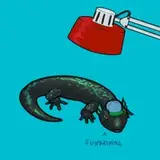
Goblins are the most numerous of the Greenskins and the most divided. Most are poor, feral, and cling to old blood-clans with names no one else can pronounce. They live in cramped quarters in the Third Quarter’s alleys and the feral warrens of the Fourth, skinning rats, brewing rot-wine, peddling herbs, or scuttling through broken pipework.
They are the most fiercely clannish, with bloodlines that stretch back generations. The Nenyuki are the most famous among them, financiers and shrewd kingmakers within the Sorcerer-King’s order. But most goblins have never seen a coin of silver. They work, steal, and scrounge in cities that would rather forget them, yet depend on them more than they know.
Common Professions:
Goblins often serve as scrappers, foragers, pickpockets, tinkers, rat-catchers, bone sellers, salvage haulers, message runners, alchemists, mapmakers, pawnshop brokers, potion testers, black-market medics, informants, and dust-leaf peddlers. They are invaluable to both criminal networks, desperate scholars, and most simple systems within the Third Quarter.
Spotlight – The Nenyuki Brokers:
The Nenyuki clan have risen higher than any other Greenskin bloodline. Bankers, brokers, scholars, and whisperers; many claim they were once favored by the Sorcerer-King himself. They built ledgers older than the current census and own more property than most lowborn human families. A Nenyuki goblin in silk robes with rings on his claws is not a rare sight in the Second Quarter. But he’s likely got a dozen daggers waiting in the dark.
Other goblins either envy the Nenyuki… or want to gut them.
Spotlight – Feral Clans:
In the Fourth Quarter, entire goblin bloodlines have gone feral: living in half-lit ruins, worshipping dead machines, and painting their teeth with ash. Outsiders who wander in don’t usually wander back out. These clans played large role in the "loss" of the Quarter, claiming it from the Legions through prolonged conflict and cooperation with magickers.

“They don’t talk much. Just point at who’s going to die.”
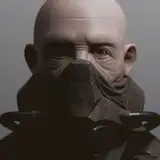
Hobgoblins are taller than their goblin kin, broad-shouldered and sour-tempered. They are known for their unshakable oaths of service—once sworn, a hobgoblin will protect their charge until released or dead. This has made them popular as bodyguards, mercenaries, house enforcers, and escort commanders among both human nobles and guild syndicates.
They are not sentimental. They are not warm. But they are stubborn as stone, and their word holds weight. They are the preferred muscle for those who can afford them: hard to bribe, harder to scare.
A few ancient hobgoblin clans claim to have once led armies under the Sorcerer-King’s banner, their banners now lost to rust and rumor. Some still bear the scars. Others just want work, blood, and the thrill of a fight.
Common Professions:
You’ll find hobgoblins working as mercenaries, slavers, caravan guards, pit-fighters, private enforcers, duel referees, torturers, war-band lieutenants, debt collectors, executioners, and bodyguards to high merchants or nobility, both minor and major.
Spotlight – Oathbound Enforcers:
A hobgoblin’s vow isn’t mere speech - it’s soul-marked. Those who break an oath rarely live long. Those who keep them rise in status and demand. Some noble families pass down favored hobgoblin retainers like bloodlines.
Spotlight – Warborn Veterans:
Many older hobgoblins served in the Sorcerer-King’s legions—as shock troops, infiltrators, or siege-breakers. Their banners are gone, but their scars are not. Some still wear the old colors beneath their coats.
“They look like us. Until they laugh. Then you remember they’re not.”
Orks are the largest of the Greenskins, built like battering rams and twice as stubborn. They are loud, proud, and full of violent mirth. Most people find them disturbingly human—not just in speech or stature, but in mind. They laugh at the same jokes, drink the same drinks, cry when kin die. And they can breed with humans, though few speak of it.
Half-orks are rare, but they exist—taller, broader, and often shunned by both sides as freaks. Some find their place in the pits or the alleys. A few rise higher. None have an easy road.
Orks work where bones break: bouncers, haulers, pit fighters, brick-stackers, iron-handlers, oath-enforcers. Some swear loyalty to humans and wear their colors with pride. Others prefer clan-life, tribal tattoos, and raw meat, living in the crater’s edge-zones within scattered clanholds or half-legal slums.
Common Professions:
Orks often work as brick-haulers, gate-watchers, pit brawlers, canal dredgers, wall-masons, arena bait, warehouse guards, butcher’s assistants, and demolition crews. Some join gangs. A few join cults.
Spotlight – Pit-Lords and Gladiators:
Orks dominate low-tier arena fights, often trained from adolescence. They are strong, loud, and wildly popular with crowds. Rare champions can win freedom, but most just lose teeth.
Spotlight – Overland Scouts:
Orks are better suited than most for life outside the city. Some serve as crater-guides, beast-hunters, and salvage-runners. They return changed. If they return at all.
Humans fear goblin cunning and ork strength—but rely on both.
Elves find them distasteful, animalistic, or pitiful—depending on caste.
Dwarves respect their work ethic, but resent their lack of reverence.
Beastkin often live alongside them—and sometimes beneath them.
Many in Cradle regard Greenskins as dirty, dangerous, and disposable.
But they know the truth.
You can’t burn out a root that runs deeper than the floor.
Greenskin spirituality is fractured, oral, and deeply tied to clan, blood, and place.
Some goblins believe the Cradle itself is alive, and that the city speaks through steam, stone, and silence.
Many hobgoblins whisper prayers before drawing blades, but name no gods.
Orks often tattoo death-totems onto their arms—ancestral beasts, teeth gods, or crater spirits.
Almost all Greenskins believe in ancestral debt—that a favor given must one day be returned.
Common sayings:
“Name, bone, and blade - keep those clean.”
“Every deal costs a drop of blood. Some just wait to be drawn.”
“We were here when the fire fell. We'll be here when it burns again.”
Oath-debts are sacred. A promise made before witnesses binds the soul.
Clan feuds are endless. Some bloodlines haven’t spoken or mixed in a hundred years. There is an incredible amount of diversity throughout the various goblin kin tribes.
Names are power. To know a true name is to own leverage. Many go by nicknames or callsigns outside the clan.
Gold is good. Copper is cleaner. Secrets are best. These are old goblin sayings.
They bury their dead with coins in the mouth and teeth carved with clan-marks. Few of them believe in gods, but they respect power and clean cunning.
"Greenskins don’t die. They scatter, wait, and rebuild." —Old Mason of the Third
"I’d trust a hob before I’d trust a human merchant." —Street preacher in Undertown
"You see a goblin smile, you check your pockets. You see an ork smile, you check your will." —Anonymous legionnaire
You want to start at the bottom and build something no one saw coming.
You want to scheme, scavenge, and survive on wit, debt, and grit.
You want to walk between the cracks of power, then sell what you find.
You want to serve with cold loyalty.
You want to be the sword behind the throne, or the blade in the dark.
You want a simple code in a world that twists everything else.
You want to fight for respect in a world that calls you a beast.
You want to test your strength in blood, stone, and bone.
You want to stand alone, or claim a legacy no one will give you.
Greenskins aren't born with power—but they know how to take it.
A race cannot stay underfoot forever. Not when it has maps of the tunnels, debts in every district, and a thousand old knives waiting to be named again.
–From “Beneath the Stone: A Treatise on the Lesser Races”, banned manuscript, Second Quarter, burned by the Sorcerer-King's forces in 832 A.D.
The second entry in the Cradle Codex!
Greenskins have always been one of my favorite races, whether in the context of a fantasy universe or the sci-fi of Warhammer 40k. I first encountered this particular strain of hobgoblins in one of my favorite book series when I was younger, the Edge Chronicles. In that setting, there were also hundreds of different variations of goblins, some sane and others completely savage.
That's something I envision for Cradle, too! Each clan having their own distinctions; physically, mentally, spiritually. From their methods of warfare, to common sayings, and their appearances that may've altered over centuries of careful management.
I was having a discussion earlier in the Discord with some players & patrons about how many fantasy races highlight particular aspects of humanity! I think that's particularly true about certain greenskins. They embody very innate, animalistic qualities, from the sheer cunning of the goblins to the brutal vitality of the orks. Let me know what you think!
🩸 Onward.
– Truth @ Exalted Text