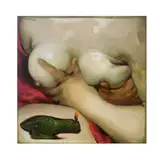
The Ébauche - literally “first attempt” in French - is the initial painted layer. When you begin, I recommend using a small round brush; I often use a Rosemary sable round. I like to hatch with the paint almost as if I’m drawing, laying in the shadows with a base shadow value and then gradually creeping up into the mid-tones- kept relatively neutral-and finally hatching into the lighter areas.
This first pass should feel connected to drawing. The paint is meant to remain transparent, scratchy, open, and graphic. It’s fine if it looks messy, and it’s fine if some of your transfer lines show through; in fact, that rawness often gives the painting beauty. I sometimes even prefer to leave areas of the ebauche exposed for that very reason—its graphic raw quality.
Once the ebauche is completely dry, you can begin the second layer, which should be more opaque and carefully blended. This is where sfumato-an Italian term related to “smoke”-comes into play. Leonardo da Vinci’s Mona Lisa is the most famous demonstration of this technique, where the half-tones melt together seamlessly.
In contrast, the ebauche avoids heavy blending. Instead, think of it like playing scales on a piano: you’re simply moving up and down your value range, step by step, from shadow to light. It’s about establishing your tonal “keyboard” clearly, without smoothing everything over too soon.
Jessica De La Rosa
2025-09-09 15:02:26 +0000 UTCcolleen barry
2025-09-06 11:01:15 +0000 UTCYap
2025-09-05 13:50:23 +0000 UTC