The most terrestrial pterosaurs
Added 2023-06-21 13:17:16 +0000 UTC<figure> </figure>
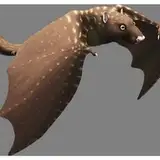
Noripterus complicidens by Ceri Thomas. This was the only known pterosaur to have been digitigrade (on the hindlimbs at least), amplyfing its ability to run.
When it comes to discussions on pterosaur ecologies, azhdarchids are usually touted as “the most terrestrially inclined pterosaurs”, thanks to now numerous studies on their ability to stride, footprints and relatively short wings. However, these claims often ignore that various other groups of pterosaurs were also adapted for terrestrial locomotion.
<figure> </figure>
Terrestrial gaits of early pterosaurs by Witton et al 2015. As you can see, with very few exceptions, most early pterosaurs had long limbs and were likely able to walk and run decently.
Fact of the matter, nearly all pterosaurs were foraging on the ground or in the water (barring a few exceptions like anurognathids, eudimorphodonts, Campylognathoides and some nyctosaurids and anhanguerids, all of which adapted to hunt on the wing), and indeed pterosaurs were terrestrially competent from the start; while historically it had been assumed that non-pterodactyloids were inept on the ground like most bats, Witton et al 2015 shows this was not the case, and that early pterosaurs had always been competent terrestrial striders.
Still, both a crow and an ostrich forage on the ground, so there has to be a gradient.
Azhdarchids are assumed to be near the ostrich level on said gradient, and indeed compared to most pterosaurs they had short wings and long legs. However, various studies (Witton 2008, Habib 2010, Padian 2021, a study on Mark Witton’s patreon not made public) have consistently compared azhdarchids to large continental flyers like storks, swans and condors, so while terrestrially competent they were still highly competent flyers likely capable of enduring long migrations. Further, while their wings were proportionally shorter than most pterosaurs’ they had high bone pneumacy, having thin bone walls and being the only pterosaur group aside from pteranodontians to have pneumatic hindlimbs. So they weren’t on the verge of becoming flightless, rather they were equally at home in the ground and in the air.
There are two pterosaur groups that I would instead consider “most terrestrial”, at least by virtue of lower flight capacities: the dimorphodontids and the dsungaripterids. Both groups were rather heavy boned with thick bone walls and relied on burst flying like modern fowl (Witton 2008, Witton 2013). Both groups had longer wing fingers than azhdarchids, but in the case of dimorphodontids they lacked the long metacarpal of pterodactyloids so proportions might be very similar overall, leaving only dsungaripterids with longer wings overall. And within the latter, at least one species, Noripterus complicidens, had digitigrade hindlimbs, making it the most cursorial pterosaur known yet.
So there you have it. If azhdarchids were the storks of the Cretaceous, dsungaripterids and dimorphodontids were the fowl of their time.