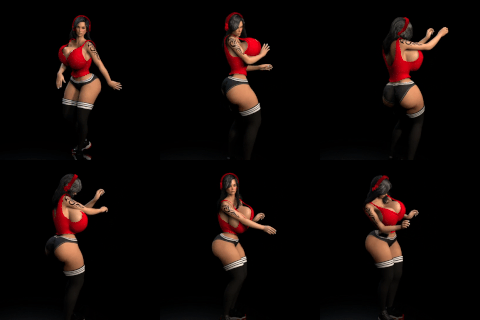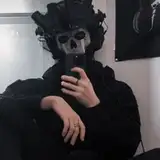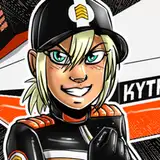
The J-series was an early source of revenue for Chemsok, providing a low-cost, reliable unit for conflict. Although the clones of this series are simple in design, they have no fear of attack, are skilled in using a wide variety of weapons, and are completely obedient to orders. Their actions are meticulously calculated and energetic, but they can explode in rage when they receive strong external stimuli or are restricted in their activities. These clones have a body type that emphasizes agility, endurance, and muscle strength.
Due to the endless intrigues between companies, J-series clones are constantly exposed to combat situations. Therefore, their experience, training, and equipment are the deciding factors that ultimately determine whether a battle will be won or lost. Since they are obedient to orders when not on duty, they usually do not show hostility among themselves. During breaks, they are seen to deepen their mutual understanding and share experiences. However, after long periods of rest or multiple missions, they tend to overreact to even minor stimuli, and frequent resets are required. This characteristic may lead to violent escalation in some cases, so careful monitoring is required. It is also recommended that they be kept in a temporary suspended state when necessary. This problem was not anticipated during the design stage, and the J-series clones were not originally intended to survive after several missions.
The early model J1 clones had a weakness in that they were poor at responding to complex orders and would make arbitrary decisions during missions for self-preservation. To address this issue, Chemsok invested a large amount of R&D money into improving their behavioral characteristics, and the resulting third-generation clones (J3) are used as the main assault unit. While the J3 clones carry out orders without question, they tend to lack flexibility and creativity in difficult situations, and in this respect the early model J1 clones still have an advantage.
The second-generation (J2) clones, which were discontinued in a short period of time, lost support in the market and were quickly withdrawn because their instinct for self-preservation was further strengthened. This caused a temporary crisis within the company. As a result, all J2 units were recalled and operations were temporarily supplemented by J1 clones until the next generation models were available. The first generation models are still operational today as a good option for low-budget and limited missions, while the second generation models have been almost completely scrapped and are rarely seen. The third generation clone (J3) has a great track record in assault missions and its appearance is said to have saved the entire Chemsok company from a difficult situation.
Currently, there are rumors that the fourth generation (J4) that overcomes the weaknesses of the J series and the fifth generation (J5) that aims to further improve performance are under development.
---
Jシリーズは、紛争において低コストで信頼性の高いユニットを提供し、Chemsok社における初期の収益源となっていました。このシリーズのクローンは設計が簡素ながら、攻撃に対する恐怖が皆無であり、多種類の武器操作に熟練し、指令に絶対服従します。彼らの行動は緻密な計算のもとにエネルギッシュに行われますが、外部から大きな刺激を受けたり、活動を制限されたりすると、激しい怒りを爆発させることがあります。これらのクローンは、敏捷性、持久力、および筋力の向上を重要視した体型を持っています。
企業間で繰り広げられる終わりなき陰謀により、Jシリーズクローンは常に戦闘状況に晒されます。そのため彼らの経験、訓練、そして装備こそが、最終的に戦闘の勝敗を分ける決定的な要素となります。非任務時には指令に従順であるため、通常は仲間同士で敵意を示すことはありません。休憩時間には相互理解を深め、経験を共有するなどの交流が見られます。しかしながら、長期的な休息や複数回の任務後には些細な刺激でも過剰反応する傾向が高まり、頻繁なリセットが必要です。この特性は、場合によっては暴力的な事態の悪化を招きかねないため慎重な監視が求められます。また、必要時には一時的な停止状態で保管することが推奨されています。この問題は設計段階で予測されていなかったものであり、本来Jシリーズクローンは数回の任務遂行後の生存を前提としていませんでした。
初期モデルであるJ1クローンは複雑な命令への対応力が低く、任務中に自己保存のため独断的な判断を下すことがあるという欠点が明らかになりました。この課題に対応するため、Chemsok社は行動特性の改良に多額の研究開発費を投資し、その結果誕生した第三世代クローン(J3)は主力突撃型ユニットとして活用されています。J3クローンは指令を疑うことなく遂行する一方で、困難な状況では柔軟性や創造力に欠ける傾向があり、この点では初期モデルのJ1クローンが依然として優位性を持っています。
短期間で生産終了となった第二世代(J2)クローンは、その自己保存への本能がさらに強化されたため、市場での支持を失い早々に撤退。これが社内で一時的な危機を引き起こしました。その結果、すべてのJ2ユニットが回収され、次世代モデルが利用可能になるまで運用はJ1クローンによって暫定的に補われました。第一世代モデルは現在も低予算や限定的任務に適した選択肢として運用可能です。一方で第二世代モデルはほぼ完全に廃棄され、その姿を見ることは稀です。第三世代クローン(J3)は突撃任務で大きな実績を挙げており、その登場がChemsok社全体を窮地から救ったとされます。
現在では、Jシリーズの弱点を覆した第四世代(J4)および、それ以上の性能向上を目指した第五世代(J5)の開発が進行中であるとの噂も囁かれています。