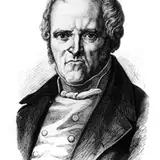
My writings on Baudrillard's 'Utopia Deferred'
Added 2023-09-28 14:02:17 +0000 UTC
My next video will be on the topic of the proletariat and productive labor. Until then I thought I'd share something with you.
At the beginning of the year, I read Utopia Deferred, a collection of texts by Baudrillard from 1967-78 (pre-Simulacra & Simulation Baudrillard), and while reading it I occasionally wrote notes. I'm sharing them in case you're interested in seeing me trying to make sense of some of his points and getting frustrated at them.
--------------------------------------------------------------------------------------------
Jonas Čeika's notes on Baudrillard's Utopia Deferred
◊
For Mirror-of-Production-era Baudrillard, capitalism proper (i.e., profit accumulation and exploitation of surplus labor), is only one mode of a wider tendency, which finds its complete expansion in the postmodern world – this is the tendency towards signification, representation, exchange of all things, subsumption of everything under a single code. This includes not only production (by which Baudrillard seems to mean mainly the manufacturing industry) but language and sexuality (among other things?). He says that there is not only a political economy of production but a political economy of language and of the body, terms which he emphasizes are not metaphorical. He argues that naïve materialists (Marxists) focus on the content of production, whereas naïve idealists focus on the content of representation. Today, Baudrillard argues, the distinction itself has become socially meaningless. If one wants a radical critique of society, one has to criticize not the content but the form of the modern world (he does not mention that Marx does focus on the relations of production, not its content). This is a form that is self-serving, reinforcing itself, subsuming everything monopolistically under a code.
He argues that in its early stages, capitalism involved production for the sake of consumption (abstract exchange-value for the sake of concrete use-value), but today, there is only production for the sake of production. I would argue that capitalism has always been materially a matter of production for the sake of production, consumption being a necessary step of the process, as well as an ideological justification. He argues that concrete use value no longer exists, as it was based on needs/demand, and today there are only those needs/demands that are created by the code/system itself (although that doesn’t actually entail the disappearance of use-values in Marx’s sense). They no longer express something concrete but are themselves only effects of political economy. I assume he is here talking about the ubiquity of commercials, advertising, consumerist culture.
He says that, although traditional capitalism has signs of distinction with a use-value (used by the upper classes to distinguish themselves and reflect their class status), this was still a signification with an (objective/material?) referent. Today, even signs of distinction no longer have any referent except other signs – they are all part of a self-enclosed code. Perhaps a symptom of this is the fact that there is no longer really an exclusively bourgeois culture (Steve Jobs and Elon Musk wearing casual clothes, consuming popular media, etc.).
◊
Some of Baudrillard’s critiques are valid, but he presents them as critiques of problems going back all the way to Marx himself, rather than critiques only of certain forms of Marxism. He critiques workerism, for instance, the elevation of labor power above all, but misses Marx’s point on the self-abolition of the proletariat (I don’t know if that text had been published yet at this time). Another critique recalls (prefigures?) communization theory: the postponement of revolution to a finality disconnected from existing practice.
A lot of the different strands of French “gauche” anti-capitalist radicalism at this time shared the same critiques of established Marxism, whether coming from poststructuralism, communization, left-communism, or even Maoism: critiques of the Soviet Union, reformist and revisionist parties, union bureaucracies, institutional stagnation and sedimentation, neutralization of all radicalism and spontaneity. I think this very fact speaks to the truth of historical materialism, which Baudrillard wants to reject outright. It’s precisely because of the shared historical and material moment under which these different groups existed that their theories, despite coming from completely different foundations, converged on a number of different points.
◊
One of the most ridiculous claims Baudrillard makes in these texts, while criticizing the Marxist perspective of class struggle, is that there is in fact only one class – the bourgeoisie. To present the proletariat as a class limits it, encloses it within a form bequeathed to it by capitalism, chains it to the logic of rational production which is itself bourgeois. But the proletariat by definition DOES exist under a social form bequeathed to it by capitalism – that doesn’t make it any less of a class. The truth, of course, is that, to the contrary, we can easily imagine capitalism existing without the bourgeoisie, whereas a capitalism without the proletariat is an incoherent impossibility. He himself overestimates the importance of the bourgeois class here. He says that there is only one class – the bourgeoisie – and it is defined by “the rational finality of production.” But it is not the bourgeoisie who determine this finality of production; it is capital itself.
◊
It’s really fascinating to read Baudrillard discussing actual cases of organizing and mass action that happened in the real world. Often, his critique of every single conceivable mode of politics, and his vague suggestions of enacting symbolic exchange, or abolishing the life-death binary, can be so tiring and eyeroll-inducing, because it seems so disconnected from any kind of praxis, that it’s really refreshing to see him talk about an actual workers’ strike.
Although he disparages class struggle, and the very view of the proletariat as a class, he very favorably refers to a case of dock workers who went on strike without any particular demands, independently of the union bureaucracy, and then even returned to work, as if by their own collective decision. He argues that this was a case of striking for the sake of striking, which parodies and inverts the existing system of production for the sake of production (or, even, as he later describes it, reproduction for the sake of reproduction). He writes that this was not “class struggle” proper – it was directed more against the internal enemy of the union bureaucracy (the representation of the working class, its signifier) than the external enemy, i.e., the bourgeoisie. This was, therefore, an attack on the mode of representation. He even describes this behavior as decolonial in a way, exhibiting the kind of behaviors that colonialists disparaged in the indigenous communities that they came across, and which they violently exorcised. Through this mass action that seems almost arbitrary, Baudrillard argues, the workers acted against the logic of rationalism and productivism, unbeholden to industrial discipline or the maximization of utility, or even the means-ends distinction. They refused any kind of end or finality to which all actions are to be subordinated to, and even refused the classification of themselves as simply productive agents, as agents of labor power.
◊
There are several points at which Baudrillard gives off the appearance of not even having a firm grasp of Marxist concepts. He, for instance, repeatedly proclaims that we no longer live under a mode of production, but a mode of reproduction. According to him, traditional capitalism had the end goal of producing use-values, whereas today, its only goal is self-reproduction. But this doesn’t point to anything unique. Capitalism has always been inherently cyclical, and built around self-reproduction. It’s impossible to conceive of capital without the tendency to self-reproduce, because the very point of capital is investment for the sake of increased capital, which itself is in turn invested. If capital was not self-reproducing, there would be no point in investing it, and if it wasn’t invested it wouldn’t be capital at all. Capitalism was therefore always simultaneously a mode of reproduction.
He then claims that in this new, reproductive capitalism, the salary “ceases to be a cost of labor power” and becomes a “salary of reproductive consumption”, but the cost of labor power has always been the cost of the reproduction of labor-power! This further makes him seem like a charlatan.
He further says that the proletariat is complicit with the system of production because it is the owner of “the essential means of production: labor power”, but labor power IS NOT MEANS OF PRODUCTION, IT IS A COMMODITY. THIS IS BASIC MARXISM. Labor power only exists because the majority of its providers are deprived of means of production!!!
◊
The praxis Baudrillard ends up weirdly endorsing is terrorism for the sake of death, which creates a situation in which equivalent exchange is no longer possible – a symbolic act – which the system cannot appropriate or respond to except with its own death, destroying itself. (He’s drawing here from ethnographic studies of gift exchange and potlatch in primitive societies, where a gift is meant to be met with an even greater gift, a sacrifice is meant to be met with an even greater sacrifice, etc., and he’s dubiously applying it to late capitalist society, as if capital (or the government?) is beholden to the same rules of symbolic exchange as primitive tribes were). If I understand correctly, he supports the taking of hostages; not for the sake of negotiating demands, but as a kind of sacrifice. This is absurd at best and repugnant at worst. It kind of makes sense in that the 70s were a decade of terrorism, and I suppose Baudrillard was trying to find something radical in existing events. (He would later conceptualize 9/11 as a true event, escaping and subverting the code where nothing else can – un-exchangeable, unrepresentable – the intrusion of the Real in Lacan’s terms).
When he stops pretending that he has a “radical” praxis to offer and starts talking about porn is where his theoretical strengths show up. He points out that pornography, in its obscenity, extreme proximity, in a paradoxical way carries out the function of repression. Repression suppresses sexual fantasies; porn, in revealing everything in extreme detail, leaves nothing to the imagination, therefore leaves nothing to fantasize about, and thereby destroys the possibility of sexual fantasy.
Comments
Do you follow PlasticPills's Patreon? He is in his Baudrillard phase and posted lots of videos on him there. It would be interesting to hear an exchange between you guys to see the different leftists perspectives on him clash a bit. When reading or hearing about Baudrillard it's just so hard to make an opinion since his takes are so wild and speculative. Having two leftists who actually read him and have diff opinions on his theories could make for a great discussion.
Kelen
2023-10-03 19:06:38 +0000 UTC