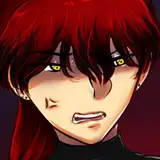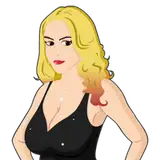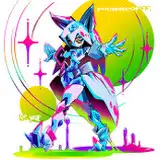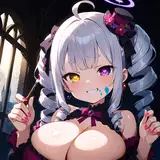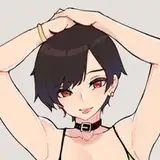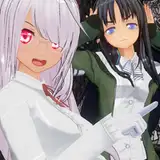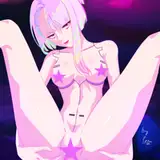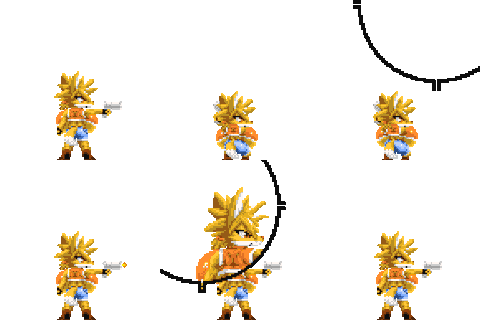
Concept: This article explores various transformation effects in dot animation, using a minimal number of frames. These techniques are not limited to pixel art and can be applied to general video animation as well.
Minimum Frames: 2
Flashing alternates between the "before" and "after" images, prompting the viewer's brain to interpolate the connection. By adjusting the frequency and duration of the switches, a gradual transformation can be achieved. However, excessive contrast or color variation may strain the eyes, so moderation is advised.
Minimum Frames: 3~
Flicker involves rapidly alternating between "pre", "mid", and "post" images to convey the transformation. This technique is effective for conveying shaking or hesitation, In retro games, there is also a method to save space by partially combining previous and subsequent pictures.
Minimum number: 3~
Complement the middle part with effects and cut-ins and switch after changes.
It is suitable for effects that are hidden body to smoke or light, or for momentary emphasis on parts or expressions of change.
In the case of effects that show flow, the illusion of movement can be created simply by switching the display.
Minimum number: 3~
The beginning of movement, preparatory movements, and follow-up movements make you aware of the flow and express instantaneous changes. Even without a middle part, the movement itself can make people aware of the connection and create an illusion.
There are many productions that combine it with effects to make the transition look smooth.
Minimum number: 3~
Silhouette involves inserting Single color images with light or shadow to connect the before and after states. It is often used to gradually reveal or emphasize specific elements of the transformation. Additionally, it can be employed to reduce animation costs.
Like effects, it can be expressed using at least three pictures, and can be expressed effectively depending on the combination.
Minimum Frames: 5~
Full animation smoothly connects the before and after states, providing to transformation. The more you add in-betweens, the smoother and slower the drawing becomes, While automatic interpolation methods like keyframe animation or morphing are available, pixel art may lose its charm due to the inherent roughness.
If you are particular about appearance and movement, create a silhouette rough sketch and decide on the number of sheets.
If it feels strange, it means that the movement, the difference in changes before and after, and the flow are not in order.
This concludes our discussion.
When actually creating movement, it is easy to do 2+2 4-frame frames by shifting the original picture forward and backward.
As you repeat the momentary switching, you may be able to see the picture you are looking for from the complementation in your brain.
Thank you for staying with us until the end.