Commentary: Pages 32-33
Added 2024-12-16 20:00:12 +0000 UTCPage 032 - First Born
Shoulda called this one “First Man”. That’s hindsight for you.
We get another new character introduction on this page. Say hello to Proteus:

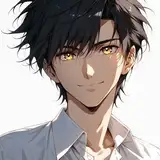
Proteus is the main baddie of Love Bomb. It seemed fitting to introduce him with a Legend of Zelda style boss title. Proteus’ forces are malformed grotesqueries of masculinity, but he himself is masculinity’s perfected form. Muscular but not bloated, hardened but not insecure, he is a man of intelligence and refinement, with his desires in check. He is an embodiment of a certain idea of masculine virtue, and yet! He is framed in Love Bomb’s narrative still as someone to be feared. I wonder what it means that he also represents toil and obligation? Probably nothing.
His philosophy is… well, it’s kinda stupid, right?

He was straight up based on Meta Knight in Kirby Super Star. Like that’s the level of depth he’s operating on here. Kirby Villain. I do think it is important that he not be, like, pure evil, and this still works for all the themes and symbolisms, buuuut he’s not exactly putting his best foot forward here. Like his whole dialogue here is meant to be the kind of thing that was meant to sound really deep and philosophical but actually just… isn’t.

Like… c’mon man. Who are you impressing. We may perhaps delve deeper into Proteus later in the story, but for now he is very much the villain you’d expect from a stupid trashy RPG.
Anyway, onto the visuals. Masculine Evil Wizard is the theme here, befitting the final boss of Love Bomb. It’s kind of a trope, right? The biggest most dangerous badguy in a game or anime won’t look like the hugest possible monster, but instead looks like a Cool Man. It’s a way to escalate without feeling tired, presenting the final antagonist as someone with so much control over his power that it doesn’t spill out of him. His appearance at this point in Love Bomb’s story is a classic hallmark of a supposed-to-lose fight that sets up the main villain as a guy not to be fucked with (although if you do manage to cheese him somehow the story will still continue on as normal).
Proteus design-wise is basically a fusion of Ganondorf and Sephiroth. He’s got a long coat for that Cool Man appeal, he’s got gemstones and jewellery so you know he’s A) a king of sorts, and B) a wizard, and he’s got that big hair. And a chinstrap. He’s still an anime guy, after all, and there tends to be a limit on how much beard those guys are allowed to have. Even this slightest amount of facial hair is often used to mark a character as a grizzled older dude (read: 29 years old). The last touch is two stupid shoulderguards to guard his shoulders. Yknow, so you know he can throw down if he needs to.
Peri provisions: This would probably be a good place to explain that Proteus mixup I mentioned in the last commentary! See, the character designs in Foreach are largely the domain of Lum and Rhys, and especially early on in the comic I would often see these designs for the first time when Lum was drawing panels for the actual page. But of course, this doesn’t stop me from imagining the characters in my own head. With Proteus in particular, for reasons I don’t fully understand, I somehow conflated my headcanon mental image of him with, you know, actual reality and was FLABBERGASTED when Lum started drawing this anime twink the weekend this page went up.
So what was the Proteus-in-my-head? Well, drumroll please… he was a cyclops! A cyclops in a roman-ish legionnaire outfit–you know, a breastplate, short skirt, tie on sandals, the whole deal. I think I had latched onto the faux greco-roman look we got with the Goddess’ temple and some of the anime girl designs (especially Polyta and Rilly), conflated that with him commanding an army of monsters, and ended up with… you know. Cyclops legionnaire. It kinda makes sense!
Lum and I had a good laugh about it when we figured out what was going on. Fortunately, I think the real Proteus design kicks ass, so it all worked out great.
He’s also got a fire association, which is another one of those things decided pretty much on the previous page, for the sake of short term convenience.

See, on the previous page I wanted to indicate that some kind of loud noise happened that Jiro heard, but you might notice that in Foreach I broadly avoid onomatopoeia. The reason for this is partly that some original conceit of Foreach was meant to be that the panels could resemble videogame screenshots, and those tend not to have big words describing every sound. But it’s also that I don’t think onomatopoeia are that evocative for their chosen purpose? When there’s a big KBAMMM on the page that doesn’t make me feel like an explosion just happened, to me, it makes it feel like I’m reading someone making a sound with their mouth. So instead of using that, when I want a panel to feel like something noisy happened in it, I try to use visual effects for that purpose. Like an example from next page:

You can totally hear this panel, because there’s a lot of visual detail in selling the feel. I take a lot of inspiration from the effects in Super Smash Bros Ultimate, actually, the way they’re so splashy and graphical. The sound spills out in the colours and rays and jagged edges here. No words necessary!
Peri japes: Quick side note, Casandra’s lucky cat punch is one of my favorite gags in the comic. It just ties everything together so GOOD. Casandra is money themed -> lucky cat -> little statues that have the hand wave back and forth -> but instead of waving it’s a PUNCH. YES. KAPOW.
I hope to god someone on earth finds this at least 10% as hilarious as I do. Lum is so fucking funny.
So, back on topic, I wanted to make clear that some kind of magical explosion was happening. Some of that is clarified with Sam’s line “Was that an explosion...?” but I also wanted it clear visually, for maximum clarity. The result is the, in hindsight, kinda phallic figure used in the final panel. The helix shape looks controlled and magical, but at the base there’s more standard explosion-looking effects that sell the violent sound of it.
And if I want it to feel obviously explodey… well, it’s gotta be fire, right? Some kind of indistinct purple MAGIC WAVE wouldn’t really get across the violence of it. So, fuck it, Proteus is fire-themed. It wasn’t a decision made without thinking, let me be clear, we absolutely considered the implications of it and what it could mean thematically, but yeah it was decided pretty late.
Peri spills: Oh… and do you want to know how we landed on orange for Proteus?
Ah. Good old ForEach Color Theory™.
Lum counternotes: NOOO OUR SECRETS
Actually while we're here, check out Purple Proteus and some concept art for the Goddess' second outfit:


I was still figuring out Zabelle’s design at this point. The first time I ever drew Zabelle’s design in its current form was here, as a sprite:

Real cute! Except being designed as a sprite first means there are several ambiguities present here in how she should look when drawn full size. I can’t just stretch her out to normal human proportions and be done, because the relative sizes of all the elements in the chibi design are different to how they should be in the human one. To normalsize this design I need to actively make choices about how big every element should be. How long is her dress/robe? How puffy are her sleeves? How big are those beads hanging off her waist? To see what I mean, compare the Zabelle from this page:

…to this itty bitty Zabelle from the future:

See any differences? The skirt is longer and flares out less, the sleeves are puffier, even the hat is a little droopier, but both of these designs are still feasibly interpretations of the same sprite.
It wasn’t just the design I was figuring out, I didn’t have a great bead on her personality yet either. That big ol :D face she’s showing on page 31 really doesn’t fit how she’s characterised later! The problem was I’d envisioned Zabelle as a quiet type, but I hadn’t really figured out exactly what brand of quiet she should be. She couldn’t be shy, right? That's Yuno's thing. I don’t want to double up on archetypes. As a result she doesn’t get a whole lot of lines in this sequence, just so that she wouldn’t have many opportunities to say anything that could contradict her future characterisation. I did crack her code eventually, though. It took until Chapter 3, but I managed to settle on “basically that blue haired girl from Bocchi the Rock”.
Peri provides: You’ll also notice that we don’t see Zabelle’s lightning braid in any of these images. That hairdo wasn’t decided on until Chapter 3. Fortunately, we’d never seen her from behind at that point so we could get away with retconning it to be the hairstyle of our choosing (provided it wasn’t too poofy.) We also considered pigtail braids, but I for one like the less cluttered look of just a single braid, since it puts more emphasis on the jagged lightning-bolt look of it.
Page 033 - Low Level Party

My first thought when I drew this panel was hm. That looks like piss.
My second thought was ahh its fine. It doesn’t look that much like piss, right? It’s like an orangey gold not a yellowy gold. I’m overthinking it.
I should have listened to my gut.
This page was drawn mostly the morning it went up. I’d just spent the weekend at a wedding and didn’t have a wealth of time to get everything done. This was back before I had a buffer! I frankly have no goddamn clue how I lived like that back then. Maybe if I’d given myself more time to simmer on this one, I wouldn’t have gone with the Piss Barrier.
Peri pronounces: Shoulda made it orangier! Alas.
(For the record I also have no idea how Lum functioned without a buffer. Madness.)

Hey hey! Love levels!
These have a long history. In the earliest ideation for Foreach a character’s textbox would have changed depending on which protagonist’s perspective we were in. That would apply to the whole camera viewport: so Cliff’s sections would be in first person, Nix’s sections would be side view, and so on. In Jiro’s case, the idea would be that whenever he would talk to a character their Love Level would be visible over their dialogue box. He’d be constantly aware of exactly what everyone thinks of him! The scene would be constrained by the perspective of the current viewpoint character. I like what we came up with in the end, where characters keep their unique texboxes between worlds and perspectives, but there is still something interesting about that approach…
Potent metaphors aside though we didn’t end up going with having those racks of hearts over each textbox, but these Love Levels are still an important element in the story. It was fun thinking over which girls would have what Love Levels in this bit, but I am very much glad I haven’t taken on the obligation of doing this for every character Jiro talks to.
You’ll notice as well that each girl has an Element. The idea is that rather than sharing a visual language these love powers each have their own unique material that the attacks are made of. This was one of those things I did for Love Bomb rather than Foreach, which is to say I made this call from the perspective of the in-universe developer of Love Bomb trying to make that game as cool as it can be. If I was gonna play a game with a bunch of girls I would want them all to have different spells! I think this is an important part of Foreach, where the games being genuinely “cool” helps the audience recognise what each character likes about them, gets them sympathising with using this as a channel for escape. But it may have created some readability issues… a recurring problem I’ve had is getting the audience to recognise that the Love Powers are only active when the girls are around Jiro– he gifts them the power and they channel that for a temporary period. I wonder if I’d had a unified visual style for the powers, if that aspect would have been clearer.
Peri publishes: One thing I love about the element system is just how unbalanced it is. We have four (FOUR!) girls with weather related powers–Polyta with wind, Zabelle with lightning, Eladea with storm, and Rilly with water. Those… kinda overlap! Like a lot! To me this can be interpreted in two ways. The first is hinting again about the Goddess’ secret second domain and her weather-associations. The second is that it feels like the kind of jank you would run into with a real somewhat trashy rpg like Lovebomb. I mean come on. Money? How is that an element!
Orbs!

The end of chapter twist here is going to be that Casandra was travelling between worlds to collect ghosts for the orbs, but to make that twist comprehensible the audience has to actually know the orbs are a thing. That means that in between introducing Yuno, Proteus and Sam, and also need to find an opportunity to reference Casandra’s orbs, preferably in a way that is memorable enough that when it comes up again the audience will go “OH THAT!” and not “huh, what?”.
So we need a method of working this into the scene that flows with what’s already happening. Like, my first thought was to have Casandra tell Jiro about a new deal she’s got on a hot new item, but where am I ever going to find the time for that? This sequence doesn’t have room for a bit like that.. If I were to try and crowbar in a line like that into an otherwise unrelated scene, it would be bad for two reasons. The first is that it would interrupt the pace of the scene with a seemingly pointless aside, the clunk as I switch gears shuddering through the reader’s whole body. The second issue is that if you insert a seemingly-pointless aside like that the audience will be immediately primed to wonder what it’s doing there. You’d thinking, weird that they’re bringing up the orbs all of a sudden. Are these orbs important? Are these orbs related to any unanswered questions from earlier in the series? And just like that, I’ve primed the audience to figure out the big twist through metaknowledge alone. That’s no fun!
So if we wanna have the orbs in this sequence, they need to serve a purpose within the sequence itself. It felt like a good idea for Cas to use an orb to beat Proteus, provides a neat resolution to this scene, but that by itself isn’t quite enough. You’d still be wondering why the orb itself was necessary – why not have the characters defeat Proteus with their own power? Why introduce a deus ex machina to randomly save the day? We end up back at that problem I brought up earlier with priming the audience to guess at the twist with their metaknowledge.
Here’s where our old friend comedy comes into play. Why’d we introduce an orb into this scene? It’s a joke, of course! Getting Jiro to pay up for an item mid-combat is an incongruous and amusing action that generates laughs. It’s actually pulling a few duties, as any good writing decision should: we also get additional characterisation for Casandra (there’s no low she wouldn’t stoop to for a quick buck) and once the twist rolls around it gives insight into why Casandra is stealing ghosts from other worlds (for that hot dollar baybeeeee). Most crucially, though, it misleads the audience into thinking the orb has served its purpose once we’ve all had a laugh about it. In a way, I’m roleplaying as a different author here, one who has different intentions for the direction the narrative is going to take, in order to disguise an upcoming twist. It’s a tough needle to thread!
Peri pipes up: And it’s a call back to the Tome of Orbs flavor text from page 9! Full circle!
I really don’t have too much else to add on this page. In lieu of any insightful commentary, I figure I’ll bribe y’all with a rat photo–here’s a bona fide picture of how page 33 got edited:

Comments
HEY EVERYONE IN THE WORLD THROW MONEY AT THESE PEOPLE!!! If these people are cool with that ofc!!!
Almera
2024-12-24 04:31:56 +0000 UTCI-I- THIS IS AWESOME
Almera
2024-12-24 04:31:29 +0000 UTC