XaiJu
ibenz009
ibenz009

patreon


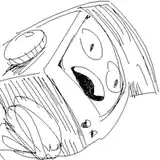
Demon lord ch3 sketch p 27-30

Alright this is the last post of this year and you're getting the return of demon lord.

I've manage to bring out 4 pages of sketch before the year end. As alway i appreciate any help correcting my grammar. I'll take a new year break for a few day so happy new year! I hope you all the best!

Thank you so much for your support this year.

Demon lord ch3 sketch p 27-30 Demon lord ch3 sketch p 27-30 Demon lord ch3 sketch p 27-30 Demon lord ch3 sketch p 27-30 Demon lord ch3 sketch p 27-30

Comments

She looks incredible! Thank you for a year of spectacular works! I look forward to the future of it!

Corington

Happy new year. Format: Original quote ↴ Modified quote with [notes] ↴ Modified quote without notes. Notes shown in [square brackets] Multiple possible modifications shown in {curly brackets / braces} ―――――――――― [Page 27] "So this what you're after?" ↴ “So, this is what you’re after?” "Yep! I bet youguy curious what exaclty this stuff are?" ↴ “Yep! I bet you guys are curious what exactly this stuff is [‘stuff’ is strangely uncountable. That means it does not have a plural form and always referred to using singular forms.]?” ↴ “Yep! I bet you guys are curious what exactly this stuff is?” "Allow me to present a demonic arm weild by our third incarnation of our goddess!" ↴ “Allow me to present the demonic arms [plural I assume. She does seem to be referring to all 4 items.] wielded by the [No need to double up on ‘our’.] third incarnation of our goddess!” ↴ “Allow me to present the demonic arms wielded by the third incarnation of our goddess!” "What left of them anyway. We just came to take what's rightfully our." ↴ “What’s left of them anyway. We just came to take back what’s rightfully ours.” "Hey, don't worry I didn't lay a finger on them yet!" ↴ “Hey, don’t worry! I haven’t laid a finger on them yet!” "Your ancestor put on a quite a powerful ward to protecting it." ↴ “Your ancestors [we’re referring to the collective of people who came before them, not a literal parent to one of them] put quite a powerful ward on them. [For weird spoken English reasons, stating the reason for the ward sounds clunkier than restating where the ward on placed, despite the listener already knowing this.]” ↴ “Your ancestors put quite a powerful ward on them.” "When I tried to touch them I'm getting all buzzzzey!" ↴ “When I try to touch them, I get all buzzzzy! [Present and future, not the past. ‘Buzzy’ doesn’t have an ‘e’.]” ↴ “When I try to touch them, I get all buzzzzy!” "See?" "Brrrrr! It so gross touching that old hag's light." ↴ “Brrrrr! It’s so gross touching that old hag’s light.” "Hmpf! It would take me a while to dispel them and now with you with you guy showing up. I'll never get done!" ↴ “Hmpf! It’d take me a while to dispel the ward [‘them’ is ambiguous. Restate subject.], and now that you guys are here, I’ll never get it done!” ↴ “Hmpf! It’d take me a while to dispel the ward, and now that you guys are now, I’ll never get it done!” "Just my luck to face an actual competent paladin in the boony like this." ↴ “Just my luck that I’d face an actual competent paladin in the boonies [the ‘boonies’ doesn’t have a singular form] like this.” ↴ “Just my luck that I’d face an actual competent paladin in the boonies like this.” "It's feel quite peculiar to recieve praise from a demon." ↴ “It feels quite peculiar to receive [‘i’ before ‘e’, except after ‘c’ (this case). Except for the several exceptions to that exception.] praise from a demon.” ↴ “It feels quite peculiar to receive praise from a demon.” "Hmpf! I'm serious, you know! I used to be a paladin I know my stuff!" ↴ “Hmpf! I’m serious, you know! {I used to be a paladin myself. I know my stuff! / I used to be a paladin, I know my stuff! / I used to be a paladin; I know my stuff!}” [And so, we find ourselves at another English particularity, the comma splice. Recap: Sentences are made of one or more clauses (a subject and a verb). A clause is said to be independent if it can be said alone and form a sentence by itself (e.g., “She is pretty”). Dependent clauses are clauses that must attach to an independent clause to be valid (e.g., “I think” is invalid despite having a subject and a verb, while “I think she is pretty” is a valid sentence comprising of both an independent and dependent clause. If the independent clause comes after the dependent clause, it is often joined with a comma. As demonstrated by that sentence. The problem arises when we want to join two independent clauses together. To do so, one normally needs to use a conjunction (‘for’, ‘and’, ‘but’, ‘or’, ‘so’; to list a few), e.g., “don’t push that button, *or* we all explode.” Omitting the conjunction and just using a comma (“designer clothes are silly, and I can’t afford them anyway” vs. “designer clothes are silly, I can’t afford them anyway”) is known as a comma splice, and by most style guides considered a grammatical error. The problem is, in spoken English, speakers use them on the regular (in fact, in the example used about clothes, the latter comma splice would probably be more common). There is one saving grace: The semicolon (;). The semicolon can join two independent clauses, but it comes at a cost: the bloody thing is so infrequent in fiction it can bring the reader out of the world they’re immersed in and question why it’s there. So, in conclusion: I used to be a paladin I know my stuff! Wholly wrong. Must separate independent clauses. I used to be a paladin, I know my stuff! Grammatical incorrect according to some, but common in spoken English. I used to be a paladin, and I know my stuff! Grammatical correct, but unlikely to be said in spoken English. I used to be a paladin; I know my stuff! Grammatical correct, but SURPRISE semicolon might startle easy-to-scare readers. I used to be a paladin. I know my stuff! Grammatical correct, if clunky due to short lengths. I used to be a paladin myself. I know my stuff! Grammatical correct, less clunky by making at least one of the sentences more impressive. ] ↴ “Hmpf! I’m serious, you know! {I used to be a paladin myself. I know my stuff! / I used to be a paladin, I know my stuff! / I used to be a paladin; I know my stuff!}” "Scoff! If you end up as a demon you must be a shitty paladin then." ↴ “Scoff! If you ended up as a demon, [Hey look, it’s that comma I mentioned when joining an independent clause to a dependent!] you must’ve been a shitty paladin then.” ↴ “Scoff! If you ended up as a demon, you must’ve been a shitty paladin then.” "Oh, quite the contray. I was a devoted no non sense paladin. A real stick-in-the-mud." ↴ “Oh, {quite the contrary / au contraire} [When being humorous in correction, sometimes the French ‘au contraire’ is used due to the perceived fanciness of French. I don’t actually recommend you use it, but a fun English titbit for you]. I was a devoted no-nonsense [‘nonsense’ is one word, and ‘no-nonsense’ is joined with a hyphen] paladin. A real stick-in-the-mud.” ↴ “Oh, {quite the contrary / au contraire}. I was a devoted no-nonsense paladin. A real stick-in-the-mud.” "I even tried to kill my life long bestie under the chruch command. Following order like a good little soldier." ↴ “I even tried to kill my lifelong bestie under command from the Church. [Semantics here, just think this flows better.] Following orders like a good little soldier.” ↴ “I even tried to kill my lifelong bestie under command from the Church. Following orders like a good little soldier.” "Buut it's all in past now." ↴ “Buut, it’s all in the past now.” "You know, it would be better if you guy just fail your task just this once." ↴ “You know, it’d be better if you guys just fail your task just this once.” "It would save you a lot of pain from what about to come." ↴ “It would save you a lot of pain from what’s about to come.” [Page 28] "I had enought of your yapping!" ↴ “I’ve had enough of your yapping!” [Ah, ‘have had’. Awful construct. Even worse is the past perfect form, ‘had had’. For a bit of fun, look up the sentence ‘James while John had had had had had had had had had had had a better effect on the teacher’.] "Just shut her up!" "Ha! We've spent month eroding this land!" ↴ “Ha! We’ve spent months eroding this land!” "Fill the air with sweet sweet demonic corruption." ↴ “Filling the air with sweet, sweet [when listing adjectives, use a comma] demonic corruption.” ↴ “Filling the air with sweet, sweet demonic corruption.” "Bit by bit your false goddess hold on this land is sliping!" ↴ “Bit by bit, your false goddess’s hold on this land is slipping!” *Sssh* "Hey! That hurts, you know!" "Sir! She's doing something! The dark energy is spiking!" "You see, our back up plan is a bit of a gamble." ↴ “You see, our back-up plan is a bit of a gamble.” "But it seem like luck is on my side." ↴ “But it seems like luck is on my side.” "This land has been corrupted enough worthy for my goddess presense." ↴ “This land has been corrupted enough; worthy enough for my goddess’ presence.” "And unlike you old hag of the goddess." ↴ “And unlike your old hag of a ‘goddess’ [Here I’m using a construct known as ‘scare quotes’. Scare quotes emphasis a piece of text and indicates that the writer doesn’t agree with the contents. Technically speaking though, because this a dialogue, it’s actually a stand-in for the similar verbal construct ‘air quotes’, which is when a speaker emphasises a part of their speech to indicate they’re using a term ironically.]…” [Like usually, I’d recommend an ellipsis here to indicate that this specific concept continues.] ↴ “And unlike your old hag of a ‘goddess’…” "Tsk!" [Page 29] "My goddess isn't afraid to her hand dirty"↴ “…My goddess [Continuing on from previous sentence] isn’t afraid to get her hands [I presume she has multiple.] dirty.” ↴ “…My goddess isn’t afraid to get her hands dirty.” "Tremble in her shadow, mortal." ↴ “Tremble in her shadow, mortals.” "For you stand before a true goddess." ↴ "The ruler of all demon kind." ↴ “The ruler of all demon kind:” [Colon here, she’s about to state who it is]. ↴ “The ruler of all demon kind:” "Demon lord"↴ “The Demon Lord, [NAME]” [ Few things to unpack: 1. Does she have a name? I forget if she has a name. If she does, I’d recommend you use it here. Actually, even if she doesn’t, I’d recommend you come up with one and use it here. 2. Titles should start with ‘the’. 3. Titles don’t really carry much weight in English. /If/ the title being used would be surprising, then you could get away with it (e.g., had it been “The ruler of all demon kind: The Prime Minister of New Zealand”), but I mean the ruler of all demon kind being called the demon lord? It’s got the bloody word ‘demon’ in it, not a massive surprise there. I’m trying to think of alternate phrasings which don’t need a name to be present, but honestly, unless you rework the title, which given the work’s called ‘Demon Lord’ I find highly unlikely, a name would be the easier solution. ] ↴ “The Demon Lord, [NAME]”

trigger_portal_cleanser


More Creators