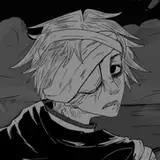
Tsevet comes in much the same way Kor did when I first met him: abruptly, in drama, making my home feel askew because it can’t contain someone so intense. And he likes jump-scares, so his first words are said almost against my neck. “So, you’ve found the sap of life again? Remembered that it throbs in you like poetry? Your heart is beating at last! Good. I will not have my story told by someone who is convinced she is old.”
“I am not as young as I was when I first met you—”
He has drawn away to examine the materials scattered around my art desk, touch them. “Ridiculous. I have known a god who never dies. And you will speak to me of age?”
“Tsevet,” I say. “You didn’t even live to be thirty.”
“And in my day Ai-Naidar were fortunate to reach sixty,” he says, dismissive, cutting. “I was nearly ‘middle-aged’ when I died… so what’s your excuse?” He walks around the edge of my table, trailing fingers on it as he approaches. “It’s one of the things we hated the dar umudchek for. That they lived longer than we did.”
“The… what?” I exclaim, my brain exploding with images and concepts.
He knows what he’s done to me. It’s in his lifted eyes, the wicked satisfaction in them, in the thin smile. “What did you think, artist? That Thirukedi made weapons of war to deter some future threat? That it was an exercise for him? He won a war with them. That means there was a losing side. Why do you think he needed me so badly? How else, when his first task was to weld together two such disparate peoples, seething with resentment and bitterness and fear?”
I’m still reeling.
“Of course,” Tsevet muses aloud, and this is definitely a performance meant to pierce me, “we, the winning side, feared our conquered foes. Not only did they live nearly twenty years more than we did, but they were sturdier. Stronger, vibrant, more resistant to disease and injury… shorter, admittedly, but that was their only flaw. Well, that and that they lost.” He pauses. “It is fitting—or ironic?—that the first of my priests to succeed to my mantle was born of that strain. Your Kor, yes? Boldly colored, solid, shorter than average. And he lived quite a while longer than expected.”
But I am stumbling toward the more urgent realization. “Is that where the caste name came from? The caste for slaves?”
“Of course,” he says. “What else? They needed a place to belong. Where they wouldn’t make trouble.”
“Oh my God!” I exclaim. “How did He keep the empire from flying apart?”
He bares his teeth. “Come and find out.”