World Lore - The Fae
Added 2021-07-29 17:45:37 +0000 UTCA collection of excerpts from The Good Neighbors: A History of the Fae by Dr. Flix Moonsong
What makes someone a fae?
Fae are the most diverse group of people in the world by a wide margin, ranging in size from under a foot tall to well over 10 feet tall and with any ability or appearance you could possibly imagine. So then what makes one a fae instead of one of the other types of supernatural person in the world?
There are two main things used to categorize someone as fae. First, they all have pointed ears. Some are long and thin (aka “night elf” ears) whereas others are the more traditionally-known elfin ears, but every fae has pointed ears even when they are shapeshifted or under glamour.
Glamour magic is the other thing that makes someone fae. Every fae possesses what they refer to as their “true face” and also a “human face” or “guise”. While both of them are true faces technically, meaning that they are unique to the fae in question and they are not an illusion or enchantment, the term “true face” is generally used to describe the form a fae takes that does not resemble a human. In the case of non-human fae like kelpies, their “normal” horse-like form is their guise, while the aquatic form would be their “true face”. The magic used to switch from one form to the other is called glamour. It is innate magic that all fae possess from birth, and is often considered the defining trait that makes someone fae.
Seelie vs Unseelie
While fae come in many shapes, they are generally divided into two categories: Seelie and Unseelie.
Seelie fae are predominantly those whose magic is linked with spring or summer, or who possess fire, water, light, or plant-based abilities. They tend toward warmer skin tones and brighter eye colors, and are usually diurnal. Seelie fae have a reputation for mischief and playful trickery, though they are often stereotyped as thieves or grifters.
Dewdrop fairies, pixies, nixies, dryads, brownies, kelpies, and elves are some common types of seelie.
Unseelie fae, on the other hand, are linked with autumn and winter, and have ice, air, shadow, or earth-based abilities. They tend toward cooler skin tones and darker eye colors, and are often nocturnal. Unseelie fae have a reputation for being clever and calculating, and are stereotyped as being cruel or bullies.
Dwarves, goblins, ogres, blink dogs, sylphs, spriggans, and darklings are some common types of unseelie.
There are also the High Fae, who fall into neither category. The High Fae, or First Children, are said to be those that first came to Earth from the Otherworld after the First Fae (known as the Mother and Father) opened the door. They are ancient, immortal beings who live in the old, undisturbed places of the world and rarely if ever interact with humanity at all. Most don’t believe they actually exist - there are so few undisturbed places left - but there are often enough sightings to keep the myth alive that they’re out there.
Mother and Father (First Fae)
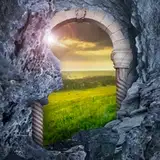
From a genetic point of view, scientists aren’t entirely sure if fae are in fact just an evolutionary offshoot of humanity - they bear enough genetic similarity to humans to be able to create viable offspring who possess the abilities of both parents - but there is significant historical proof that the fae did not originate here on Earth, but in fact came from another realm entirely. There have been ancient depictions that survived the Roman occupation of Wales found by archaeologists that show two beings opening a doorway in a hill. Fae scholars agree that these depictions are of Oberon and Titania opening the door from the Otherworld.
Truly, no one knows if their names were actually Oberon and Titania. Named after the fae King and Queen from William Shakespeare’s A Midsummer Night’s Dream, many Elizabethan-era fae believed that the play was based on a story told to Shakespeare by one of the First Children (likely Puck himself) and it has been widely accepted since that Oberon and Titania are the First Fae.
What has become of them since is also a matter of wide speculation in the academic community, but research suggests that they returned to the Otherworld before the door closed and left their Children here to make a home for themselves.
The Mother and Father are venerated as guardian ancestors by many modern fae, who believe that they still watch over us from the Other Side and will return someday - though the manner and reason for their return is unknown and we only have theories and speculation, none of which with any scientific backing. Truly, after speaking to many of my fellows, there seem to be as many theories as there are fae.
The Otherworld
Also known as Underhill, Fairyland, or Tír na nÓg, the Otherworld is where the fae originated. Not much is known about it, as the entrance has been sealed since before written history, but some things that are known about it are thus:
1. It exists. We have evidence of its existence in the form of items that the High Fae brought through the door with them. Fae silver, for example; the first fae silver tools found predate most iron and bronze tools by decades at least. There are amulets and artwork that have survived made of materials that do not match anything found on Earth.
2. The door is somewhere in Wales. That’s where all evidence of the First originates, and so it is safe to assume that that is our point of origin. The door is both sealed and hidden, so its exact location is lost to time*.
That’s it. That’s all we know for sure. Some scholars have attempted to make contact with the First Children to find out more, but those that can be located remain evasive and uncooperative. This document shall be updated as more information comes to light.
*The Welsh government asks that tourists refrain from digging in the sides of hills looking for the lost door. Your likelihood of finding the door to Underhill is slim to none, and you are much more likely to get lost or injured - or else, to stumble upon the lair of Children who would be better left undisturbed.