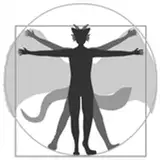
Classification: Lower‑body and spinal‑assist prosthetic exoframe
Weight: 14.2 lbs (6.4 kg) complete system
Manufacturer: Tricell Medical Technologies, Mobility Division
Project Name: Mobility Restoration Exoframe Prototype
Overview
The Tricell Exoframe Skeleton is a semi‑powered prosthetic‑assistance chassis originally developed for medical rehabilitation and paraplegic mobility programs. Designed as part of Tricell’s push into advanced prosthetics, the MR‑X series represented their early exploration into compact exoskeletal mobility systems. Although built for medical applications, the base chassis proved structurally capable of supporting ruggedization for limited military testing.
To meet these experimental requirements, the frame was reinforced with hardened titanium braces, upgraded servo housings, and improved environmental sealing. These adaptations increased chassis strength and durability while maintaining the low‑profile, lightweight form factor necessary for clinical rehabilitation use. No militarized variant ever entered mass production, but internal evaluations documented the prototype’s potential for extended‑load travel and stability under adverse terrain conditions.
At its core, the Exoframe provides mechanical load sharing, gait stabilization, and controlled amplification of lower‑body motion. It anchors at the waist, shoulders, thighs, and shins, creating a supportive scaffold that mirrors natural movement. Electro‑mechanical assist modules compensate for fatigue, stabilize steps during incline shifts, and reduce joint strain under prolonged or weighted activity.
Mechanical Structure
Waist Belt Assembly: Central mounting platform housing the primary torque and load distributor. Hardened titanium ribs channel leg force, pack weight, and torso lean into the brace system without compromising flexibility.
Shoulder Suspension Straps: Adjustable load‑bearing stabilizers that transfer upper‑body weight into the waist assembly, maintaining vertical posture and preventing frame drift during extended movement.
Thigh Braces: Dual hardened titanium femoral struts with rotary hip and knee joints. Integrated alignment sensors track gait mechanics and adjust servo response in real time.
Shin Braces: Hardened titanium shank stabilizers linking into reinforced ankle hinges. These braces reduce strain on the lower legs and improve stride efficiency under heavy load.
Ankle Plates: Compact, ruggedized pivot‑hinges preserving natural foot roll while distributing impact forces across the frame.
Power and Actuation
Main Battery: Hardened lithium‑ion pack located in the lumbar cradle. Moisture‑sealed, shock‑resistant, and optimized for medical‑grade reliability.
Backup Battery: Secondary pack stored in the belt mount. Hot‑swappable during operation.
Gyroscopic Charger: Pelvic‑mounted micro‑alternator converting wearer motion into passive recharge. Functions similarly to a miniature kinetic‑energy recovery system.
Actuation System: Ruggedized electro‑mechanical servos positioned at hips, knees, and ankles. Operate silently in low‑assist mode, transitioning to a noticeable mechanical hum under boosted output.
Assist Modes:
Low‑Power Assist: Reduces effective body weight load, improves endurance, stabilizes gait, and eases extended trekking.
High‑Power Active Mode: Short‑duration strength and acceleration boost for sprinting, climbing, or resisting displacement. Increased battery consumption.
Features
Low‑Profile Construction: Slim chassis fits under clothing or armor without interfering with external loadout.
Gait Stabilization: Micro‑adjustment routines reduce stumble risk and maintain controlled stride across uneven terrain.
Load Redistribution: Transfers pack and armor weight from shoulders into lower body, decreasing metabolic strain.
Joint Protection: Servo dampening reduces stress on knees and hips during rapid movements or sudden impacts.
Noise Discipline: Medical‑grade housings ensure near‑silent operation during low‑assist movement.
Environmental Reinforcement: Dust‑sealed servos, hardened titanium linkages, and moisture‑proof electronics support limited field testing.
Weight Distribution
Waist assembly and battery mounts: 4.6 lbs
Thigh braces and servo joints: 5.1 lbs
Shin braces and ankle plates: 3.2 lbs
Shoulder suspension straps and fittings: 1.3 lbs
Functional Role
Though conceived for clinical rehabilitation, the ruggedized MR‑X Exoframe demonstrated strong compatibility with long‑distance load carriage, mobility‑intensive travel, and stability enhancement under heavy equipment. The system provides improved endurance, reduces fatigue, and maintains user mobility in challenging terrain.
While the Exoframe does not offer armor or combat‑specific reinforcement, high‑power mode grants short bursts of increased acceleration, improved climbing mechanics, and enhanced stability against bodily displacement. These characteristics made it a notable candidate for testing in controlled operational environments.
The MR‑X prototype remains the only confirmed example of Tricell’s early foray into mobility‑assist exoskeletal technology, built on hardened titanium architecture and optimized for both medical and experimental field applications.
Alex Piskura
2025-11-23 10:30:11 +0000 UTClynn
2025-11-23 10:20:21 +0000 UTC