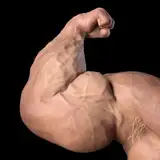
This is an older post, but I decided to revamp it. All land vertebrates share practically all the same muscles with a few exceptions . Apes and birds have clavicles unlike most other vertebrates, so morphology changes slightly, but a horse, human, and dog share 99% of the same muscles, just in different shapes and sizes. How did I get good at drawing creature anatomy? It all starts with humans.
In the first year of animation college, we had to memorize all 206 bones. We also had to make a booklet with diagrams and a tour through the body. It was a nightmare. But it prepared us for our exam. We had 3 hours to draw a scene that told a story using 3 skeletons; without any reference. The second year, we studied all the external muscles of the body. We would spend a month on one part. Such as the thighs, glutes and calves. Then move onto the torso for another month. Then the arms and so on. Once again, we had a test on the entire human body, however this time there was a sheet with the names of every muscle and we had to be able to point it out. Then third year was about taking all that knowledge we had gained and using it to create dynamic poses, moving the body in which it could tell a story through imagery alone. The fourth and final year was about placing drapery on the figures. Four years spent to master anatomy. It's not something you can learn in a couple weeks. I already had about 5 years of anatomy training before starting college, and even then it wasn't enough. So, if you ever feel like you're not making improvements even with all the studying you're doing, you're wrong. You are improving, but in tiny increments that aren't noticeable in the span of weeks, but they will be after years of repetition.
Bryan Antolin Pizarro
2020-08-11 03:21:18 +0000 UTCGiorgio
2020-05-31 15:08:54 +0000 UTCTroikAnia
2020-05-29 16:53:45 +0000 UTC