(198X) Factbook serialization, part 5
Added 2025-11-08 01:39:09 +0000 UTCContinued from the fourth part. Find the first part here.
--------------------------------------
DJEKKER, continued.
RURAL GANGSTERS

While the Marshals Service usually keeps you around where you signed up, there’s a contract system if you’re looking to pick up work somewhere hot. Get your boss to sign the papers and you’re good to go. It’s something of a custom: good for a new Marshal to go “around the bend”, get a picture of the rest of the country. Remind him that he’s working for the nation and not his own state.
That’s how I found myself in Djekker: home of the auto gang and the roadside ambush. In a land where everyone carries, there’s not much in the way of holdups. Your first warning is the bullets hitting you. There aren’t many gangs—not nowadays, at least—but those that are left are real cutthroats. Get the “man of the people” picture out of your head. That’s something for the movies, where the actor knows his mark’ll put up his hands. These guys would kill you just to see what you had in your wallet.
Back in the day they had infamy, power—even respect. Truck pirates and bank robbers, mostly. The most daring tried to go after the canal shipping. That didn’t last long. Generally, it’s gotten harder to make a killing in the developed parts of Djekker. They’ve circled the wagons. So you hide on the dirt paths in the woods and take what you can from travellers.
I figure that’s why they approved my contract. Finding people out there is bloodhound’s work, and if you do catch them it’s a fight. Good work for a dogface. I certainly earned my pay. But eventually I’d seen enough.
Marcel Laurent, Federal Marshal
GNOMES

I seen a gnome again lately. Now I was on leave from Catterall Air Base last month an’ I was drivin’ my Buffalo on Route 9 when th’ Number One bearing gave way. An’ there I was with no repair kit feelin’ damnfoolish. Then I hatches an enviable plan.
I took my last pack a’ Dog Heads—an’ it’s better if it’s the last pack—an’ popped the hood an’ laid out the cigs. Then I went n’ laid low.
Now you ain’t supposed to watch. But I swear by the tube of th’ Gun that I saw th’ tip of his pointy hat over the hood. An’ when I got back to the truck the engine was all right an’ the cigs were gone.
Jaan Goots, Aviator, 512th Fighter Regiment
VYKELAND-AND-DEIRE
OVERVIEW
End of the line in the East. Over the river lies the Land of the Dead. We’re friendlier with Calekrossa than we were a few decades ago; hard to make any Federal hold onto a grudge once he feels it’s settled. But the tensions are still there. For starters, we’re sitting on land that used to be theirs. We think we damn well earned it. For diplomacy’s sake, their government agrees. Their people here don’t. You want a good combat tour without ever deploying overseas? Go to Vykeland-and-Deire.
Rayleigh Irving, Federal Intelligence
THE RIVER DIORDNA

Of the seven waterways known to our western compatriots as the “Grand Intermarine Rivers”, so dear to their beating hearts in their role as the arteries of the land both then and now, the least beloved of their number is the Diordna, of which they hold only the western bank. On its own, such a demerit would be of little consequence. The Hackensack River, the longest and mightiest of the Intermarine arteries, against which the Diordna is a mere rivulet, shares such a birthmark. And yet, the words “I’ve been posted to the Hackensack” are cause for celebration; whereas “the Diordna calls” compels an aging Lowlander mother to strain her smile, and take brief refuge from her son to smoke an unfiltered cigarette.
It is not that the Diordna is a more hazardous place for sailors, soldiers, commerce agents and bordermen of all stripes than its lengthy counterpart on the other side of the Federation; in truth, the Hackensack’s broad waters are thick in some segments with yet-uncleared mines, and acts of small piracy unheard of along our border are a dismally frequent event there. Dear reader, I will dispense with any musing on the allure of danger, or the uselessness of life without death; I will not speak for the young Federals whose blue coats are faint specks on the decks of the river patrol-boats. Purchase a train ticket to the border and speak to them yourself—you have only decades left to do this. To save you your precious time, I will simply tell you why they dislike the Diordna.
The Hackensack is not truly—beyond the dreaming world of the legal, and the written word, but in hard, vital fact—a river of one blue bank. The Federals may bend the wolves and the satellite plainsmen as they would like; and so, it is their river, beyond which lie rustic places, bound inexorably to become like the Federation in time, or perhaps part of it. But across the Diordna lies an alien development, foreign in custom and sense, yet largely their equal in means and reach. The eastern bank of the Diordna is not blue. In living memory, our western compatriots recall that their bank, too, was purple.
Bashmachkin, Direcția de Informații Externe
CITY OF DUST

Kladnec, whose name in the Vyke tongue means “hideaway”, is situated near to the source of the Diordna in the mountains, occupying the fertile lowlands around it and filling the soil with coal ash and machine oil. As its water source is divided between our nations, so is the city, its once-stately riversides fortified with concrete walls, and its eight bridges (the ninth never rebuilt) flanked fore and aft by guard-posts monitoring traffic between its halves.
For three hundred and thirty-one years, Kladnec was a subject city of Calekrossa, under whom she flourished. A mere hideaway, of herdsmen and bandits in the hills, grew into a great industrial city, from whom railroads sprang west and east, and from whose individuals of culture sprang the name “Painter’s Hills” for the overlooks surrounding her sprawling quarters. Kladnec had, by the Thirty-Six Years’ War, become that most precious thing for a city: a Work, a high object surmounting its legs by the labor of generations; who, from her most stately works of art to her meanest staircases, soaked with dish-water and spirits, stood proudly as nothing less than a justification of human existence. The measure of that title is seen in the journeys by the wolves of the Regency, when it was still young, to make note of its layout and practices. I had even the pleasure of speaking to one of them—rest well, his soul!—in his time. Perhaps, I hope, there still cling some scraps of mottled pelt-hair to his bones, by which I might recognize him come the End of Days.
I have said this much of Kladnec to explain its importance as a target in the late war. Suffice it to say, dear reader, that our desire to hold it was as great as that of the Federals to seize it. The High Tomb, lately evacuated to the east, was of lesser value. For one year and one month, the full energies of both armies in their millions were directed at Kladnec.
Even the dead despaired.
By the end of the thirteenth month, the Federals occupied near the whole city, with the exception of a solitary pocket. Great gun batteries grew in steel gardens on the Painter’s Hills and methodically shelled what stones were left upright below them. The dead that fell in battle were not suffered to rise again by the Federals. It was decided—but I will go no further on the deliberation. Suffice it to say that the holdouts in Kladnec were already lost.
While the remnants still drew fresh bluecoats into the lines of battle, a secret weapon was brought along the eastern railroads leading into the city, and at a distance of twenty miles was loaded into a railroad gun and fired. Thus burst the first atomic bomb fired in anger on Oid. And by a few microseconds’ separation from their intended targets, its first victims were our own. The second victim was the Court Prospect, already thoroughly dismembered by artillery, but whose granite had yet to shed white tears. Only after the transient star had had its fill of collateral did it begin to work on the advancing Federals.
Today, it is more difficult to raise the dead in the interest of the living than it was in those days. It was sufficient to simply muster a graveyard and rouse them to their descendants’ welfare; but now, if the cause does not seem just, the greater proportion will utter “Kladnec!”, and return to their crypts.
Bashmachkin, Direcția de Informații Externe
You meet all kinds on blackwater tours, but the most talkative are always the dead men that run Callie orbital supply stations. Not what you expect, right? But I think they just get lonely. No light, no heat, no air except when a freight module putters in to haggle for O2 and parts and no-one else on board to talk to except a handful of other floating bone piles. A lot of them were poor men when they were alive, a lot of soldiers who feel they did their part for Calekrossa already, and now that they're dead they're looking to give their descendants a shot at a better life than they got; CalKos pays a healthy stipend to the living descendants of any rattler working the blackwater stations, passing on some of those savings on life support. Lot of stories, and my Vykal's passing so I heard near all of them.
Remember one told me how he'd been a warm body for the big war, an artillery observer—the dead don't quite 'see' like the rest of us, no eyes and all, so you need living men to plot fire missions, look through binoculars, that kind of thing. During the battle of Kladnec, he had been sent up onto Tezkty, one of the mountains south of the city, where the Painters' Hills meet the Vykals proper. It wasn't a pleasant billet, just a snowbound craggy peak but it was high, high enough that they could see the whole city laid out below them. On their first day, they walked the big siege guns onto a bridge and dropped it into the Diordna before 'we' could take it. He stayed up there for another 11 months, just a six by six dugout with a portable furnace, a sandbagged OP fifty feet below the peak, a field telephone, two other men in his forward observation team and the weekly supply party with firewood and rations carried up the mountain by mules and skeletons—forward observers down in the city were dying so fast there was a corps wide shortage and none could be spared to relieve our man.
By day, they watched the city, pounding our railyards in the western outskirts, marshaling areas for assault crossings, artillery parks in the Painters' Hills, or simply whatsoever part of the city weren't so shrouded in dust to make observed fire impossible, just so they were doing something. Sometimes, they would hear gunfire below them and they would crawl out to stick their heads over a cliff that looked down the north-western face where little white and green blobs of our boys in snow parkas hurled themselves at the battalions of dead men dug in just above the snow line, trying to kick the Callies off that damned vantage. He said the mountain stopped any of the 'little' guns from firing in support, but the big heavies, the 150s and 260s and the railway pieces with their longer ranges were further North, outside the city and so could fire past it, so he'd walk them along the line of each of our attacks, one shell at a time, "like watching sunflowers bloom in the snow", until we had enough for the day, and the blobs slithered and crawled and dragged their wounded and dead back to their own trenches.
By night, they watched the fires. Kladnec was burning round the clock of course, but during the day the smoke and dust made a constant low hanging cloud that hid most of the city at any given time and with it the flames. By night that cloud glowed a deep red from within, like a furnace with a little white halo of twinkling star shells. Sometimes one side or the other would put in a night bombing raid and the red would flare up to a flickering orange with the sticks of incendiaries, but a few months in and everything still left that could burn in Kladnec was already burning or ashes, and the firebombs soon sputtered back into the red furnace pulse. Then the sun would rise and the pounding would begin again.
When autumn brought sleet and fog they called fire missions at random onto preregistered positions, when winter arrived, the dead men sat in their trenches motionless until they filled with snow around them, and the supply party's drum of Devleti coffee became the center of the living men's world. He said there wasn't much to miss about living, but every once in a while he did miss the feeling of a warm cup of coffee on a bitterly cold night—Not sure if he was serious, that grin always makes me feel like a rattler's telling a sly joke, some dark but good natured one that only those in the know would pick up on.
Anyway, one clear morning late in the spring and the battle is going badly for the Callies, they've lost most of the city and what they have left is either holding on in a little spit of city from the river to the eastern suburbs, or trying to dig in a new line east of the hills to protect their own railheads and artillery. Now the white and green blobs come at Tezkty from three sides, and every day. But our man is told that today they'll have a special order: simple enough, walking the biggest of the railway pieces onto target, two shells to spot before a third shell which must be on target. Nothing too out of the ordinary there, they've worked the big pieces before and this one often fires alone, for it is a one of a kind, the largest in the Callie arsenal. The target's odd though, right in the middle of the city, the center of the Diordna. Not much need to bombard a riverbed with both the nearby bridges dropped and us across elsewhere, but theirs is not to reason why, so they get to work.
The first shell lands well long, but they do their calculations and three quarters of an hour later, the second lands short, very short. Either something is out of whack with the gun, or with the shells, but he splits the difference and calls through to fire again. Thirty eight minutes later, the third shell——
Kenet Polke, W.O. 3rd Class, F.S-N.S.C.
MOUNTAIN BASES

The Snowcap Mountains (“Havasok”, if you’re a local) are still Calekrossan territory. During the Battle of Kladnec, see, they dug in hard. We could keep them bottled up as much as we liked. The old tanks on second-line duty had a grand old time crushing the odd sally, and they couldn’t push enough bones out of the mountains to relieve the city. But we couldn’t stay in the hills, either. And we never did. After Kladnec, it wasn’t worth going any further. We’d had our fill of the East, and they weren’t in any more of an attacking mood.
Today the Snowcaps make decent money. It’s a pain for them to ship ores, because the smoothest route is through our country. It’s that, tackling the slopes, or tripling the distance by running south. But none of that matters to the Callies. They’re not holding them just because they’re rich.
There’s big guns in those mountains, dug in to stand the Last Firing and a day. Cold dead metal manned by cold dead men who don’t fear thermal recon satellites. If we want East Kladnec, we first give up every town and city within thirty miles.
Rayleigh Irving, Federal Intelligence
THE VYKE TONGUE

Don’t get it twisted: “Vyke” is a language, a people, and a place, depending on what you’re talking about. Nobody ever said they weren’t efficient. But to the nerds across the hall from my office, “Vyke” means the Intermarium’s own language isolate.
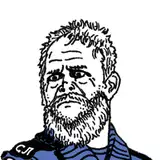
To the west, everyone speaks a Lowlander tongue, or some derivation of it. To the east, the Calekrossan family and its script holds the same place. (Hell, that script gets around. We use it—if not the tongue it’s meant for—whenever we want something to carry a prestigious air. Just look at any ranker’s shoulderboards in the States-Army. He knows what “СЛ” means, but not what the letters are called.) Then in the middle you’ve got Vyke. Stubborn, incomprehensible Vyke. Not a drop of common blood with the tongues to either side; nor, as far as we can tell, to anywhere else on Oid.
As far as the nerds figure, the Vykes have been in their country a little longer than forever. Their ancient memory is that of watching everyone who spoke like them disappear, one by one, folded into the masses to both sides. And now it’s not Vyke; it’s Vykeland-and-Deire, and only half of them still speak the language. Yeah. I’d get mad, too.
Rayleigh Irving, Federal Intelligence
DEIRE

What’s in a name? “Vykeland-and-Deire” is our word for the place. Ask a Vyke, and the whole place, both halves, is just “Vyke”. (It is—was—their country.) Ask the Calekrossan leering across the bridge from the guard post opposite yours, and he’ll say he’s in Deire. That’s what they named the place when they chased off the locals and built cities on the old mounds. At some point we got sick of mixing the two up and just started saying both names.
It fits, too. The northern half of the state is full of Vykes, and it’s no safe place to fly purple. The southern half is where you find the imperial edifices, the culture, the Eastern tongue. That’s the transplant. It may as well be a different place.
Don’t get it twisted. We let them wave their flag, and we play hands-off, but no amount of playing nice will make a people with any self-respect enjoy the status of provincial subject. They hate us, and they’re counting down the days until the rattlers back home get over the disrespect their own progeny gave them in Kladnec. Better wait a couple hundred years. Bones remember.
Rayleigh Irving, Federal Intelligence
BRUSHFIRES

There’s no such thing as a TKO in war. You’re only down and out when you’re down and out. It doesn’t matter how many of your bones the big guy breaks. It’s not over unless you allow it.
Our enemies to both sides are unwilling to exterminate us to the last Vyke. That’s a stroke of good luck. It means, over a long enough time, we’ll win.
Uine Bhalick, Subcommander, Vyke Home Army
It’s getting too hard to track all these ridiculous little separatist groups. Mainly you worry about the Vyke Home Army, of course—they’ve been around forever—but nowadays the fashion is to come up with your own stupid little flag and motto and style of car bomb every time you get three guys and some drinks together. It’s almost harder to figure out who you shot than to shoot them in the first place. Not like it was twenty years ago, when it was almost a stand-up fight.
I get it. Nobody likes an open-ended struggle. You can recruit guerillas who know they won’t live to see the end of the war, but it’s harder to do that with their kids (or their grandkids, for that matter). I’m not saying they won’t fight, of course. It becomes an institution: my father’s rifle, and the Enemy beyond the safehouse. But the new blood starts looking askew at one another and at their leaders. They say: Who’s the bastard holding us back? Who’s not pulling their weight? Who’s got a blue heart?
Rayleigh Irving, Federal Intelligence
VICTORY DAY

I grew up in Bronveld, a sleepy place at the mouth of the Grond, mostly notable for being sandwiched between the Brunbrook Training Area and hosting a refit yard for the Outer Fleet's nuclear boats. Just important enough that you learned how to do NBC drills as soon as you could walk.
Anyways, every Victory Day the local base would put on a huge show for all comers, sort of like the Shooter's Festivals over in Langport. You had marksmanship competitions with everything from pistols to vehicle-mounted machineguns, an air show, and every varietal of grilled sausage you can think of. But the real star of the show to me was the armored vehicles lined up on the berms, for which anyone could purchase ammunition and put a few rounds down range.
I remember spending the pittance earned at a summer job washing dishes in the dingy kitchen of the Broken Arrow to purchase a 115mm APDS-TP round, which I proudly carried to the waiting Tusker-B on my shoulder. It's hard to forget the first time you set foot in a tank, the smells of artillery lubricant and gun oil are almost overpowering. The report of the main gun was almost underwhelming—even with an open hatch—compared to the sound of the breechblock recoiling with the force of a railshaker at full steam and the metal on metal clang of a case striking the deflector.
The people who claim the festivals are really a recruiting pitch in disguise aren't entirely wrong. I wouldn't get the chance to sit in the gun seat of a tank for another few years, in a Duck as 2-5th Dragoons crossed into Cydoland. Still have the case on my desk.
Dijken Eikksen, F.S-A. General Staff
Victory Day is an Intermariner celebration: a great big expending of booze and bullets recalling the end of the Thirty-Six Years’ War. They have a lot to be thankful for. Victory over their old foes; their new foes; over Father Death and his black rain, denied its fall on the great Federal cities by the same Lowlander ingenuity that fucks up amateur astronomy to this day. They won. The throne of all Oid was theirs. They ought to enjoy it. In their own country.
Yes, they pay well. They’re nice masters. But comfortable chains are still chains. And whether they do it to a plan or not, every little ounce of blue they bring in is at the expense of Vyke. You know why Intermariners are fat? It’s because they don’t even need to stomp on your face to destroy you. Your kids will be taught Lowlander, because that’s what the good jobs need; they’ll dress like Vansans, with guns at their hips, to fit in with the master culture. And in one hundred years—so short a time for a people!—your kind will have ceased to exist in all practical terms.
Who alive now has the right to permit such a thing to happen? Have we lost our notion of good and evil as separate from pleasure and pain? Even our brethren in the forest can make that distinction. Can we not?
So spare me the hand-wringing about the car bombs, the kidnappings, the street ambushes. Of course we kill more than just traitors and enemies when we do this. But we have no alternative. Loyalty to your own kind, to your swatch of the great fabric, is the highest moral imperative. Now tell me: would you rather our work be fast or slow?
Uine Bhalick, Subcommander, Vyke Home Army
Comments
They turn into a cloud of high-velocity shrapnel plus the completely intact engine block.
Rifle Infantry
2025-11-10 23:33:05 +0000 UTCThe teasers of Calekrossa are great, but the City of Dust entries were so well-written with unique voices that I had to pace around my office reading them out loud.
Adolfo Munoz
2025-11-09 02:19:00 +0000 UTCHow durable are Ezels against Vykeland car bombings?
Gardenoid
2025-11-08 05:06:08 +0000 UTC