(198X) Factbook serialization, part 2
Added 2025-09-21 01:17:02 +0000 UTCContinued from the first part.
--------------------------------------
VANSA, continued.
BUILDING TO LAST

“Built Petty”/”Petty make” — A product of inferior quality; particularly, one with an artificially short lifespan (i.e. planned obsolescence). Referential to the industry of the Petty States of Rygos, who are held to habitually work along these lines.
Adje’s World Slang, 198X Edition
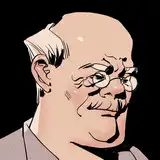
My cousin, Franklin, is a middle executive for Dic Automotive. One of those suits that’s comfortable in overalls; spends more time on the assembly floor than in his office. Knowing a thing or two about your own industry is good business. Can’t sell cars if you don’t know what they’re like; if you don’t know why anyone would want one, or who might buy.
He travels. Lots of business in the satellite states and Rygoland. After all: we build to last. A man with a car is a son with the same. His grandchild might replace it for something newer, but that just means another cheap old car on the second-hand market. One that runs just fine at four hundred thousand on the odometer. What all that means is that it’s hard to squeeze more money out of a happy customer. They’ve got what they want already. Sure, some will want another, or a replacement, but what you want is sustained growth.
So you look abroad. Find a place where they build junk cars: cars that last just a hundred thousand kilometers, sold purely for the annual facelift. (Imagine—a nine-year-old engine and bodywork with no history to it. All backwards!) We undercut them. We build better, stronger, and cheaper: we’ve the economy of scale. Gotta keep the factories going. Buy Federal: and tell your friends to do it, too. No unsatisfied customers.
It’ll be a long time before Oid runs out of potential buyers. Now and again, though, we run into the kind of tinpot dictator that won’t let his people buy what they’d like. Franklin says: When this comes up in the papers, put some money in Langport Ferry, Vernon and Honeydyne. Or any other arms company that seems promising.
Now, if you ask me, all this business about durable goods and foreign markets is too exhausting to care about. I sell alcohol. That’s something Intermarines will never have enough of.
Staunton Ross, CEO, Johnson Bar Brewery
THE EZEL

ALL OF OID DRIVES AN EZEL.
Since its introduction, Dic Automotive’s EZEL has outsold every import car line—both inside and outside the Federation. It’s easy to see why. High-technology engineering gives the EZEL the room, fuel economy, and power at the wheels to outdo any of the most modern subcompacts—foreign or domestic.
AS MUCH GOOD AS YOU CAN FIT IN A SUBCOMPACT.
Open up one of its four doors and you’ll find all the good things an EZEL can offer you. Four-wheel independent suspension, robust all-wheel drive, remarkable fuel efficiency, and power steering. And a design that YOU can rely on—with rugged systems, no-nonsense layout, and a complimentary toolkit, jack, and operator’s repair manual.
FOUR DOORS — FOUR WHEELS — SIX CYLINDERS.
Our traditional inline-four engine has propelled millions of EZELs across Oid. But we’ve heard your calls for more speed, to roam the longest highways. Order your EZEL this year, and opt into a powerful new V-6 engine—zero to 100 km/h in nine seconds.
AND ALL OF THAT FOR FOUR-FIFTHS AN IMPORT’S PRICE.*
*Based on most recent manufacturers’ reported retail deliveries.
Full-page ad in THE LANGPORT BROADSIDE
The smokestack is a Federal affectation—a mass-marketization of the “bare machinery” school, whose designers lionize the moving parts, the exposed engine in its living vitality, the churning pistons and snorting valve-heads like a thumping heart and thrashing limbs. Outside their nation it is unseen beyond heavy trucks and earthmovers.
The Ezel is a poverty car in their land. If you have means you’d buy something larger, squarer. But it was always meant to be an economic weapon: to be sold to the foreigner, to trump his own automakers—a demonstration of Intermarine excellence, even in small things.
Hence the smokestack: a reminder that, though greatly satisfactory, it is not of your make.
Giorgio Moceri, University of Baba Gadou
Export and domestic Ezels are identical from the outside, but the driver’s seat is night and day. See, exports are all fucked up. Gone is the hand throttle on the steering wheel, or the heavy-sprung clutch pedal that you engage with a stomping motion. They even changed the gearbox to make it jump less; it’s a little thinner without the shielding.
It’s like a Petty Stater car. You do all the throttle work with your foot, and you shift all awkwardly, trying to dodge the kick in your ass when it changes gears. I dunno—I guess there’s something to be said for a super-smooth ride. But I don’t like it. It’s like they’re trying to make you forget about the car.
Rayleigh Irving, Federal Intelligence
DIC SOUPCAN

Dic Soupcan is a name most Intermarine boys learn before they do Hendrik van Veldjen—for if we love anything more than freedom, it's good business. You already know the classic story printed on every can: a founding hand-in-hand with the infant Confederacy, feeding the nascent States-Army’s soldiers with durable canned and bottled goods. Nobody seems to bat an eye when they see the same name on toilet seats, biocomputers, and tank powerpacks—nor that the general store, where they buy groceries and scoop eleven-mil rounds by the pound from wooden barrels, carries the same name.
In the Ebon Forest they’d call it an “asset clique”. What started as a soup cannery kept branching out into everything profitable; buying up poor industries, hooking them together, and making a killing off of the growth. A sizable chunk of Federal oil, water, and chemical pipelines are Dic Soupcan products: governed by Dic Soupcan valves and logic controllers, and guarded by Dic Soupcan tanks.
What about the man himself? It’s not normal that a business this big should be so opaque at the top. Yet Dic Soupcan, the company, keeps its directoral affairs to itself. Official bulletins, changes in policy, and so on still bear the classic quill signature. I say: with three hundred years of brand image behind him, he’s a great favorite. He’ll never die.
Rayleigh Irving, Federal Intelligence
CORPORATE PERSONHOOD

One thing I’ll give Lowlanders: even if they’re consummate experts at lying with only true statements, they still make for stand-up businessmen. See, the buck has to stop somewhere. In Cydoland we make agreements between men, not faceless firms. In Vansa they give the firms faces—and they stick to the act.
The last high-profile corporate wardship case I can think of is Berend Consolidated—nice, up-and-coming chemical firm out near the border with Sumpkassel. Anyways, they get a new batch of execs. Some of those completely misbegotten bean counters who figure they have a formula for everything—you know, “gentle touches and second-order effects”. They figure they can cut costs here and there without squeezing safety too much. Then forty people die in a plant fire and spill.
Kind of surprising that such an open-and-shut case still runs all the way up to the Tulip Court. Anyways, the C-suite tries to squirm out of it; but you know how Lowlanders are. You just have to hit them with direct questions, wall off their escape routes. Some of them get away on pleas; the CEO’s slapped with child abuse charges. See, he was Berend Consolidated’s legal guardian—and look what he did to it!
That’s the best case, really. Clear top-down problem, and the corporate person’s civic duties—the company militia and all—were spotless. They liquidate firms for that kind of foul play.
Rayleigh Irving, Federal Intelligence
CYDOLAND
OVERVIEW
My home.
Cydoland might be a Federal state—and one of the Founding Four, at that—but it’s not by shared blood or Lowlander culture. You ask that mass on the floodplains what they think of us, and they usually say something like this: suspicious, taciturn, sparse. Cold as the mountains. Better them in front of the dogfaces than us.
But, as much as some hate to admit, we do have a lot in common with the Lowlanders. We’ve got the same love of freedom and big business; and they’re our oldest partners in both. We want their bread and port traffic; they want our mineral resources and meat shield.
It’s a working arrangement. We don’t mind holding our own.
Rayleigh Irving, Federal Intelligence
THE CYDOLAND CANTONS

The Canton Mountains—”Kantonbergen”, if you’re a Lowlander—are so named for a reason. They carve up the mountains: each canton, a powerful city-state or alliance of small cities, plus whatever towns fall under its sphere of influence. Each and every one of them looks to itself for the basics: its own army, its own money, its own border control. Frankly, you can barely call the whole thing a “state”. Cydoland proper is little more than two piles of sworn oaths: one between the cantons, and one to the rest of the Intermarium.
And the Council of the Cantons, I suppose—but what a joke! Go ahead and try to impose terms on sovereign cities, even ones you’re from. Best the old whitebeards can do is make recommendations.
Rayleigh Irving, Federal Intelligence
THE LANDSGATHERING

Like the Lowlanders, we love democracy. Unlike the Lowlanders, we’re serious about it. Let them have their tangled laws; their indirect methods; their appointed officials and greased hands. They seem to enjoy that game. All the better for them.
Almost every canton (certainly, every canton worth noting) practices the ancient concept of the Landsgathering. It’s simple, as it should be. Get everyone who can vote together (that means everyone with their old service rifle—your family sidearm doesn’t count, at least in those cantons who do it right). Under the open sky, read off a list of motions. If you’re in favor, hike your piece into the air. That’s it.
Every now and again there are calls to abolish it. Find something more modern, more equitable and secretive; something more than one in four people might bother to show up for. Hey, we’ve got some flat land too. Go move there.
Rayleigh Irving, Federal Intelligence
THE SWORN OATH

The Lowlander can’t lie. No, really, he can’t—not under duress, not under torture. Some little pipe-bend in his brain just won’t let a knowing falsehood, made to profit off you, through. (It’s the intent that matters. A good joke, or a work of fiction, is all fine. But a Lowland accountant locks up when you ask them to file cooked books.)
We can. But somehow we still end up being more honest businessmen than them. See, there’s a million ways to lie without lying; and a great many of them invest a lot of effort into getting around their own heads. It ends up being a shield for them: “hey, when did I ever lie to you?” And if what they said didn’t come to pass: “well, honest mistake.”
Every agreement between cantons—or the wider Federation, for that matter—lies on the sworn oath. That’s not something to be taken lightly; mothers used to spank their kids for saying “I swear” about chores. You break a sworn oath, no matter how minor, and nobody will ever take your word for something again. You’re an untouchable; your best course of action is to eat your gun. There are cantonal martyrs so recognized because they died in the fulfillment of some mundane oath; like Ed Campbell, who ran through a roadside ambush he knew was coming for a payroll delivery he swore he’d complete.
Takes me back to elementary school. We had this school play about it. Campbell hung his head as soon as he’d said the words, because he knew he’d killed himself. But he still saw the oath through. Rolled his tin-lizzie into town with a radiator full of holes and a seat covered in blood.
Rayleigh Irving, Federal Intelligence
LAWYER REQUIRED FOR CIVIL CASE
NON-LOWLANDERS NEED NOT APPLY
Hornpass Cantonal Herald, classifieds
CANTONAL MARTYRS

The host of lupar bayed, their sharp white teeth were near,
Muskets’ breath ill slowed them, their bloodlust all could hear,
Now seeing they were doomed, the reisers felt despair,
And would have been well torn, if not for one man’s dare.
Seeing his brothers’ fear, a brave man, Ashton Reed,
Said this to the reisers: “Now’s the time for a deed;
A pension for my wife, and tutors for my boys;
I’ll hold them off myself, although as a chew toy.”
Saying thus he stepped forth, and leapt into their midst,
The wolf-men closed around, and through his flesh they ripped,
They tore him into shreds; how awful was his end!
But now the muskets spoke, at just an arm’s extend.
They killed a hundred wolves; each bullet pierced three heads;
And put the rest to flight, crawling over their dead.
The reisers buried him, poor tattered Ashton Reed,
And built a stone marker: “Remember this man’s deed.”
Songs of the Western Cantons, Vol. I
MOUNTAIN MINERS

Cydoland is a miner’s state. No two ways about it: the mountains are some of the richest on Oid. The Federation is built on Cydoland’s ores. It’s a matter of cultural identity. The mountains reward the brave and the resourceful.
I won’t go into detail about the big mining firms; those are pretty much the same, the nation over. What tourists marvel at, rather, are our “bootleg” mines. Funny, that: the enormous pits in the earth are a forgettable eyesore, but a hole in the ground someone dug on the mountainside is worth paying to see.
It’s a simple operation. You’re a goatherd, or a country electrician, or something like that. You figure you want some extra money on the side. Get two of your friends together, have some drinks, and drive a shaft into the hillside. The mountains are kind: they have a lot of little deposits close to the surface, just for people like you. Coal, mostly—have your friends lower you in, fill up your cart, and keep at it until you’re tired.
Bootleg coal, from someone you know, is usually cheaper than the industry stuff. If you’re digging, it’s free. Well—no such thing as a free lunch. Every now and again a tunnel collapses. But it was your choice to dig the damn thing.
Rayleigh Irving, Federal Intelligence
SHOOTER'S FESTIVALS

It’s not something a proud Cydolander will readily admit, but we’re big on tourism. We’ve got beautiful mountains, clear crisp air, ski resorts. Big money in Langport blows off steam here. It adds years to your life.
The big summer event in any canton—the one that draws in crowds and money—is the Shooter’s Festival. All of them have one. A long time ago it was a formal militia drill: long hot days firing at bullseyes, with scores tallied and prizes given to the best. Over time it became a sport, and then a matter of cantonal pride. Your best shots wear the city colors at the Grotehaven fest—in front of half the Federation’s cameras.
More than anything else, it’s an opportunity to get drunk and spend money. Make your bets; play a million carnie games; stuff your face. Vernon, the artillery manufacturer, makes a kind of grilled pork sausage with spiced ketchup and fries: it’s become the traditional audience food. It’s got to be responsible for at least ten of my kilos.
Rayleigh Irving, Federal Intelligence
Comments
Cydo shooting carnie currywurst sounds fucking awesome.
James Vizza
2025-10-06 03:31:55 +0000 UTCI really like how the Lowlanders physically cannot lie like a computer encountering an error while for the Cydolanders it’s almost a religious thing to ensure you keep your word.
Chris Stochaj
2025-10-02 03:50:35 +0000 UTCBig fan of how these flesh out the federation, I think I like more that every so often in part 1 you saw perspectives from the outside, and I do wish we saw a Santi perspective here and there. I eagerly await the Lupe entries
SDries
2025-09-21 09:31:11 +0000 UTCthe pump guns and pequods amidst the sea of flutes is a really rad visual (to be fair most of these are, especially the late Mr. Reed) you've really nailed these, man, shit feels alive in a way not a lot of modern fiction does. (military industrial complex branded knackwurst and fries sounds like it goddamned rocks)
Sweatwater
2025-09-21 02:08:21 +0000 UTC