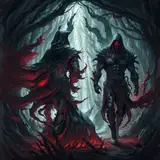
Constantinople late 1432
The carriage rattled over the ancient stones of the city; each jolt served as a sharp reminder of how long it had been since Theodore last laid eyes on Constantinople. Once, he would have marveled at the great capital—the glimmering mosaics of the churches, the scent of spice and salt drifting from the harbors, the domes rising like celestial orbs above the city’s uneven skyline.
Now, each shimmer of torchlight on golden tiles felt like a jeer.
He sat rigid in the carriage, fingers drumming against his knee, his face a careful mask of indifference. The streets outside bustled with life—merchants hawking wares, priests murmuring evening prayers, children darting through alleys like shadows. There was a time when such sights had stirred something in him, a quiet reverence for the empire’s resilience.
That time had passed.
Selymbria had been a cage, gilded with duty but stifling nonetheless. His removal there, disguised as a reward, had been nothing short of exile. A message. One he had read clearly.
His lips curled in distaste as the carriage neared the Theodosian Walls, their weathered stones standing defiant against time, even as the empire behind them crumbled. This city still clung to the illusion of grandeur, like a beggar draped in the robes of an emperor long dead. The Blachernae quarter loomed in the distance, its silhouette dark against the fading dusk. It was there that the next act of this empire’s tragedy would unfold.
A soldier riding alongside his carriage slowed to match his pace. “My lord, we will reach the Palace of Blachernae before the evening bells.”
Theodore gave a slow nod, his gaze lingering on the Hagia Sophia as they passed within sight of its massive dome.
A monument to faith. A monument to compromise.
His grip on the seat’s edge tightened. Soon, he would stand before his brother, Emperor John, who still entertained his foolish delusions of unity with the Latins. A sick man trying to bargain with the gravedigger, thinking a few kind words would delay the burial.
He exhaled, slowly and steadily, forcing his mind into clarity.
He had waited long enough.
Soon, the city that had cast him aside would witness his return—not as a humbled vassal, but as something greater. As something worthy of the throne.
Theodore stepped from the carriage, boots striking the polished stones of the palace courtyard. The Blachernae Palace rose before him—a fortress and a relic in equal measure, its high walls and isolated towers standing in defiant contrast to the slow decay of the empire it sheltered. Once, it had been a place of triumph, the seat of emperors who led armies into battle. Now, it felt more like a tomb.
Servants moved swiftly around him, eyes lowered, their robes whispering against the marble floors as they escorted him through the dimly lit corridors. The palace still clung to its opulence—vaulted ceilings adorned with fading gold leaf, frescoes of long-dead emperors watching from the walls, their painted gazes hollow with time. Yet, to Theodore, these were no longer symbols of majesty but ornaments of decline, reminders of a throne more fragile than ever.
At the doors to the imperial chamber, a servant paused to study him before announcing his presence.
“Theodore Palaiologos, Despot of Selymbria.”
The doors groaned open.
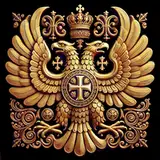
Inside, Emperor John VIII Palaiologos sat on a modest throne, his robes of deep blue embroidered with golden double-headed eagles. The candlelight cast shadows across his lined face, accentuating the quiet weariness beneath his dignified composure. Beside him stood his advisors, their expressions carefully neutral, their presence a reminder that no meeting in this court was ever private.
Theodore approached, bowing stiffly.
“Your Majesty,” he said, his voice controlled.
John VIII studied him for a long moment before speaking. “Theodore, it has been too long.”
“Indeed, Majesty.”
A pause stretched between them, a quiet weighing of intentions.
The Emperor gestured for him to rise. “I am pleased to hear that the transition of power in Mystras was smooth. The empire has need of loyal hands, now more than ever.”
Theodore’s mouth thinned. “Loyal hands.” Words chosen carefully—words that reminded him he was being watched. Judged.
“My loyalty is to the empire, Majesty,” he replied evenly.
John VIII’s lips curved in something like amusement. “Yes. And to Orthodoxy, as you have often said.”
The shift in conversation was deliberate. Theodore could feel the Emperor steering them toward the inevitable topic.
“We have had success in securing further support from the West,” John continued, his voice calm but pointed. “With Constantine’s efforts in Italy, his dealings with the Pope, and the victory at the Hexamilion against Murad’s forces, we have more than just words—we have momentum. The Franks and Venetians see us as a cause worth backing, but they will not commit unless we stand united.”
Theodore did not answer immediately. He had known this was coming.
“You speak of the union,” he said at last.
“I do.” The Emperor leaned forward slightly, his fingers clasped together. “This city—this empire—cannot stand alone against the Sultan. We must present a united front. The union is not merely a matter of faith, but of survival.”
Theodore inhaled slowly, forcing the sharpness from his tone. “Survival at what cost?”
John’s gaze did not waver. “At the cost of necessity.”
There it was.
“Majesty,” Theodore began carefully, his jaw tight, “to compromise the faith for political gain—”
“Is it compromise,” John interrupted, “or is it wisdom? You believe the Latins will consume our traditions, but I tell you, it is the Ottomans who will consume our very existence if we do nothing.”
Theodore’s fingers curled into his sleeves, hidden from view. “Our people will not accept it. And neither will I.”
The Emperor exhaled softly, a trace of something unreadable in his expression—disappointment, perhaps, or resignation.
“Then we are at an impasse,” John murmured. “Again.”
Silence settled between them, heavy with unspoken grievances.
Then, with a measured tone, the Emperor added, “You would do well to learn from your brother, Constantine. He understands the weight of these decisions.”
Theodore felt a flicker of something close to fury, though he mastered it before it showed.
“My brother,” he said carefully, “is not here.”
John VIII watched him for a moment longer, then finally leaned back in his seat. “No. He is not.”
A subtle dismissal.
Theodore bowed once more, turning on his heel and striding from the chamber, the Emperor’s words pressing against his thoughts like a blade at his throat.
Constantine.
The favored son. The one whose absence was now being used as a rebuke.
He forced his anger down, focusing instead on what lay ahead. This meeting had only confirmed what he already knew.
John would never change.
Which meant neither could he.
The empire needed stronger hands to guide it. His hands.
Night had fallen over Constantinople, thick with silence and the scent of the Bosphorus—a humid mix of salt and decay. The lanterns lining the streets flickered, casting long, restless shadows along the ancient walls of the city.
Theodore stood at the edge of a deserted alley near the Kaligaria Gate, his cloak drawn tightly over his shoulders, his breath slow and controlled. He had spent the evening at the palace, enduring veiled admonitions and lectures on unity, on patience, on the necessity of bowing to the inevitable.
But patience had long since worn thin. He had bowed enough.
Beyond the gate, the city murmured with distant life—merchants closing their stalls, the occasional drunken laughter from the taverns near the harbor. But here, near the northernmost walls of Blachernae, all was quiet. Too quiet.
The sound of footsteps reached him first. Deliberate. Measured.
Theodore turned his head slightly, though he did not move from the shadows. He recognized the tread before he saw the man.
A hooded figure emerged from the gloom, his form briefly illuminated by the lanternlight before slipping back into darkness.
“The men are in position,” the figure murmured.
Theodore nodded, his gaze shifting past him toward the gate. He had chosen the Kaligaria Gate precisely for this reason—it was less used, often overlooked, a perfect entry point for those who wished to come and go unseen.
“How many?” Theodore asked.
“Fifty are stationed within the city, waiting for your signal,” the figure replied. “Another thirty are just outside the walls, concealed near the monastery ruins. And Demetrios’s forces…” He hesitated. “They will come when the time is right.”
Demetrios.
His brother had sworn loyalty to the cause, but Theodore knew better than to trust his word completely. Loyalty was a currency in this empire—one that could be spent or stolen.
Still, there was no turning back now.
Theodore exhaled slowly, his hand tightening into a fist.
“This is the only way,” he murmured, more to himself than to his companion. “The Emperor clings to ruin. He does not see the danger before him.”
The man at his side hesitated before speaking. “And if he resists?”
Theodore’s expression did not change. He already knew the answer.
“Then he will be removed.”
A gust of wind stirred the leaves near the walls, a whisper of movement in an otherwise breathless night.
Theodore turned, the flickering torchlight catching the sharp edge of his profile.
“Tell the men to wait for my command. When the gate opens, we move.”
The figure gave a curt nod before vanishing into the darkness, leaving Theodore alone once more.
He lifted his gaze to the walls of Blachernae, the imperial residence that would soon be his.
No turning back now.
The iron hinges groaned softly as the Kaligaria Gate swung open.
For a moment, there was only silence—the kind that lingers before a storm, before the first strike of steel. Then came the hush of boots against cobblestone, the muted rustle of cloaks drawn tightly around armored men.
Theodore exhaled, his breath misting in the cold night air. No turning back now.
From the darkness beyond the gate, Demetrios’s vanguard poured in—a force of a hundred men, half of them Ottomans, their weapons glinting faintly in the dim torchlight. Their presence was a bitter necessity. Allies of convenience. Nothing more.
Theodore watched as his own men—the loyalists he had gathered in secret—moved into formation, their expressions grim, their hands steady on the hilts of their weapons.
“We move quickly,” Theodore murmured to the commander at his side. “No war cries, no wasted breath. By the time the palace wakes, it will be too late.”
The commander nodded and signaled forward.
Eighty men—his best soldiers and a handful of loyal anti-unionist sympathizers—broke off toward the palace interior, disappearing into the labyrinthine halls of Blachernae. Their orders were clear:
Silence the guards before they could raise the alarm.
Secure the imperial chambers.
Take—or kill—the Emperor.
Thirty others fanned out through the nearby streets, blocking key roads to prevent reinforcements from reaching the palace. The remaining twenty held the gate, waiting for Demetrios’s main force—three hundred more men—to enter.
The first kill came swiftly.
A palace guard, barely alert, barely aware, barely breathing before his throat was opened with a single slice. His body was caught before it hit the ground, dragged into the shadows as his blood seeped into the cracks of the stone.
The attack unfolded like clockwork.
Shadowed figures slipped through corridors, steel flashing in the dim glow of torchlight. Blade met flesh. Armor met silence.
Theodore advanced through the palace halls, the distant echoes of struggle growing louder. His hand rested on the pommel of his sword, though he had not yet drawn it. Not yet.
Another cry—brief, stifled, gone.
A door flung open. A guard stumbled backward, blood pooling at his feet. The attackers moved with precision, cutting through the palace defenses before resistance could form.
Then came the first true clash.
A group of imperial guards, roused from their chambers, stumbled into the corridors—eyes wide, swords half-drawn, caught between sleep and battle.
“Traitors!” one of them roared, but the word was swallowed by the sound of steel.
A brutal melee erupted.
Theodore stepped aside as one of his men lunged forward, driving his blade into a guard’s chest. The air filled with the raw, desperate sounds of battle—steel scraping against steel, grunts of pain, the dull thud of bodies hitting marble floors.
Then—a sudden thunder of boots.
More soldiers. The alarm was spreading. Not fast enough.
Theodore’s pulse quickened, but his expression remained cold. This was war. It was never going to be clean.
Somewhere deeper within the palace, the Emperor still lived.
Not for long.
As if on cue, the palace doors burst open. Through them came the rest of Demetrios’s army.
The clash of steel and the cries of the dying echoed through the Blachernae Palace, a once-grand Palace now reduced to a slaughterhouse. Blood smeared the marble floors, staining the imperial halls that had stood for centuries.
The imperial chambers lay ahead, the great doors shut, their gilded surface marred with fresh gouges from desperate blades. The guards inside were loyal, but outnumbered.
Theodore stepped over a fallen soldier, his breath steady, his grip firm around the pommel of his sword.
A single nod. A signal.
His men surged forward.
Axes splintered the doors apart.
Torchlight spilled into the Emperor’s private chamber, illuminating the final, gasping remnants of resistance—five imperial guards, their swords raised, standing between their sovereign and death.
For a moment, time stretched thin.
Then, the silence shattered.
The battle was short and merciless.
The last of the guards fell, their lifeblood pooling across the marble tiles. And there, standing among the wreckage of his kingdom, was Emperor John VIII Palaiologos.
The sovereign of Byzantium. The man who had ruled an empire in decline.
Theodore stepped forward, his shadow stretching long across the room. John did not cower.
“Is this your remedy, Theodore?” the Emperor asked, his voice quiet, controlled. He looked upon the corpses of his guards, then back at his betrayer. “Will the Latins come to save us now?”
Theodore hesitated. For the first time.
He had imagined this moment many times. Yet now, standing before the man he had called Emperor, there was no satisfaction, no triumph—only inevitability.
“This empire has rotted under your weakness,” Theodore said, his voice tight. “You barter with Rome like a beggar, believing their mercy will save us. You would sell our faith for the illusion of salvation.”
John’s lips curled into something almost amused. “And you would have me kneel before the Sultan instead?”
Theodore did not answer.
Behind him, footsteps approached. Heavy, certain.
Demetrios.
Theodore turned as his brother entered the chamber, his expression unreadable. Behind him, Ottoman soldiers stood in quiet observation. A reminder. A warning.
Demetrios stepped forward, studying the scene—the fallen guards, the shattered door, the Emperor standing tall even in defeat. Then, he drew his sword.
John VIII did not flinch.
Theodore tensed. “We take him alive.”
Demetrios tilted his head, a flicker of something unreadable in his eyes. Pity, perhaps. Or something colder.
Then, without hesitation, he drove his sword into the Emperor’s chest.
Theodore’s breath caught.
John gasped, a sharp, wet sound, his body jerking before the strength left his legs. He crumpled to the floor, blood seeping across his robes, his lips parting as if to speak—but no words came.
The Emperor was dead.
Theodore’s fury ignited. “Why did you do that?”
Demetrios turned to him, the blood still warm on his blade.
Then, he struck.
Pain—white-hot, searing—erupted in Theodore’s side as Demetrios drove the sword into him. Deep. Merciless.
Theodore staggered, his breath stolen from his lungs, his vision narrowing to the sight of his brother’s face—impassive, resolved.
“You hesitated,” Demetrios murmured. “That’s why you die now.”
Theodore gasped, his knees buckling. His hands grasped for something—his sword, his brother, his empire.
His fingers curled around nothing.
He fell.
His blood mingled with the Emperor’s.
His vision blurred, darkness creeping in.
His last breath was not a plea, nor a curse, but a truth whispered through crimson lips:
“You think you saved the empire, brother? No… you’ve doomed it.”
Demetrios stepped over his dying form, his soldiers already moving to subdue the last remnants of Theodore’s men.
He turned to the Ottoman warriors who had watched in silence.
“It is done.”
Outside, the bells of the Hagia Sophia tolled.
The bodies of John VIII and Theodore lay for a full day in the courtyard of Blachernae, a grim warning to those who might dare resist. But there was no uprising, no attempt to avenge the fallen emperor.
There was no one left to fight for him.
The city had already lost many of its pro-unionists—those who had stood by John’s dream of unity with Rome. Many had been purged in the chaos of the coup, cut down alongside the palace guards or arrested in the hours that followed. Others, seeing the inevitability of their defeat, fled into exile or took refuge in monasteries, hoping for mercy that would never come.
This left Constantinople’s true majority in control: the anti-unionists.
And Demetrios was their emperor.
Unlike John, Demetrios saw the union with Rome as heresy, a betrayal of Orthodoxy, a desperate illusion that would never bring salvation. His rise to power, though violent, was welcomed by many as a return to the true faith. The clergy—those who had quietly resented John’s negotiations with the Pope—did not weep for their fallen emperor.
The Patriarch, however, hesitated. Though he was no a true friend of the Latins, John VIII had still been the rightful ruler. A murder in the dark, a throne taken by blood—this was not how the Church wanted an emperor crowned.
But Demetrios had the army. The army and the city garrison had already accepted his rule. The nobles, too, saw where the wind was blowing and bent the knee before they could be labeled enemies.
And so, the Patriarch was forced to agree. Unwilling, but powerless, he blessed the new emperor.
Only one voice openly opposed Demetrios—his mother, Helena Dragas. As Empress Dowager, she refused to recognize him as Emperor, declaring that Constantine was John’s rightful successor. She had hoped to serve as regent until Constantine could return from Morea, believing that only he could truly save Byzantium.
But her claim was ignored.
Within days, Demetrios ordered her sent to a monastery in Selymbria. It was not an execution, but it was no act of mercy either—she was a prisoner in all but name, condemned to live out her days in isolation.
She had been spared only because she was his mother.
Within days, the city had accepted its new emperor.
The streets did not rejoice, but they did not resist. For the people of Constantinople, this was not the first time a ruler had been overthrown, nor would it be the last.
Demetrios had taken the throne.
But now, he had to keep it.
The Ottomans had helped him rise—but what price would they demand? The Venetians and the Pope, who had once seen Byzantium as a cause worth aiding, would now turn away.
And then, there was Constantine.
He was far away now, in Morea. But he would return.
And when he did, the empire would bleed again.
Author note: In the original timeline, Demetrios twice attempted to claim the throne—first in 1442 with Ottoman support( He sought Murad II's support to overthrow John VIII. With Ottoman backing, he marched on Constantinople to claim the throne.) and later in 1448, hoping to be proclaimed emperor after John VIII's death. He was also a well-known anti-unionist, likely more for political reasons than religious conviction. In this timeline, however, events have accelerated, leading to an earlier confrontation.
Kirra
2025-04-30 16:36:23 +0000 UTCSimon Kellis
2025-02-15 18:32:47 +0000 UTCRENAISSANSE SI
2025-02-15 17:43:42 +0000 UTCRENAISSANSE SI
2025-02-15 17:39:39 +0000 UTCRENAISSANSE SI
2025-02-15 17:35:56 +0000 UTCEthan Eichelberger
2025-02-15 10:40:50 +0000 UTCForTheEpicness .
2025-02-14 10:19:56 +0000 UTCBobby Hill
2025-02-14 05:37:12 +0000 UTCrussell marsh
2025-02-14 03:55:01 +0000 UTCGabriel Melnik
2025-02-14 01:45:53 +0000 UTCPearl of the Orient
2025-02-14 00:38:05 +0000 UTCHugo23
2025-02-14 00:33:40 +0000 UTCBen Robbins
2025-02-13 23:41:10 +0000 UTCRENAISSANSE SI
2025-02-13 23:12:00 +0000 UTCRENAISSANSE SI
2025-02-13 23:07:35 +0000 UTCGabriel Melnik
2025-02-13 23:06:54 +0000 UTCRENAISSANSE SI
2025-02-13 23:00:05 +0000 UTCRENAISSANSE SI
2025-02-13 22:56:51 +0000 UTCRENAISSANSE SI
2025-02-13 22:55:16 +0000 UTCRENAISSANSE SI
2025-02-13 22:54:19 +0000 UTCRENAISSANSE SI
2025-02-13 22:52:46 +0000 UTCRENAISSANSE SI
2025-02-13 22:51:03 +0000 UTCBen Robbins
2025-02-13 22:38:48 +0000 UTCGabriel Melnik
2025-02-13 21:01:05 +0000 UTCEmpty Crate
2025-02-13 20:38:27 +0000 UTCKatherine
2025-02-13 19:04:26 +0000 UTCFlygar
2025-02-13 18:10:09 +0000 UTCBen Lockwood
2025-02-13 17:56:25 +0000 UTCioshf fikry
2025-02-13 17:51:59 +0000 UTCElaine
2025-02-13 17:51:19 +0000 UTC