Those of you who have followed my work for any stretch of time probably knows that when I do an interview, I take it pretty seriously and I take my time and I answer questions thoroughly. Partly because I always feel like I'm not making myself clear, partly because I have a tendency to talk (or type) a lot. Anyway, I don't care if it's a fanzine interview very few people will see or a site with some kind of a following, I treat them all equally, and while it might not be a quick turnaround, I always try to answer the questions and get back to the interviewer.
Live interviews are easier, and more fun, but I tend to go off topic a lot and never get around to answering anything adequately. I also tend to talk way too much. I prefer written interviews in that I tend to be more on topic and sound less like a fucking imbecile that way. I still type a lot, but it never goes as far afield as a live interview. Another benefit is that it spares the interviewer from having to do a transcription of a phone conversation with me (I've unintentionally sent three people to the ER and had to get a restraining order against two others).
The biggest problem with a written interview is that it can be a problem for my hand, and it can take me a while to get back to someone. Because while I enjoy doing interviews, they're not a priority. Between the hand pain and my schedule it can take a while to finish up an interview. And sometimes you send it back and...you get ghosted. Which is classy. Especially if I'm doing something that doesn't have an agreed-upon deadline, or is for a fanzine which doesn't have an impending deadline. In this particular situation, I was ghosted after informing the person that I was running later than I'd hoped, and I was ghosted after I sent in the completed interview. I figured it was almost finished, so I gave them the benefit of the doubt, finished it and sent it off.
Maybe they were eaten by bears, maybe they converted to a religious sect that disavows comic books. I don't like having my time wasted, or my typing wasted, so here's the orphaned interview for you folks to read. Please forgive any typos that might be in there, I checked over it before sending it out but it's always possible I missed something. I tend to send these kinds of things out late at night when I'm falling asleep.
And so:
1. What initially inspired you to pursue a career in comic book creation?
I wanted to be a cartoonist ever since I was a kid growing up on newspaper strips and comic books. It wasn't like there was a single conscious choice over it, it was just my being immersed in comics. The medium drew me to it, no pun intended. Like a lot of other kids, I copied the comics I liked, Peanuts, MAD and Marvel superheroes. There was a lot less pop culture competing for your time and attention back in the 70s, comics weren't exactly respected but they were everywhere, on newsstands, in newspapers and magazines, all the doctor and dentist offices seemed to have cartoon collections in the waiting room. I just soaked it all up, and I liked it enough and my brain hooked up with it all in such a way that it's what I wanted to do when I grew older. The ink in the comics sections and comic books rubbed off onto my hands and got deep into my bloodstream.
2. Can you tell us about your creative process? How do you approach developing characters and storylines?
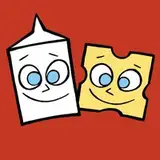
It depends on what I'm working on, but, by and large, it's all notes on paper. You get ideas and write them down and file them. I have separate notebooks for different projects, one for Beasts of Burden, for Blackwood, Milk & Cheese, one for horror ideas, one for jokes. I'm not great with computers so I still rely mainly on writing notes down. I can't say I know where ideas come from, I get a lot of my best ideas while driving, or washing dishes or when I'm in the shower. The brain just connects things, sometimes it solves puzzles that help a story script, sometimes it just comes up with a bit of business that you write down and store for later use. Sometimes it's a joke, or a character name, or a scene. That part of the process can be mysterious, things just pop into head. The process of turning your ideas into stories and comics is less mysterious, because part of it is mechanical. If I'm doing four-panel gag strips or something like Milk & Cheese, it's a matter of using the ideas I think work best, laying out the panels and filling them up with words and pictures. If it's a more involved comic, or a script for Beasts of Burden or Blackwood or whatever, the process is more involved. Condensing the notes and ideas into a plot breakdown, then doing a page-to-page breakdown, then breaking the pages down into panels, and finally working out the dialogue. There's more structure involved, I used to wing it back in the day, I'd just start drawing a Bill and Ted comic based on a loose plot description, breaking the story down and making stuff up as I went along. There's a lot of ways to approach the page, it depends on what works for you, and for your editor, if you're working with one. As far as characters go, they usually develop over time. If you watch a long-running TV series, you can usually see that they don't have a complete grasp of the characters when they start out. There are certain traits in place, but the final version takes a while to develop as the writers work with them. You have to pay attention to making your characters stand out from one another, differentiating their attitudes, mannerisms and way of speaking, the same way you'd want to differentiate them visually to stand apart. Characters make or break most stories, I try to put a lot of work into how my characters behave and interact, and to not make them generic, or treat them like chess pieces to just be moved around for plot purposes. There should be a reason for them being on the page. I'm not great at describing my writing process, but if there's one thing I try to do is to pay attention. Not be lazy. In the writing and the art. If you're engaged, there's a good chance the reader will be engaged.
3. Throughout your career, you've worked on various titles and projects. Is there one that stands out as particularly memorable or meaningful to you? If so, why?
There's a few. Milk & Cheese, because it's something I came up with as a goof – it wasn't supposed to be a comic, and it ended up being the work that in many ways launched my career. It got a lot of notice for an indy comic, it also got Sarah and I hired as writers for the Space Ghost Coast to Coast show. The Eltingville Club was supposed to be a one-off comic that became a series of stories and an Adult Swim TV pilot, and it's had a very weird recent resurgence with a younger audience. That was unexpected and has been very gratifying. Beasts of Burden is my favorite project that I've done in collaboration, co-created with Jill Thompson, and it's the comics writing work I'm most proud of. World's Funnest was a nerd dream project that allowed me to work with people like Jaime Hernandez, David Mazzucchelli, Dave Gibbons, and many other creators who I'm a fan of.
4. What do you believe sets comic books apart as a form of storytelling?
The language of comics, obviously. The pacing across panels and pages, the time gaps in-between the panels, the deliberate selection of words and images, or just images. Unlike books, you have visual information, unlike films, the images are static, and you can more easily get inside character's heads if you want to. There's so much to play with and work with in those spaces, anything you can imagine you can put down on the page/screen. And if you're making a comic by yourself, you are in charge of so much information – character, dialogue, settings, locations, costume design, atmosphere, mood, tempo. You can create small moments and entire worlds. You can do pantomime, you can have endless conversations, whatever. And you can indicate sound, although that can be tricky. But you can put a lot in front of the reader, and a lot inside their heads, as well – inflection, sound effects, loud and soft dialogue. All with lines on paper, or a monitor. And there's also personal style, like a singer or author, the line work is a signature style for the cartoonist that sets their work apart from others, and that style has a lot of effect on the text, the story. It's pretty special and definitely an undervalued medium.
5. How do you navigate the balance between humor and darker themes in your work?
It's usually not something I set up at the start, it usually comes naturally, sort of how you balance out flavors when cooking. Not that I know how to cook. But when something gets very serious I like to puncture it when called for with some humor, and when things seem to get silly I like to slap that down with something dark or serious. A lot of that comes down to the characters, because people have a lot of disparate traits, and sometimes you'll find yourself laughing at the most inappropriate moments. One of the times I laughed the most in my life was at a friend's father's funeral, they weren't close and there were no tears shed, we all sat around talking and laughing, with a corpse fifteen feet away. We got so loud the funeral director had to ask us to quiet down. If a story is just dire all the way through it can get monotonous, and something that's funny is often not taken seriously, even as satire. I like to change things up, especially in my horror comics, but also, sometimes, in the humor work. Horror and humor have some things in common, in timing and surprises and audacity. They can both go very hard, and they can complement one another if done well. The hope is that you're doing it well. I try.
6. What advice would you give to aspiring comic book creators looking to break into the industry?
I really don't have a goddamned clue what to tell younger cartoonists and writers anymore. The industry has changed so much, and I'm practically an outsider in some ways now. I have so few contacts left in the industry. I have not been paying attention to what goes on in the business or the medium, it's impossible to keep up nowadays, with webcomics and the book market and whatever the hell's going on in the direct market and shops. All I can say with any confidence is that there's a difference between making comics and breaking into the industry. I know how you can make comics, you just go make comics. And you can post them online. And for all intents and purposes, you're “in comics”. As far as making a living, or breaking into the traditional industry, or industries? I have no idea. None. It's a different world than when I broke in, then there was just the one comics industry. Now there are different paths, the direct market mainstream stuff, the art comics route, traditional publishing and bookstores, webcomics. I have no idea how I'd try to break in if I was coming up now, probably just try to do my own webcomics and make them as good as I can and get a day job and see what happens. I don't know how networking works at conventions anymore, I never had a real portfolio, I worked in a comic shop and fell in through meeting people in person, and work created work. It was also a much smaller industry when I broke in, and tolerated much cruder work, like mine. . But if you want to make comics, if writing and drawing comics calls to you, make comics.
7. Your work often delves into satire and social commentary. How do you see the role of comics in reflecting and influencing culture?
I think comics, like any medium, any artform, can obviously reflect culture and society, comics is a great format for satire. But as far as influencing culture goes, I can't say it makes any real headway other than marketing and memes. If The Simpsons, with decades of shows and billions of views, can't influence culture beyond selling stuff and getting people to post GIFs, what can? Does satire in general change or affect anything? Has any stand-up comic affected change? Satire mostly preaches to the choir, and that's probably the best it can do. And that's still worthwhile, we need to feel like we're not alone and know that others understand the world's a mess and most of us are broken robots. But it solves nothing, it does very little beyond the laughter and nodding in agreement. And in my small neck of the woods, it's a peaceful protest that very few people are paying attention to. It's one reason why I've been doing a lot less humor work, that and everyone's a comedian now on social media. And none of it changes anything, unfortunately.
8. Can you share any upcoming projects or collaborations that you're excited about?
Not really, I'm sorry to say. I'm mostly working on private commissions and my Patreon, which along with original art sales has been my lifeline for the last few years. I've had some health issues, carpal tunnel in my drawing hand and degenerative arthritis in my neck have limited my ability to work. I recently got a steroid shot for my arm but my hand still starts hurting badly when I draw or type for a few hours (like now, ha ha). I do have some old work coming back into print next year, which should be announced fairly soon. I also have a few variant covers coming out soon for several Dark Horse series, Operation Sunshine, Barfly and another that hasn't been solicited yet. Beyond that, I still hope to get back to writing the next Beasts of Burden arc before the end of the year.
9. As someone who's been in the industry for a while, how have you seen it evolve over the years, and where do you see it heading in the future?
Like I said before, the industry is almost unrecognizable to me now. If I had any idea where the industry was going I'd try to get there first and prop up my sagging career. But then again, I've always mostly done what I wanted to, and not considered the commercial angles. I like making my own stuff. It's difficult to do that and only that and not get a day job, somehow, so far, I've managed it. I would guess, though, that the kids comics being published through traditional imprints will continue to gain strength. And the superhero-centric direct market will always be a quagmire.
10. Finally, what do you hope readers take away from your comics?
Enjoyment.
Tim Kocher
2024-07-17 20:28:20 +0000 UTCBuzzFeedAldrin
2024-07-17 12:34:59 +0000 UTC