Learning Day: So You Wanna Be a Gambler! Learn how to Win at Slots
Added 2025-10-14 12:00:14 +0000 UTC
It used to be that you couldn't gamble on your phone while jacking off and smoking weed. You used to have to go places to do things in America: a casino, the adult bookstore, your weird dealer's house where you don't know how long you're supposed to hang out with him to be polite. We've become a soft nation, addicted to the full spectrum of sinful pleasures which are immediately accessible to us at all times. We want it all, and we want it now.
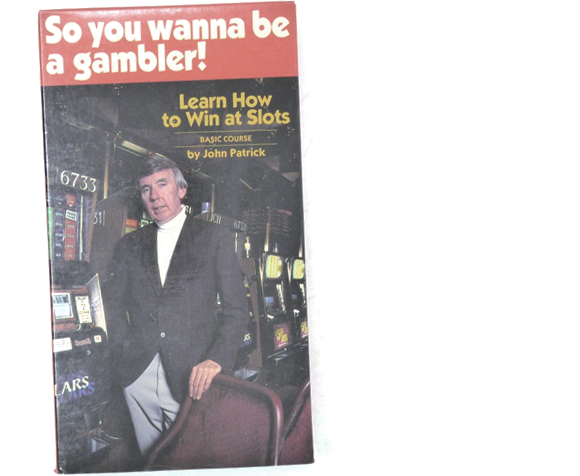
John Patrick weeps.
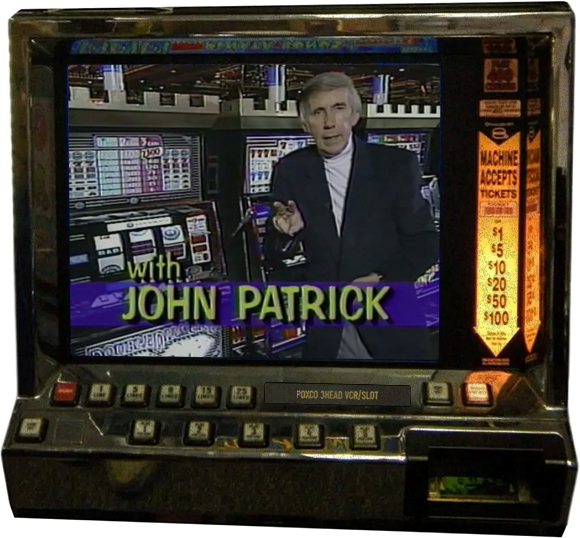
Who is John Patrick? He's the insanely unlikeable star of So You Wanna Be a Gambler! Learn How to Win at Slots.
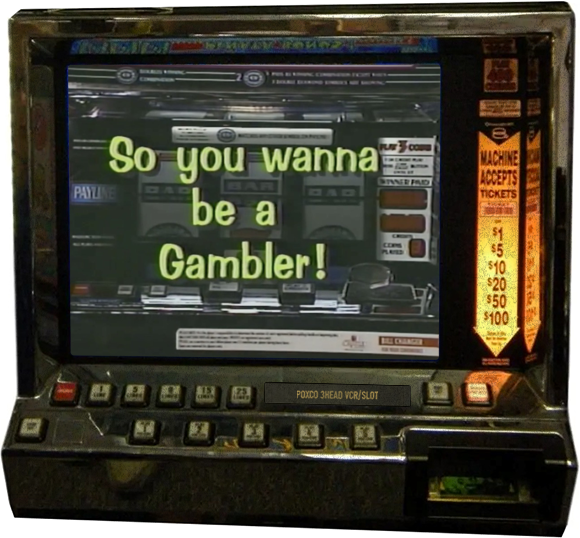
Or maybe it's called SuperSlots?
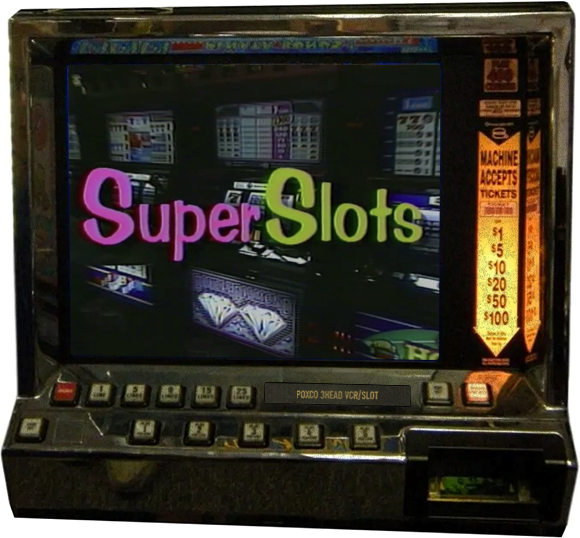
In addition to this video on slot machines, John Patrick produced at least 21 other video tapes and eight books on living the desperate, anxiety-ridden life of a professional gambler. Released in 1995, How to Win at Slots has lower production values than most home videos of the era. For a full hour, John Patrick thoroughly demolishes the thrilling, dangerous, sexy image of gambling popularized by films like California Split and The Gambler and, of course, Burt Reynolds' Heat (see below).

John Pa– sorry, I'll let Burt Reynolds finish what he was doing.
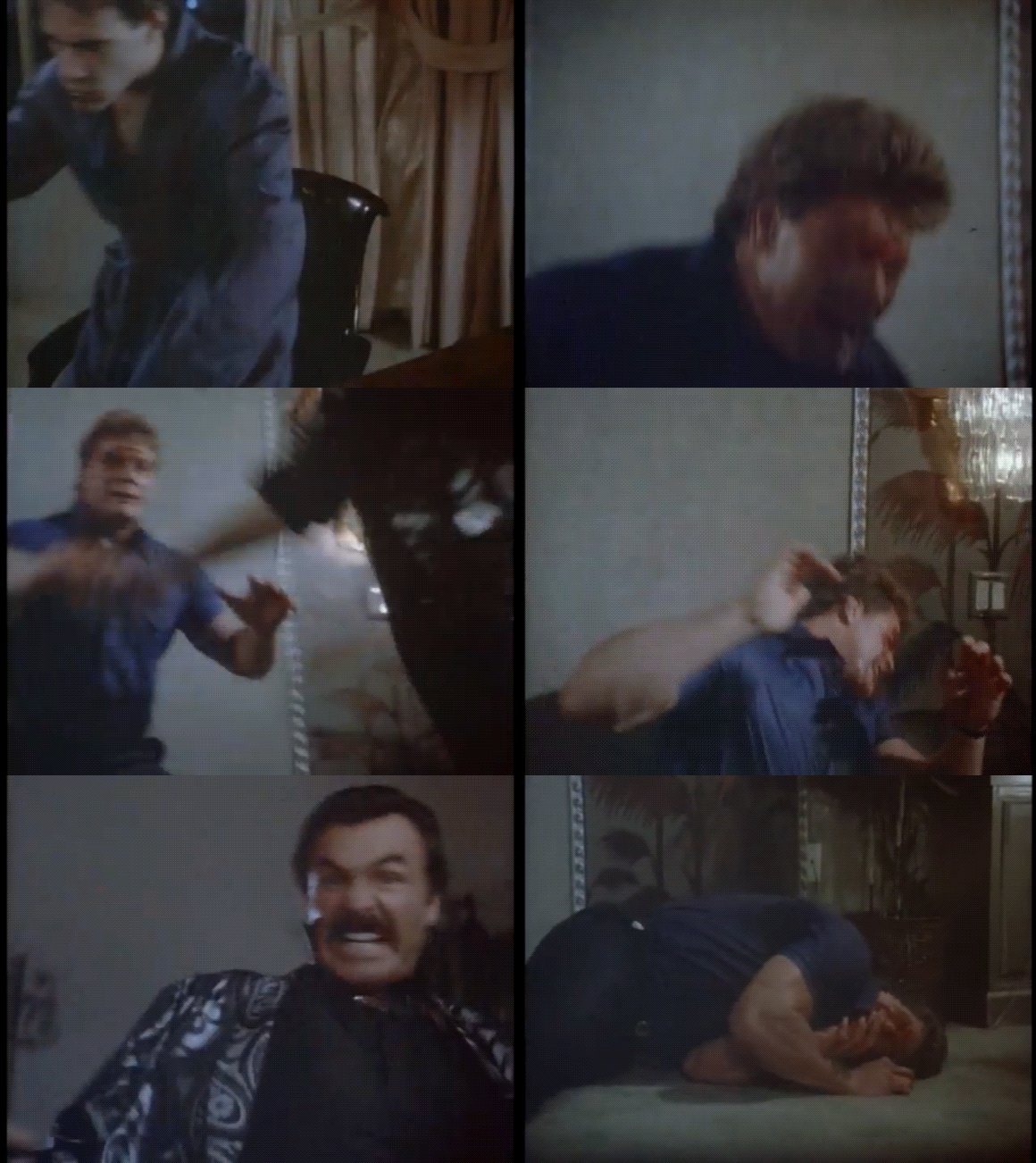
Back to what I was s– oh, it looks like Burt Reynolds in the film Heat (1986) had one last thing to do.
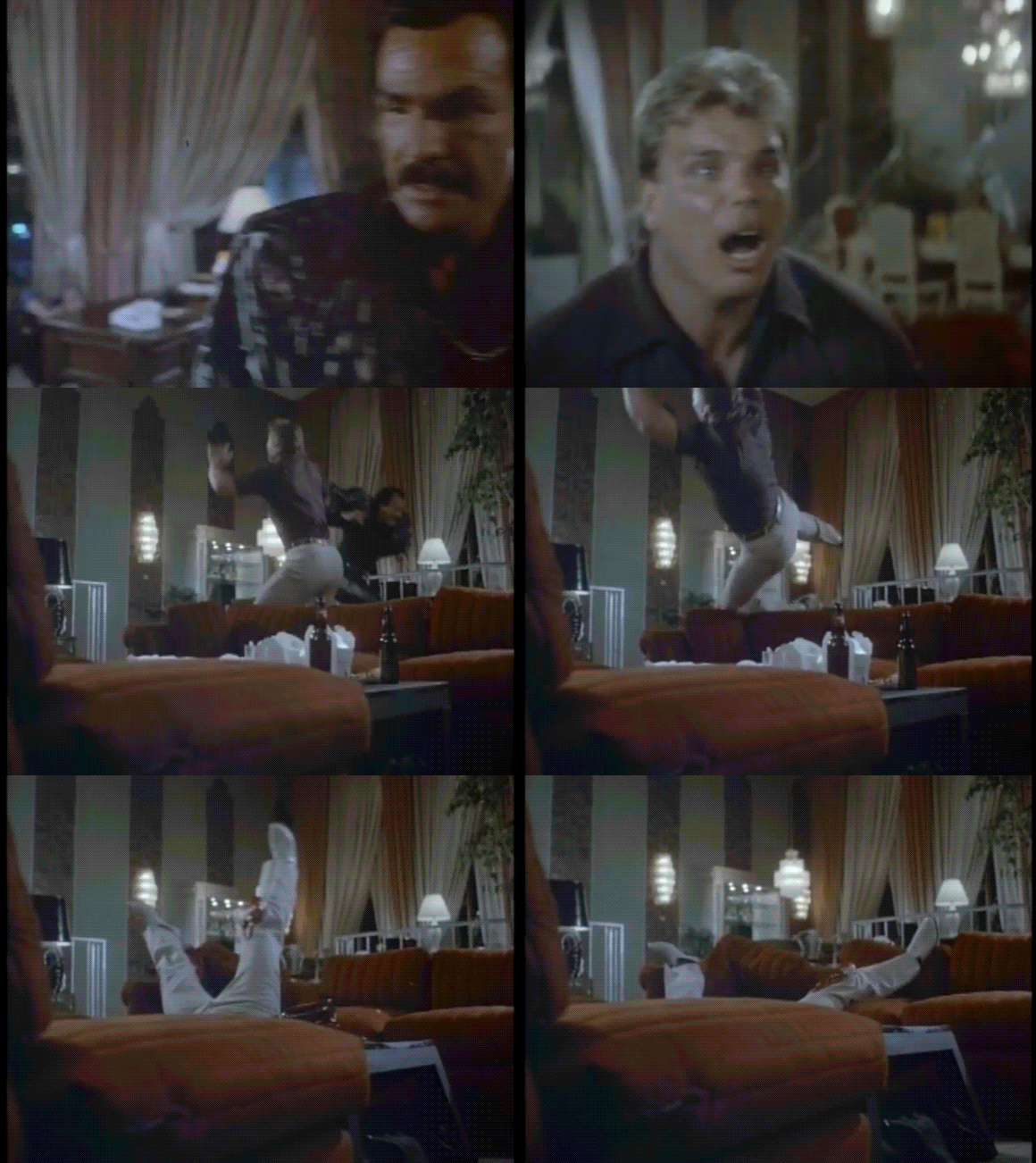
Heat, an outstanding movie about the glamor of Las Vegas. But like I was saying, that glamor is undone by John Patrick standing in front of a row of slot machines in a sportcoat and turtleneck and joylessly listing off "strategies" on how to defeat them.
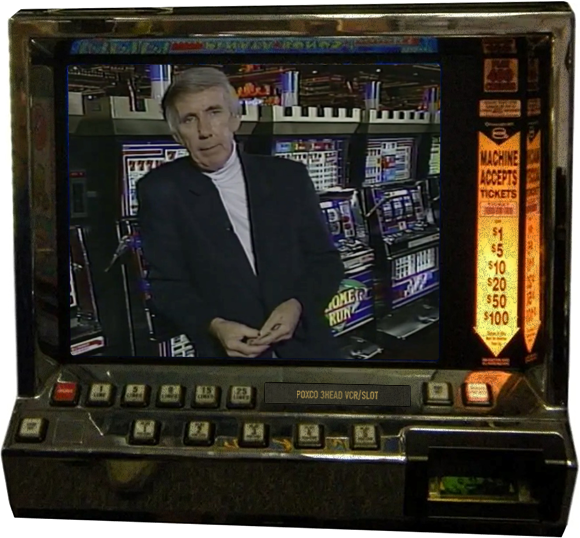
Haha but surely as a mid-90s instructional VHS tape, we're going to get some cheesy Video Toaster effects, right? No, because those cost money. And gambling is not about the thrill of the big win. It's about putting in the hours, working the angles to shave down the house edge and minimize your losses. Form follows function. Thus, nearly the entire runtime of the tape consists of John Patrick looking down at his notes, making pointless utterances about how slot machines might work, possibly.
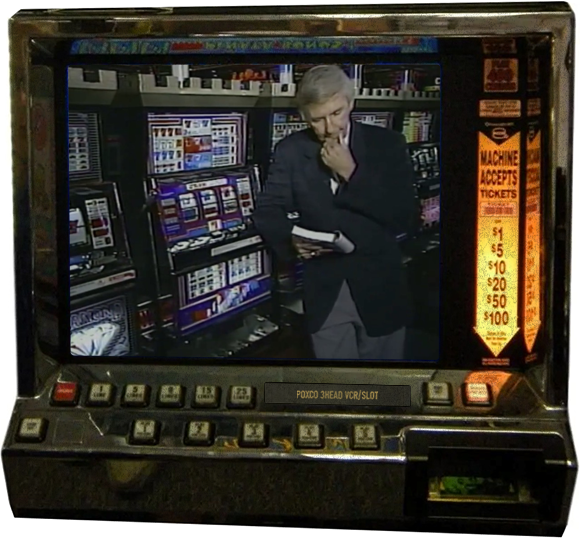
The most variation we get on this format is a short segment in which John Patrick sits down with Jim Hildebrand, the legendary "Slot Sleuth," and listens as he explicates his understanding of slots, derived from thirty years of feeding coins into slots and hoping against hope that the unfathomable machinery within will, this time, finally deign to turn his life around.
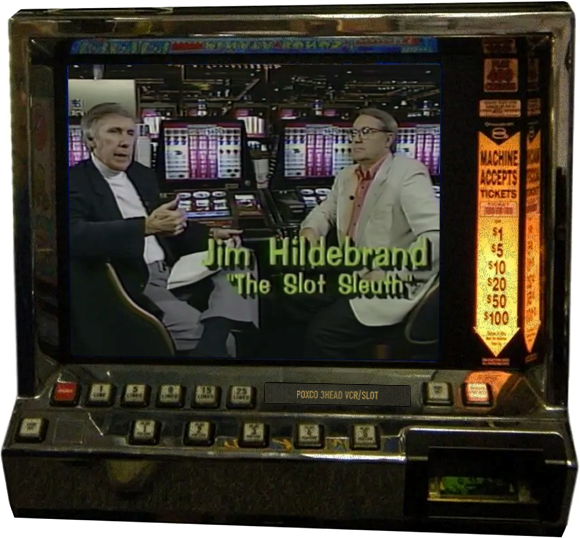
John Patrick and Jim Hildebrand have the social chemistry of two pedophile ventriloquists fighting over which one of them gets to take the first bite out of the eight year old they're planning on cooking. At one point, Jim just begins listing slot machines that he likes. "I like the Red White and Blue. I like the Lucky Seven. I don't like the fruit machines," he explains, as he might rattle off his opinions of various cuts of boy meat. Incredibly loud casino music mercifully drowns out the majority of their conversation.
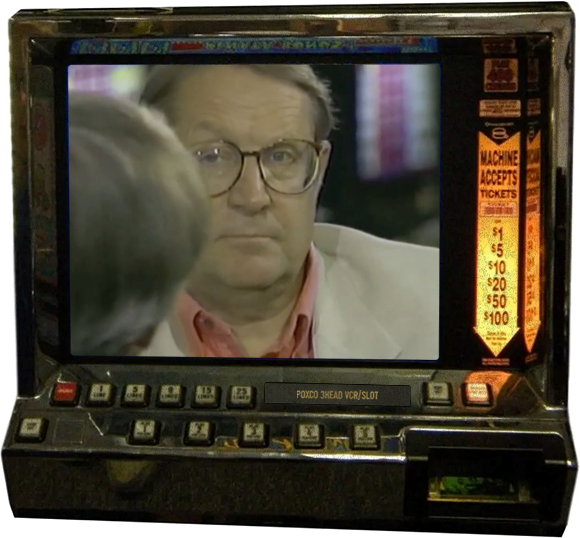
Jim explains "RNG," or "random number generation." Today, that concept is familiar to anyone who's played a video game. But in 1995, it was a novel idea. A computer inside the slot machine generates random numbers, meaning the results of each pull are up to chance!
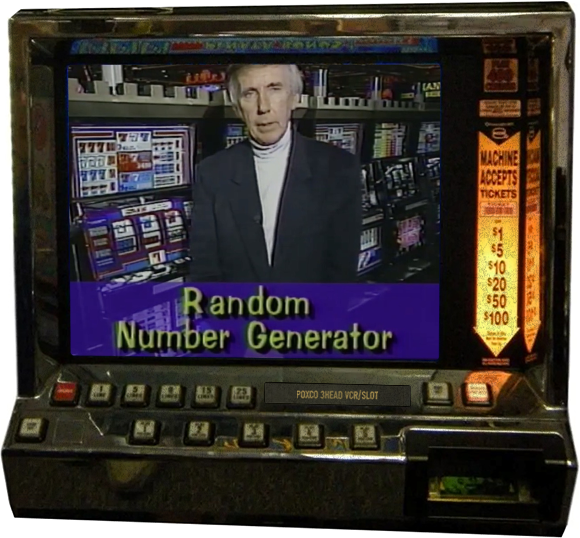
That should be the end of the video. Once you've stated that your subject is governed entirely by the whims of fate, you've admitted that there's nothing anyone can do to influence its outcome. And it's not like there are rules to deal with, like there are with roulette or craps. You put coins in, sometimes more coins come out and sometimes they don't. Mostly they don't.
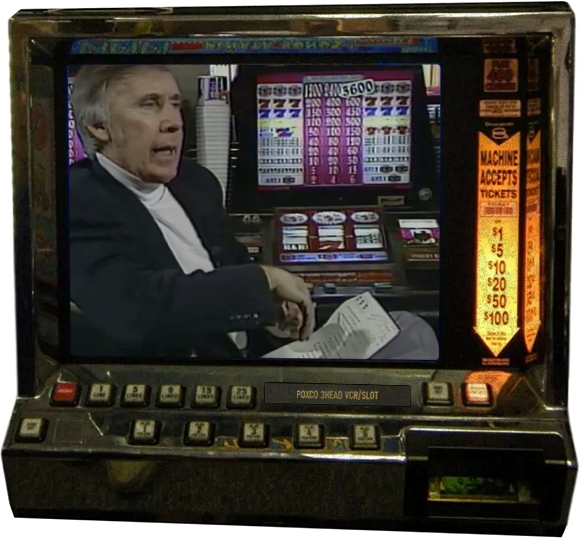
But even after the conversation with Jim Hildebrand, John Patrick has only killed about fifteen minutes of VHS tape, which he was hawking for $39.99 — in 1995, mind you, which would be around $85 today. And so, the thin broth of his soul visibly leaching out of his body, he enumerates the high level techniques for winning at slots. First, you need to keep in mind the big four: bankroll, knowledge, money management, and discipline.
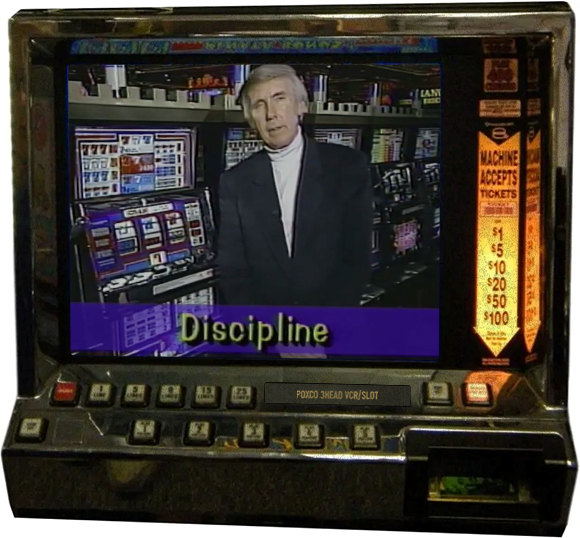
Actually, he says you don't need knowledge for slots, so it's really just the big three. There's also the little three: theory, logic, and trends. Armed with these concepts, John Patrick tells us, we can win at slot machines. Ignore that Jim Hildebrand just said there is no such thing as a trend in slot machines. That doesn't matter. John Patrick says that if he's at a "hot" machine, he'll piss his pants if it means continuing to win. I believe him.
Now, I'm not a big gambler, but one thing I know about gambling is that you have to have some kind of "system." Same goes for drug use. See, without a system you're at risk of falling into addiction. But if you decide, ok, I only smoke PCP on nonconsecutive days, or decide that you're going to go Up & Down the Steps at Caesar's Palace, then you've gotten control of the situation. Or at least the illusion of control, and hey, that's probably the best we can hope for in this life, right?
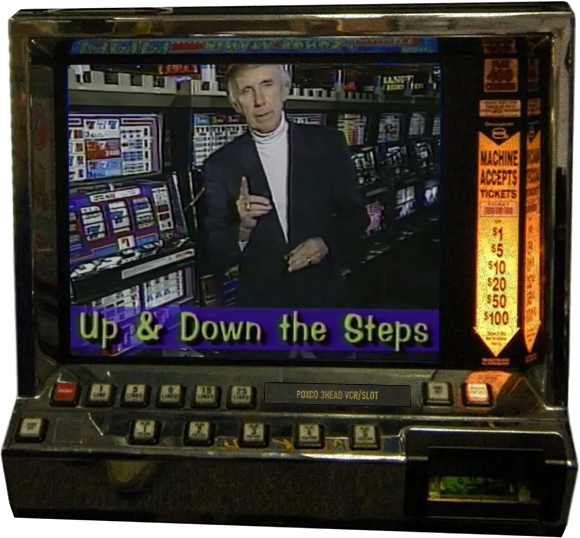
"Up & Down the Steps" means you start playing by putting in one coin. Whenever you win, you increase the number of coins you put in by one. When you lose, you go back down one. And sure, that seems perfectly sensible, but it's not the only method you can use. John Patrick has other techniques for us too, like "The Straight 60" and "Naked Pulls."
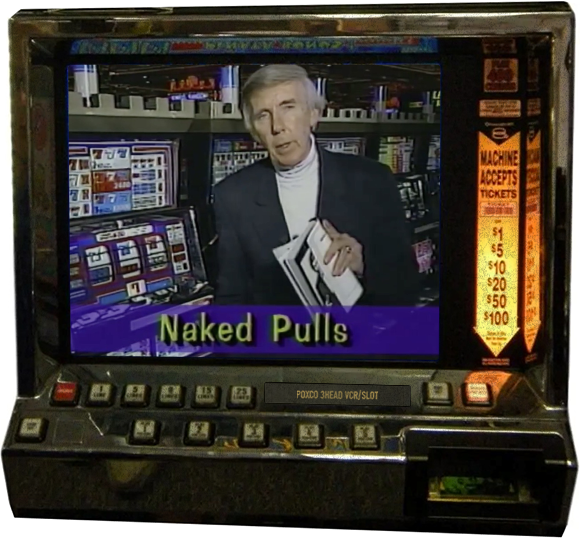
He throws so many different systems at the viewer. Some are based on your bankroll, some are based on win and loss streaks, others still are based on general vibes. He helpfully adds "you can take these systems and add your own theory to it," which is less than nothing. That's like if I wrote a strategy guide for Silksong where I gave you some general ideas of tactics that I thought might defeat a boss but then added that hey, maybe you've got your own ideas? Why not apply those to my unhelpful suggestions?
Only it's worse than that, because at least in that scenario you could end up with an actionable plan on how to succeed. So You Wanna Be a Gambler! Learn to Win at Slots is essentially a man inventing complex and confusing structures around an activity which cannot meaningfully be affected by those participating in it. In other words, he's developing a ramshackle cosmology of gambling and inviting viewers to pull parts off of it and toss them into whatever bullshit concoction of prosperity gospel, crystal magic, and hillfolk superstition is percolating in the cauldrons of their brains.
Maybe it's no surprise then that the best part of How to Win at Slots is how openly antagonistic John Patrick is towards his audience. It's a long, drawn-out hatefuck of a VHS tape as this man, on his 22nd video explaining to the starry-eyed and foolish how they can scrape together a minimum wage salary by spending all day in the casino, realizes what kind of life he's built for himself.
Every utterance is tinged with contempt. He berates his audience for seeking big wins rather than embracing the life of the slots grinder, being content with making a few dollars a day sitting in a grimy Atlantic City casino and getting emphysema from secondhand smoke inhalation. He tells the audience to read the payout charts on the slot machines, then shakes his head and mutters "I know you people don't do it. You don't pay attention."
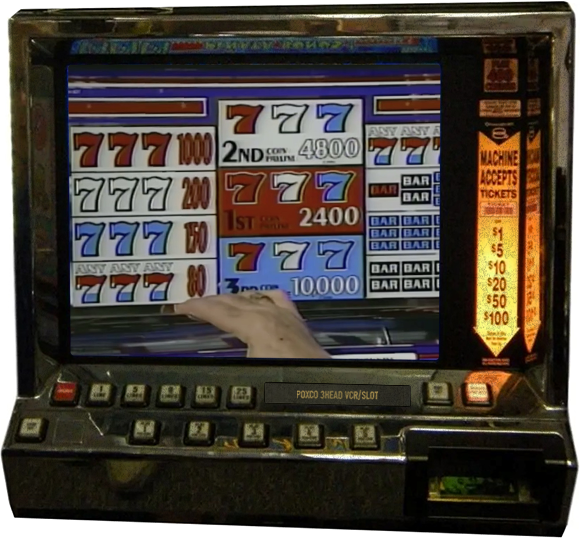
If he didn't look like a strangled penis and sound like the world's worst Christopher Walken impersonator, I might actually feel bad.
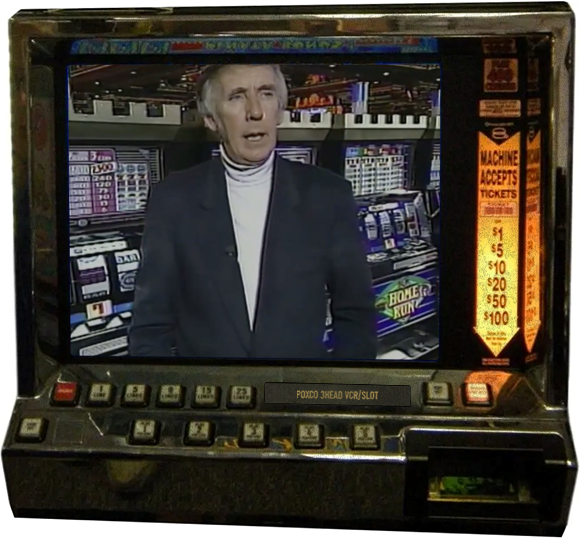
But near the end of the tape, something magical happens — after filling their minds with more useless "theory" than the first year of my Master's degree in sociology, John Patrick tries to convince the audience that there's nothing wrong with playing slots.
"The slot player is not frowned upon by the casinos," he explains. "They're valuable." They even have a "slot club," he explains, laying out the concept for the hypothetical viewer who has spent enough time in a casino to have purchased a tape on slot machine strategies yet is naïve enough to not have heard of comps. This leads him into a reaffirmation of the value of gambling, and — not for the first time nor the last — a smothering of the quiet, insistent voice within him whispering that he has wasted his one wild and precious life.
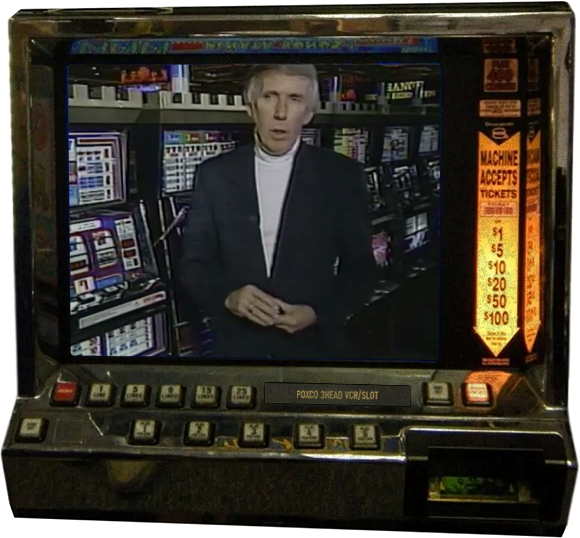
"Casinos is the greatest thing that ever happened to this country," John Patrick says, launching into a reminiscence of a time before his audience even knew gambling existed. "People used to think I was no good because I was a gambler. I drive three hours down and three hours back in the car everyday to go to work. Beautiful life, and now you people are realizing it."
The message seems to be, well, I got in on the ground floor of spending a quarter of my life hours in a car and the rest of my time in a windowless Skinner box, and I bet that looks pretty sweet, doesn't it? Well, maybe you can do that one day, too. Not today. Not tomorrow. But maybe, John Patrick says, 30, or 40, or 50, or 60 years from now, you might come crawling back to him, realizing that he was right all along.
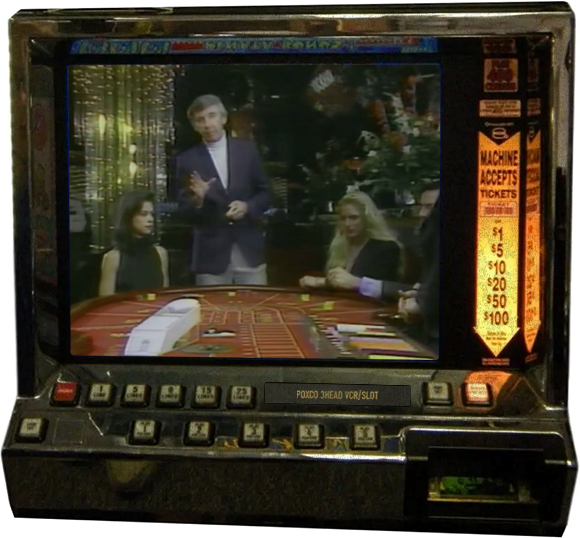
John Patrick loved casinos so much, in fact, that he offered free seminars to casino guests on gambling. But why would the casinos allow that if he was divulging critical information on how to beat their games and take their money? Is it possible that they allowed — even paid for — these seminars because they actually produced worse gamblers?

But… no! That would mean that all of John Patrick's systems for winning at slots really are useless! The nine people who bought this tape would probably be pretty upset to hear that, had they not long ago sunk to the bottom of the Atlantic Ocean, metaphorically weighed down by unpaid gambling debts and physically so by the concrete blocks attached to their feet. Damn you, John Patrick! Unless, that is, your advanced gambling ProTips actually work for me in Vegas this weekend — in which case, thank you John Patrick, I never doubted you and I take back the comment about your whole deal looking like a phimotic member.

This article was brought to you by our fine sponsor and Hot Dog Supreme: Aaron Croston, an egregore of false fortune that failed to pivot to short-form video and waits in forgotten discount-bin VHS.
You can read this article and every other one on the much better in every way 1900HOTDOG.COM
Comments
If I ever get the urge to try and outwit a machine designed to take my money I just go to the candy scoop machines, at least I get some semi-edible candy out of that and no illusions of making more money.
Swift Justice
2025-10-26 01:41:46 +0000 UTCThe second greatest is the chapter on casino gambling in Games You Can't Lose, where Harry Anderson explains how you are a sucker for playing any casino game and which ones make you more of a sucker than others.
Duamuteffe
2025-10-16 02:31:28 +0000 UTCThe best book on gambling is how "How to Gamble If You Must" which has the second greatest math textbook title after the 1000-page "Algebra: Chapter 0"
Max Baroi
2025-10-16 02:20:47 +0000 UTC