![[Teaser] Aftermath of the Eruption of Mt. Vesuvius](https://img5.xaiju.com/storage/3/lb/la/d38796-019e8ce3-cc74-7f4f-998e-939e21b706c3.png)

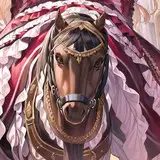
We are working away at producing this new documentary in our How They Did It series. The artwork for this video looks awesome so far and I can't wait for its release (date TBD). For now, here's an image and a bit of the script for you all to read. Enjoy!
Intro
The eruption of Mt. Vesuvius in late 79 AD was a natural disaster of epic proportions. Justifiably, much attention is focused on the unfolding of the event itself whose very essence is quite literally frozen in time at the sites of Pompeii and Herculaneum. But not all who witnessed that day were destined to face such a doom. So today let us follow the story of the survivors… the rescuers… and the reaction of the ancient world in the Aftermath of Mount Vesuvius.
What did Romans think about Volcanoes
But before we jump to the eruption and aftermath of Mt Vesuvius it will be worth laying the groundwork for the event. For starters, one might ask what did the Romans even think of volcanoes in the first place?
To a certain extent these were known phenomena and stories of smoking mountains abounded in the general consciousness. In fact Italy itself lay close to several volcanic sites. The Aeolian Islands were one such archipelago of active hot spots around which ships sailed routinely. But none could overshadow the prominence of Mt. Etna which dominated the island of Sicily. Its eruptions had long helped fertilize the farmlands of its foothills and the locals were well acquainted with its rumblings. Small summit and flank eruptions are actually quite regular and more spectacular events can happen every few generations. For instance on one notable occasion the eruption of Mt. Etna in 397 BC had even waylaid a Carthaginian army as it made war upon the Greeks.
By the time of the eruption of Mt Vesuvius in 79 AD, the Romans had long been in control of Sicily and were themselves now subject to its temperamental nature. For instance, a 122 BC explosion so damaged the nearby town of Catania that the Romans exempted it from taxes to aid in reconstruction efforts. But the most detailed account we have from ancient observations of volcanic activity comes from an anonymous poem entitled “The Aetna'' from the early first century AD. In it the author describes an eruption as follows: quote
“The eruption is announced by a deep rumbling underground accompanied with fire. As soon as it stirs its forces, and threatens havoc, it flies in different directions, dragging at once the soil with it: smitten in its branches. Then shall you think fit to flee in panic and yield place to the divine event. From the safety of a hill you will be able to observe all. For on a sudden the conflagration blazes out, loaded with its spoils; masses of burning matter advance; mutilated lumps of falling rock roll forth and whirl dark shoals of sand. They present vague shapes in human likeness — some of the stones suggest the defeated warrior, some a gallant host armed for a standing fight, unassailed by the flames. A host of sparks flash forth at every blow: the glowing rocks fall with undiminished heat. Look, you see the flashes in the distance — look, raining down in the distance!
Then the lava-liquid begins to boil hotter and at last to advance more in the fashion of a gentle stream, as it lets its waves course down the slopes of the hills. By stages the waves advance some twice six miles. Nay, nothing can recall them: nothing checks these determined fires: no mass can hold them. Now woodland and crag, here again earth and soil are in the flood. The lava-streams come to a standstill inside their margins and harden as they cool; slowly the fires shrink and the appearance of a waving harvest of flame is lost.”
Understandably such eruptions were the source of many a tale and legend. For instance, a surviving story tells of how, during one of Aetna’s many eruptions, two boys bravely ran into a burning house to save their parents. Soon however lava was upon them all. Luckily the gods looked kindly upon this act of fidelity, splitting the oncoming flows and allowing them to escape. But this was not the only case of gods and volcanoes colliding. In fact the Romans had many mythologies which sought to explain the cause for volcanoes.
One tradition held that Vulcan, the God of fire, metalworking, and smithing resided in the bowels of the mountain, its eruptions being the product of his tireless work upon his forge. Another tradition claimed that it was instead the homes of Cyclopses, giants, and monsters who long ago built the volcanoes to wage war upon the heavens. Countless more ideas were offered as to the fire mountain’s magical properties.
And yet there were certainly more skeptical individuals who attempted to explain such phenomena with natural sciences. The same poem we quoted from earlier for instance makes a strong argument for the existence of vast chasms and tunnels beneath the earth which, like the veins of some great organism, allows for the circulation of air currents. These the author argues can be driven into violent motion by all manner of forces such as the collapse of a cavern, the evaporation of moisture, and more. The poem then concludes: quote
“The volcanic wind thus feels the impact of the struggle which compresses it, wraps its own strength within its heavy mass and impels its close-packed particles through fiery passages. Wherever a path is found, it speeds on, until, driven by the confluent air-stream, as by so many forcing-pumps, it leaps forth and all over discharges itself in blasts of angry fire.”
Not a bad guess for the time. The author then goes on to describe how people at the time were quite familiar with the formation of volcanic rocks, of obsidian and pumice and sulfur and lava, and how they fertilized the soil. Armed with such information it seems that perhaps some might have been prepared for the eruption of Mt. Vesuvius. Indeed there had been some precedent for this. Plutarch wrote of the sky being on fire near Naples around the year 217 BC while Silius Italicus mentioned in his epic poem Punica that Vesuvius had thundered and produced flames worthy of Mount Etna in that year. Yet over nearly 300 years this event faded into memory and more recent authors regarded such fires as ancient history.
Yet perhaps some still wondered if it might still reawaken. In fact Plutarch reports that the Sibylline oracle foretold it. The poem “Aetna” actually alludes to this possibility when discussing the fuel which might feed such an explosion: quote
“Judge likewise by special places; take your stand by similar volcanic hollows. These have a larger store of natural fuel. But because this species of stone has nowhere contributed its resources, the fire has died away. Mount Epomeo in the Bay of Naples, we are told, once blazed out in sudden treachery, though to‑day its summit is quenched. Another witness is the region between Neapolis and Cumae, now cooled for many a year, though sulfur wells forth unceasingly in rich abundance. It is gathered for merchandise, so much more plentiful is it here than on Aetna. But it rarely gives out smoke; if kindled, it burns with difficulty; for the supply feeds but for a little the short-lived flames.”
Unfortunately in this assessment, the author would be terribly mistaken.