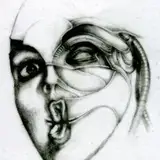
Hello again and thanks for waiting, following the poll result.
This took a while to put together and there shall be a bit of a text wall to contextualise these two individuals as Mesoamerican mythos isn’t as widespread.
So…
Huītzilōpōchtli (the avian) was the national solar warrior deity in Aztec mythology and was key to the formation of the Aztec capital city of Tenochititlan (where Mexico City stands today) Generally speaking, huītzilin means hummingbird, and ōpōchtli means left-hand side, which is in Aztec cosmology is commonly associated with the south.
Interestingly, Huītzilōpōchtli replaced the older solar god Nanahuatzin because in Aztec cosmology, the universe is in a constant loop of death and rebirth. Roughly speaking, this cycle takes place every 52 years, and the end usually comes about because the god is not satisfied with the human beings they created in the world below. The gods themselves weren’t immune to the ravages of time, often falling ill and requiring sustenance to keep the sun in the sky, hence the sacrificial traditions. Huītzilōpōchtli had a whole (Aztec calendar) month dedicated to him, Panquetzaliztli (roughly 9th – 28th November in the modern calendar) but the arrival of Spanish Conquistadors in the 16th Century saw this tradition quickly curtailed.
A surviving Huītzilōpōchtli reference still exists on the Mexican coat of arms – according to legend, Huītzilōpōchtli guided the Azteca people to where they would form their city with a visual indicator: an eagle eating a snake whilst perched on a pear cactus.
On the other hand, the Feathered Serpent remains a bit of an enigma as it is a recurring motive throughout various Mesoamerican cultures. Some scholars believe it is representative of the duality of being both a divine and mortal being, a bridge between this world and that beyond. The earliest surviving depictions of feathered serpents date from the Olmecs, a people who lived on what would now be most countries along the Gulf of Mexico, as far south as what would now be Nicaragua). The Olmecs predate Mayans and Aztecs by at least 400 years (c. 1400 – 400 BCE) but very little is known about them as we’ve no surviving written records, just examples of their art.
Anyway, I decided to go with Kukulkan from the Yuatec Mayans, who inhabited what would nowadays be Mexico, Belize and Guatemala, as that’s what I could find the most information on. The name is literally made up of kukul(feathered) and kan (serpent). Despite the fierce appearance, Kukulkan was used more symbolically to represent trade, communication and wisdom. Kukulkan was eventually adopted as Quetzalcoatl by the Aztecs, and was particularly revered in the ancient city of Teotichuacan; the remains of his temple still stand today.
I personally know of Quetzalcoatl thanks to Victor and Valentino, but it’s quite seeing how Kukulkan jumped back into public consciousness again thanks to certain superhero movies and video games, both Western and Japanese. Ironically, it’s thanks to the final arc of an old Hulk comic that Kukulkan first blipped on my radar.
This was tricky to produce but I think I’ve somewhat managed to pull this together? Maybe I’ll do another one since this ended up being far tamer than I initially planned… we’ll see.
Thank you again to everyone who allows me these opportunities to draw these, I very much appreciate it.