[COLUMN] Mission: Impossible - The Final Reckoning is the Dying Dream of the Last Movie Star | by Darren Mooney
Added 2025-05-23 14:00:18 +0000 UTC
Note: This piece contains spoilers for Mission: Impossible - The Final Reckoning, which is in cinemas this weekend. Despite a frankly unforgivable first hour - which is a serious problem in any film that can be said to have “a first hour” - it evolves in its final two hours into a much weirder and more interesting film; Buster Keaton by way of Stanley Kubrick and Christopher Nolan. If you want to see it blind, feel free to bookmark and come back. This is your spoiler warning, should you choose to accept it.
The opening shot of Mission: Impossible – The Final Reckoning is of a coffin.
Well, it is not literally a coffin. It is a box. More specifically, it is the box that appeared briefly in the third act of Mission: Impossible – Dead Reckoning, allowing the villainous Gabriel (Esai Morales) to commune with the sinister Entity, a rogue artificial intelligence. However, director Christopher McQuarrie shoots the box like a vampire’s casket. It is eerie and unsettling. This is followed by a glimpse of the Entity itself, a formless and abstract digital lifeform of immense power. It seems to be talking to the audience.
The Entity is an artificial intelligence. Benji Dunn (Simon Pegg) describes it as “a self-aware, self-learning, truth-eating digital parasite infesting all cyberspace.” In the opening briefing of The Final Reckoning, President Erika Sloane (Angela Bassett) explains that the Entity is stoking paranoia and mistrust, warping humanity’s sense of reality. The Entity is a creature of code, but it is also a spiritual threat. Benji calls it “the Anti-God.” Ethan Hunt (Tom Cruise) calls it “the Lord of Lies.”
Early in The Final Reckoning, moments after the opening title sequence, Ethan finds his way to that box. Realizing that this represents his one opportunity to directly address his adversary – perhaps “the Adversary” – Ethan straps himself in. “It will change you,” warns Gabriel’s former partner, Paris (Pom Klementieff). As the final credit – “directed by Christopher McQuarrie” – appears on screen, the box closes around Ethan. A mask closes on his face. Screens force their way over his eyes.
The Entity taunts Ethan and makes its offer. “You will let the Entity in,” it goads Ethan, ostensibly referring to the Doomsday Vault in South Africa where it plans to wait out the global apocalypse. However, the phrasing suggests something more profound and personal. When the Entity eventually releases Ethan, casting him out of the box, the spy is disoriented and confused. “Is this reality?” he asks his friends, panicking. “Are you real?”
There is a creeping sense that Ethan is no longer in objective reality. Addressing President Sloane, Ethan warns, “We’re living in the Entity’s reality.” Later, Sloane laments, “This can’t be happening.” Her advisor, General Sidney (Nick Offerman), replies, “Madam President, this is the Entity’s reality now.” It feels oddly appropriate that Dead Reckoning was the first Mission: Impossible film shot on digital, which carries over to The Final Reckoning. Ethan is very literally living in the Entity’s reality.
Each of the Mission: Impossible movies has a very different feel to it. Fallout felt like a response to the grim and gritty blockbusters inspired by The Dark Knight. Dead Reckoning felt more like it was soft-relaunching the idea of Tom Cruise as a sexual being. Compared to the other Mission: Impossible films, there is something abstract about The Final Reckoning. It feels less concrete than the previous seven films, less tactile and tangible.
The editing of The Final Reckoning has a dreamlike quality to it. There are repeated shots of Ethan waking up, having never been shown nodding off. Ethan is thrown through mirrors and submerged in water. The film is lit in peaceful shades of white and blue. In the world of The Final Reckoning, up is often down and down is often up. A key set of coordinates are inverted. As Ethan rises to the frozen surface of the ocean, the camera rotates to make it look like he is falling upwards towards a snowy tundra.

There are moments in The Final Reckoning that feel decidedly unreal. McQuarrie cross cuts between scenes, suggesting conversations transcending time and space. When Gabriel explains Ethan’s complicity in the creation of the Entity, the scene cuts against a conversation between Ethan and Benji and Luther Stickell (Ving Rhames) discussing that complicity. It could be a flashback, but it also feels like Gabriel is giving Ethan new information, and there’s no later chance for Benji and Luther to be together.
After he almost drowns, Ethan shares a peaceful moment in a decompression tent with Grace (Hayley Atwell), a conversation which McQuarrie shoots like a “dead wife” flashback in a movie like Christopher Nolan’s Memento or Ridley Scott’s The Counsellor. The two are basically lying in bed together, sharing a rare moment of intimacy that feels unusual in the larger context of the Mission: Impossible franchise.
Death pervades The Final Reckoning. Early on, Ethan journeys under London to meet his old friend Luther. Luther had left at the end of Dead Reckoning to chase the Entity, but The Final Reckoning implies that Luther has since received a terminal diagnosis. He is working in a sterile lab, sleeping in a hospital bed, and being tended to by a nurse. Luther dies, killed just moments after Ethan leaves that coffin, when Gabriel traps him with a bomb in the catacombs beneath the city.
In contrast, it seems like Ethan cannot die – at least not permanently. “Always good to see you on the right side of the grass,” Luther greets him. Later, when Ethan is trapped outside the room holding Luther and the bomb, Luther observes that they are “both on the right side of that door.” Throughout the Mission: Impossible franchise, Ethan has flirted with death, defying the grim reaper at every turn. In The Final Reckoning, Ethan seems to charge at it, head-on. It denies him at every turn.
Ironically, despite Luther’s greeting, Ethan spends a lot of The Final Reckoning underground or underwater. Over the course of The Final Reckoning, Ethan seems to die multiple times. He swallows a cyanide capsule. He is swallowed by an explosion. He literally drowns under the Bering Sea. Gabriel traps him on a burning biplane, insisting that he has “the only parachute.” Ethan finds another parachute, but it catches fire as he falls. However, in each case, Ethan does not die. It seems like he cannot die. On a sunken submarine, a frozen corpse seems to point at Ethan, as if accusing him. There is a fairytale quality to this, particularly as Ethan is encased in ice on the Arctic surface.
In this context, the film’s gratuitous use of flashbacks and clips from earlier movies feels almost excusable. The Final Reckoning occasionally feels like the dying dream of Ethan Hunt, and – by extension – of the actor often identified as “the last movie star.” Throughout the film, Ethan is confronted with the consequences of all his choices, including the creation of the Entity and the exile of William Donloe (Rolf Saxon) back in the first Mission: Impossible.
The reckoning in The Final Reckoning is that of Ethan Hunt. The movie is structured as a validation of Ethan, and perhaps of Cruise himself. Donloe doesn’t resent Hunt for his exile to the Bering Sea, he thanks him. While Ethan is convinced that no power on the planet can be trusted to control the Entity, Grace suggests there is one person she would trust with unlimited power. “You, of course,” she coos. “Only you.” Ethan is “the best of men in the worst of times.” The film is bookended by shots of Nelson’s Column in Trafalgar, evoking the specter of “the great man” seemingly absent in the modern age.
To invoke one of Cruise’s past collaborators, there is something of The Last Temptation of Christ to The Final Reckoning; think of it as The Last Temptation of Cruise. In Dead Reckoning, it felt like Cruise was trying to save Hollywood from itself, to prevent the industry from surrendering to the tyranny of the algorithm. The Final Reckoning escalates the stakes dramatically. This time, Ethan is saving not just the world, not just humanity, but the very idea of truth.
The Final Reckoning is haunted by the ghost of President George H.W. Bush. Like Bush, Sloane was the head of the CIA before being elected President. When Ethan demands control of an aircraft carrier, he chooses the George H.W. Bush. The plot of The Final Reckoning, in which Ethan tries to prevent a self-aware artificial intelligence from causing doomsday using nuclear weapons, evokes Terminator 2: Judgment Day, a defining blockbuster of the first Bush era.
Perhaps reflecting its movie star, The Final Reckoning turns its gaze backwards. The film’s opening briefing is delivered by VHS. Ethan’s plan to defeat the Entity hinges upon “the total eradication of cyberspace.” It is only a slight exaggeration to describe The Final Reckoning as “Ethan Hunt takes on the Internet.” To combat the insidious reach of the Entity, the characters embrace analogue technology. Nothing networked, nothing digital.

The Entity is the embodiment of modernity, not just technologically but philosophically. It is an opponent that “can manipulate us at will through our total dependence on a carefully constructed digital reality, an enemy that is everywhere and nowhere and has no center.” As Ethan tells Theo Degas (Greg Tarzan Davis), in the world of the Entity there are “no rival ideologies, no dogma.” The Entity is a monster for the post-truth era, a formless and shapeless adversary.
In this context, it makes sense that The Final Reckoning would retreat to classic Cold War paranoia. The Entity is hijacking control of the world’s nuclear arsenals. The President is sheltered in Mount Weather, surrounded by clocks and maps and models moved around boards. Russian and American submarines chase each other through the Bering Sea. Dead Reckoning begins aboard a nuclear submarine, and The Final Reckoning ends at a vault designed to survive the end of the world.
Nobody trusts anybody. The Entity could easily be defeated if the nuclear powers simply disabled their defense networks, trusting their neighbors. Characters often struggled to communicate across language barriers. Paris is part of Ethan’s team, but speaks primarily in French. Donloe talks to his wife Tapeesa (Lucy Tulugarjuk) in Inuktitut. There is an extended sequence of Tapeesa trying to teach Grace to operate a sleigh, in which neither character speaks the same language.
Part of the reason The Final Reckoning feels so strange for a Mission: Impossible film is that it owes a lot to the films of Christopher Nolan and Stanley Kubrick. An early montage of nuclear apocalypse cannot help but evoke Oppenheimer, one of the films responsible for the underperformance of Dead Reckoning at the box office. When Ethan boards a sunken submarine, it spins like the hallway in Inception. Sloane’s moral dilemma at the climax evokes the ferry scenes from The Dark Knight.
The focus on nuclear annihilation evokes Stanley Kubrick’s Dr. Strangelove, although the naming of General Sidney might be an allusion to Sidney Lumet’s Fail-Safe, another nuclear annihilation nightmare of 1964. Breaking from the franchise’s traditional soundscape, Max Aruj and Alfie Godfrey score Ethan’s dive to evoke the soundtrack of 2001: A Space Odyssey. In his high-tech diving suit, Ethan more than slightly resembles astronaut David Bowman (Keir Dullea).
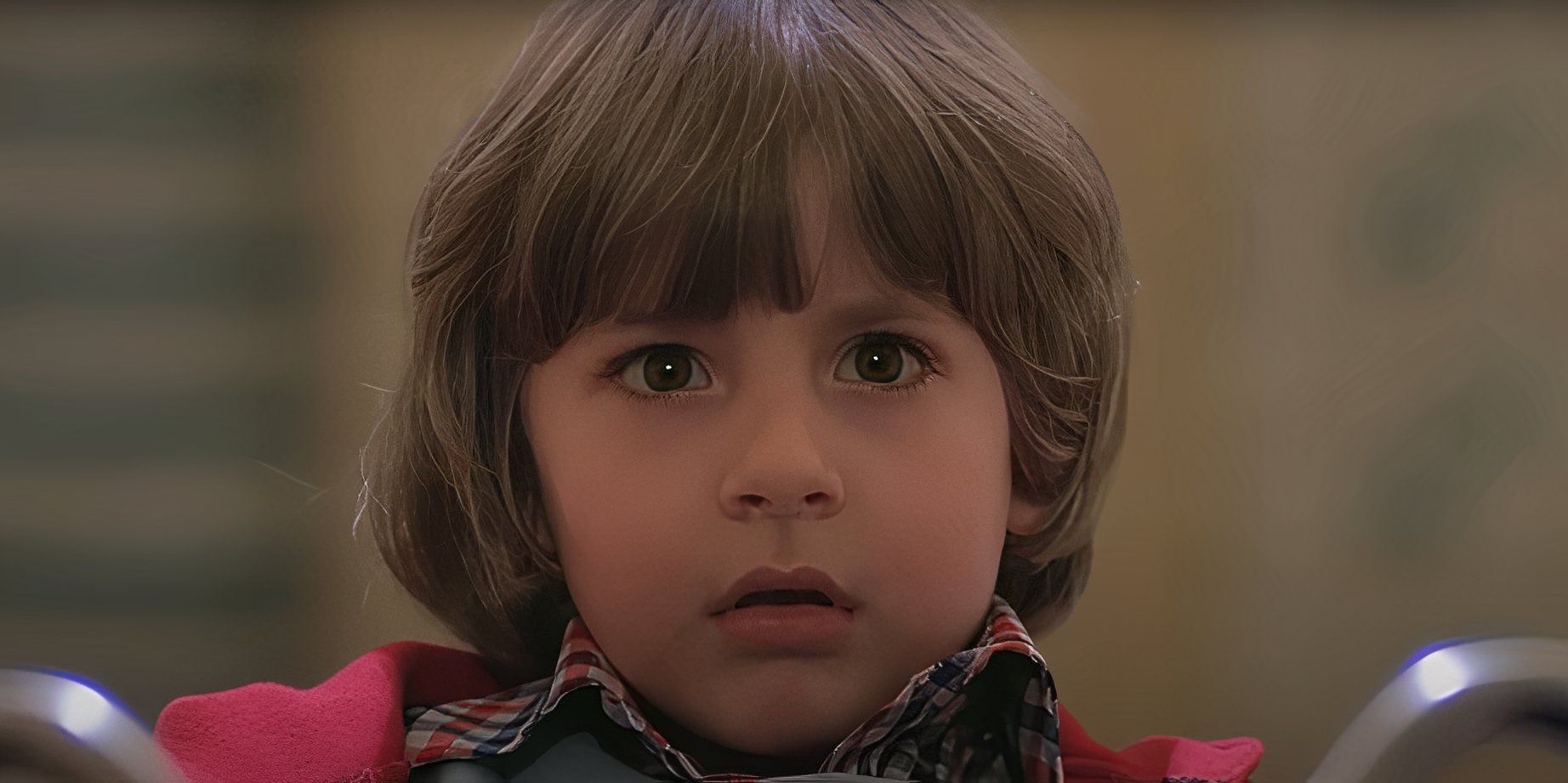
The dive sequence is (literally) breath-taking, but it also feels different from so many of the franchise’s stunt showcases. It is eerie, ethereal and uncanny. It is often quiet and creepy. The diving suit ensures that Cruise’s face is always visible, meaning that the sequence leans heavily on his reaction shots, evoking Kubrick films like 2001 or The Shining. This makes a certain amount of sense. Kubrick is perhaps another ghost haunting The Final Reckoning. Cruise did work on Kubrick’s last film.
The Final Reckoning is almost nostalgic for the rigidly defined boundaries of the Cold War, the clearly delineated ideological frameworks. Much of the film unfolds against the end of the world, whether geographically in the Arctic or metaphorically in the shadow of nuclear apocalypse. The formless and nihilistic antagonism of the Entity might be the logical endpoint of the “New World Order”, as named by George H.W. Bush. The Final Reckoning confronts “the end of history” at the end of the world.
Indeed, The Final Reckoning makes an interesting companion piece to Top Gun: Maverick, another interrogation of what Tom Cruise means. In Maverick, McQuarrie’s script invented some vaguely defined but monolithic enemy for Cruise to strike at in this post-Cold War world. The Final Reckoning escalated this, using much of the same imagery – fighter jets, aircraft carriers, nuclear threat - to pit Cruise against the absence of such an enemy. The result is a weirdly existential blockbuster
The Final Reckoning feels, perhaps, like a meditation on the idea of a movie star in the modern digital age. What are movie stars but icons and symbols to be torn down in the postmodern world order? This might be one reason why Hollywood has had such trouble making new ones. It is an exaggeration to call Cruise the last movie star – the label is also applied to Leonardo DiCaprio or Jennifer Lawrence, among others – but it can feel like he is part of a dying breed.
Though Ethan survives the movie, The Final Reckoning has the reflective and morose tone of a dying dream, whether for Ethan or for the world or for Cruise. Who can blame Ethan for not wanting to wake up?
Comments
Finally went to see it today, enjoyed it much more than I thought I would. In particular the action sequences are so much more engaging and exciting than the standard MCU spectacle (which is an obvious and almost overplayed criticism of the MCU movies, I acknowledge). Though on the subject of the MCU: in this movie they repeatedly mention that the Sevastopol, the Russian sub, went down in 2012, the same year as the first Avengers movie confirmed the success (and eventual dominance) of the cinematic universe experiment. Am I reaching in thinking there's something there? Is it just a coincidence?
Jessica Addams
2025-06-13 03:27:20 +0000 UTCMy gf got held up with work and missed the first hour of the movie. I think she probably had a better experience than me!
Lyle Hammond
2025-06-01 16:27:49 +0000 UTCSo, you do feel that the flick is Cruise being masturbatory yet you enjoy it regardless, huh, Mr. Mooney? Fair bloody enough.
Robert
2025-05-28 02:55:54 +0000 UTCIt's interesting. Personally, I feel like the AI themes are a bit weak, because there's really no significant exploration of how The Entity is affecting everyday life. This doesn't feel like a movie where people are "living in its reality," it just feels like a movie about Skynet or something.
Jim Castriff
2025-05-26 16:28:57 +0000 UTC