Video 78 Drawing Curly Hair Male
Added 2025-07-08 07:44:40 +0000 UTC✍️ (Intermediate) Practice: Drawing Curly Hair (Male)
By Pogzart
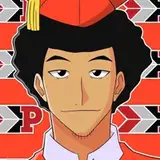
Curly male hair is bold, expressive, and packed with texture. It adds volume, rhythm, and character to your design — but to draw it right, you need to understand form, direction, and grouping. This exercise will guide you through creating semi-realistic curly male hair, focusing on simplified structure, natural bounce, and strong silhouette.
🎯 Objective
Learn to draw curly male hair by breaking it down into sculpted volumes, flowing curls, and natural density.
Reinforce understanding of:
Curl grouping (C-curve & spiral logic)
Volume-building over the skull
Natural curl flow and silhouette
Controlled messiness for realism
🧱 Step-by-Step Construction
Step 1: Sketch the Head and Hairline
Start with the head shape and sketch the natural hairline — slightly uneven and tighter around the temples.
Place the hair origin point (crown or center of scalp) and decide the overall length (short, medium, long).
Step 2: Block the Hair Mass
Don’t draw curls right away. Instead, sketch the general mass of the hair like a rounded cloud or puff.
Lift the form above the scalp — curly hair has more volume than straight hair.
Keep the silhouette lively but intentional — not too spherical or too flat.
Step 3: Build Curl Clumps
Divide the mass into chunky, organic clumps using C- or S-shaped strokes.
Each clump should suggest a spiral or wave without over-detailing.
Overlap and interlock clumps for a dense, dimensional look — especially near the top and sides.
Let some curls flick out near the edges to keep the shape dynamic.
💡 Form and Curl Logic
Curls emerge from the scalp, spiral outward, and either hang, twist, or bounce depending on weight.
Short curls tend to coil tightly and form dome-like volume.
Use contrast in curve size — tighter near the scalp, looser on the outer layers.
✔️ Tips:
Don’t draw every curl — suggest groups and let the eye connect the flow.
Show depth by overlapping clumps and layering.
Use light flicks and tighter curls around the temples and nape.
Create balance: keep the front, sides, and back varied but unified.
🎨 Stylization Guidelines
In semi-realistic anime:
Use soft, broken curves for texture and form.
Keep the silhouette defined — readable from a distance.
Use light hatching within clumps to show shadow and depth.
Stylize outer curls with sharper flicks or simplified spirals for contrast.
🧠 Optional Challenge Ideas
Draw curly hair in different character types: calm, wild, clean-cut, rebellious.
Try afro-textured curls vs loose Mediterranean-style spirals.
Animate bounce and movement in three expressions or head angles.
🔁 Practice
Fill a sketch page with curly clump thumbnails — vary size and density.
Redraw the same male face with short curls, mid-length waves, and untamed volume.
Practice shading curls with light hatching to give them 3D form.
Use photo reference, then reinterpret with stylized clump logic.
Curly hair isn’t about chaos — it’s about controlled texture and expressive volume.
Let it twist with purpose, build form with confidence, and give your character a natural edge.
– Pogzart