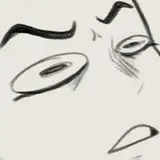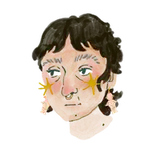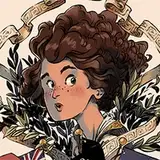
Happy December, everyone! Inking continues! You’re welcome to browse the image carousel if you’d like to see what I’ve been drawing. I am protective about this sequence, though, so I am going to — uncharacteristically! — keep commentary below to a minimum. I’d like to save most of it for when the text is in place.
I'm also going to follow up — uncharacteristically! — at length on the question of "why is the book so long?" But first! Quick bits:
Briefly, in "What's Good?" News: Gift Accounts! Patreon now offers the ability to give membership as a gift! You can do so here, should you wish. If you know someone who enjoys both Delilah Dirk and the concept of "DVD Extras," I can't imagine anything finer.
More Good News: this week I listened to THE FORTUNE OF WAR, the latest Master & Commander audiobook to pop up in my Libby app. It directly precedes THE SURGEON’S MATE, the book that doubled my appreciation for this series. Between then and now, I listened to THE IONIAN MISSION, which felt serialized in a disjointed way and which sprinted headlong into its conclusion like Wile E Coyote with rocket skates on his feet, slamming into a brick wall. THE FORTUNE OF WAR splits the difference by carrying a much more consistent through-line while also building to the rocket-skates brick-wall conclusion that I’m starting to think of as a Patrick O’Brian trademark. It earns its climax better than any of his that I’ve read, though, and I ended up liking this book a lot. If anyone asked me, “which books should I read if I want to get into Master and Commander,” my recommendation would be to pick up FORTUNE OF WAR and THE SURGEON’S MATE as a pair.
Briefly, in “What’s Bad?” News: I borrowed some other audiobooks as well, and I have to say, the quality of narrators is a real dice roll. I have been spoiled by Simon Vance, Natalie Haynes, and Stephen Briggs.
- - - - - -
A QUICK LOOK AT INKS
In the spread below, I wasn't happy with the figures I'd drawn on the original pages (right). The pose looked too stretched-out and strange. The perspective wasn't right. So instead of erasing and redrawing, I started again on a new page (left). I'll composite them digitally later.

I've seen people do this to much more extreme degrees — drawing all sorts of variations and options on one sheet, and comping them together afterwards. It looks like a fun way to work, but probably too much chaos for me.
(I just remembered to hold these up to a lamp, with the new page on top of the old, to check if this approach actually worked. Turns out, "yes!")

- - - - - -
ON THE LENGTH OF PRACTICAL DEFENCE AGAINST PIRACY
A few weeks back I asked if you would like me to talk about the length of PRACTICAL DEFENCE. A handful of readers said, “yes.” So. I’m going to try to tackle this in a sort of straightforward, back-and-forth, internal dialogue sort of way. It's half academic, half therapy. What's not to love? :)
Dear Reader, I am about to speak frankly about this project and myself as an author. I always get nervous about doing so because being self-critical can sometimes be misconstrued as weakness, and I have come to learn that people, generally, respond more positively to confidence (I disagree; I think the opposite is true, that overconfidence and certainty is a red flag). Rest assured, no matter how much self-doubt I express, or how many questions I juggle, PRACTICAL DEFENCE will be finished, and it will be good. It will be finished because I promised to finish it, and ironically, I am confident it will be good because of all the questioning and criticism. I can't imagine how this process could go any other way.
If that sounds like a downer, though, join me again next week for less talk therapy and more inks, as I continue the journey toward completing an excellent book you'll love reading.
Who cares how long it is? Why are you talking about this at all?
I thought this would be the shortest Delilah Dirk story. DD3 was long, and took a long time to make. I wanted DD4 — or, now, PDAP — to have a simple, straightforward story, nothing too complicated, and I thought that’s what it was, when I started. Land on an island, address some themes of Alexandra and her sense of self, Pirates arrive, A. runs across the island, learns something, comes back, fights, The End. I could poke my themes, have a little fun, polish it all into a tidy little package, bingo-bango ha-ta-ta. The first three DD stories were wide-ranging, travelling all over the place, and fit tidily into fewer than 260 pages. If I kept the action simple, surely that would make the story shorter, right?
Evidently not.
What I find confusing is that I haven’t added elements. It’s still, essentially, that simple outline that I started with. The outlines for DD2 and DD3 are much more convoluted.
You stuck to your plan, and yet you’re half way through and already at the 260-page mark. What happened?
I would like to know, too. Maybe it will make sense if I look at what I’ve been doing differently with this project. I’ve been writing each chapter as I go, using the outline in my head and a loose plan comprised of a hundred-or-so Post-It Notes. I’ve also been thinking of each chapter as its own self-contained little project. I’ve been trying to put interesting developments into each one, in addition to satisfying the needs of the outline. I worked this way because I wanted a challenging change of pace from my previous working methods, and I wanted to be able to post the comic online as I went. But that also meant I never had a manuscript for the project overall. A manuscript would give me a more tightly-structured view of the project as a whole, letting me choose where I should invest my time, if I had specifically wanted to keep the whole thing, say, under 200 pages. But keeping the book short was never a specific goal from the beginning — my only goals were to challenge myself, make something I loved, and not burn out. I thought it would be short but it hasn’t turned out that way.
Did you want it to be short?
I guess so! Again, I didn’t articulate it to myself — I took it for granted — but I think I really did want this.
Why?
You (I) know the answer to this. After DD3, I embarked on two personal projects: I wanted to make a kids’ book (this turned out to be LET’S GET SLEEPY), and I wanted to write a novel (which I called STANDARD MAGIC). Long story short, that novel turned out to be long. The shortest version was 450,000 words long. Yes. When I told this to prose-author friends, their jaws dropped. This is way too long for a novel. JONATHAN STRANGE & MR NORRELL is 782 pages long and apparently only around 250,000 words. The NaNoWriMo goal is to complete a finished novel at a mere 50,000 words.
My wonderful agent, Bernadette Baker-Baughman, has, I believe, read the whole thing — at least once, maybe twice. She gave me brilliant notes. When I eventually said it was finished — “yes, it has to be that long,” I told her, in what I now feel to be unimaginable hubris — she sent it out to publishers. Their response was unenthusiastic, to say the least, as you might have assumed from the fact that this book is not on anyone’s shelves.
I don’t know why STANDARD MAGIC was so long. I’m scared to open up the files and check. I know that every time I tried to edit it down (I made at least four passes), it fought me tooth and nail (though I will remind you I suspect my editing skills to be pretty poor). At the time, I was convinced that every single passage felt necessary to the themes and the plot. Now, I can think of a few ways to cut it down, but even if I lost 100,000 words — two novels' worth — it would still be very long.
I’m scared that I’m making the same mistakes now, making a book that is far too long for any publisher to be interested in it. It’s one thing to publish a thousand-page novel; the paper is thin, you only need one colour of ink. Publishing a long, full-colour graphic novel is more expensive. The paper has to be hardier and you need to use four inks throughout. It's easy to imagine this discouraging a publisher.
That said, I should equally consider that a publisher might love this book so much that they'll put their entire back into it. Why doesn't that possibility seem as likely?
I am also anxious about what a long book says about my character as an author. I worry that where I see interest, humour, texture, and depth, a critic might see something that is sloppy, undisciplined, or over-indulgent. It is a question that cuts to the core: do I trust myself and my taste to steer this project?
Here's how I push back against this self-doubt: for one thing, I’m doing exactly what I promised myself I would do. I set out to follow a different process from the one that I’d used before (I wrote a lot about this at the start of this project). I told myself to err on the side of including weird things and having fun with the comic. When I arrived at things like the “musical” sequence, or the storybook sequence in Chapter Two, I said, “yes!” because that’s the promise I made myself at the start of the project, even though it made the chapter eighty pages long. This is not undisciplined, either: in both those examples, the unusual choices bolster the story and the themes. A musical “want song” is a staple of princess movies, which is a fun juxtaposition with Alexandra’s un-princessy character. And a storybook is what you read to a child, while that sequence is about Alexandra learning what will change as she moves away from being a child. I think I can justify all of my “fun” choices in similar ways. So, the book may end up being long because I’m doing what I promised myself I would do: erring on the side of including fun things and giving the story “breathing room.” I remember being very insistent with myself that I include “breathing room.’
The other way I push back against self doubt: I can hear my taste screaming at me. For one thing, look, I’m sorry to admit this, but I’m the guy who likes and will happily defend the long tracking shots of the hobbits walking across mountaintops in LORD OF THE RINGS. I like that, sorry-not-sorry.
I also bristle when I can sense that a graphic novel feels rushed, and know I want to avoid that feeling at all costs. I read one recently (not yours, don’t worry) where the story movements did not feel very well-explored at all. It was long and dull. I know what these mistakes look like in other author's books; can I detect them in my own? I hope so.
And then there's dialogue. Whenever I read or hear dialogue that feels like it is conspiring to move me through the story or explain something to the audience, I want to close the book or turn off the movie. I burn with the need to make character interactions natural and believable (I tug nervously at my collar, hoping this is, in fact, what I have been doing). If it’s an important story beat, I’d rather spend two or three panels creating a natural interaction where stilted dialogue would have done the same with one panel.
When I read something and think, “I would do something similar,” or “I would never want to do that,” it strengthens my convictions about my choices for PDAP, and those choices have led us to where we are now, which, if I've done my job properly, means the project reflects my taste. By definition, I wouldn't want it any other way.
Are you sure you know what an important story beat is? What if that’s why the book is so long — you don’t know what is important and what isn’t.
GREAT QUESTION. This is certainly a big fear.
I have received a lot of very encouraging sentiment about the book so far, so maybe the answer is “shut up, Tony, you’re doing great.”
But I can’t lean my whole weight on that. I need something more robust.
Fortunately, I know what the book is about, and if I know what it’s about, I ought to know whether elements are important to the story. It’s about Alexandra figuring out who she is, navigating between different pulls in different directions; obligations, expectations, wants and desires. And it’s about having young eyes that see clearly — the town is miserable because of Vignelli, not because of rumoured pirates — and her frustration that the adults around her cannot see this. By the end, she should accomplish both self-knowledge and justice. If story elements speak to those themes, they get to say. This is what THE ART OF DRAMATIC WRITING says we’re supposed to do.
Having said that, Alexandra’s friends snuck up on me. Katerina and the Midshipman weren’t in the original plan, but they emerged, and I like them. They’re fun, and they add depth to the world. And they compare and contrast well against character choices that Alexandra will make, representing different directions she might embrace. I consider them a gift.
Maybe these are too many themes for one story. Probably not, though. Maybe a long comic is what you get when you finally, for once, choose to really interrogate a story’s themes.
Where does that leave us?
On one hand, I would have liked this book to be short. It would have been an easier pitch to a traditional publisher. And who knows — there are infinite options when it comes to publishing a book — maybe, with time and distance, I’ll be able to spot ways in which the final comic can be pared down and published as a single volume. Or maybe it will find a publisher who says, “this is exactly the way it needs to be, I want to print it exactly as it is.” I should keep that possibility in mind, even though it feels like a real "dare to hope" situation.
So much of this process is intuition and feeling. I need to trust mine. I started this project thinking it would be short, but I also started this project telling myself to listen to the work (as my old crush George Saunders preaches) and trust my intuition. Doing so has created the book in front of us. Embrace it and be proud! If I wanted it to fit within a certain page count, I should have designed it to do so from the beginning.
As I’ve mentioned, I recently “completed” a pass at the story, discovering that PDAP will, evidently, be composed of ten chapters by its completion. I think this clarity has scared me, because I now know for certain that I’m in for several more years of work before I’m finished. This frightens me from an opportunity-cost angle, as well as a financial angle (regardless of my partner’s reassurances). I can’t believe I got this far in this writeup without mentioning this aspect. I think I’m also scared about how old I’ll be by the time it’s done.
On the other hand, if it’s exactly the book it needs to be, if I can be as proud of it as I want to be, what’s a little time? What are a few publishing hurdles?
Plus, I know what’s coming up in the chapters ahead, and I think some of my nerves might be due to simply wanting to plow ahead and develop those scenes.
Recently on Bluesky I saw someone — S. A. Chant — post,
Write generously for an audience who loves your work, not defensively for an audience who hates it.
I like that sentiment, “write generously for an audience who loves your work.” That’s such a nice way to rephrase “write the book you want to read,” and such a succinct way to summarize what I think I’ve been trying to do. Surely this is the way to write a book to be proud of, regardless of how long it is.
There might be more to this, but our Kiddo is sitting on my lap as I am putting the final touches on this post and he is restless to do other things. I told him I would be quick, I made "being quick" a priority, so I'm going to go keep my word.
- - - - -
Thank you for coming on this ramble with me! As always, I love hearing your thoughts. Thank you to everyone who has shared encouragements, too. I don’t know if you see the little hearts I put next to them, but rest assured I receive these comments and internalize them as deeply as I possibly can.
Off to pick up kiddo from preschool!
Until next week,
I remain,
uncharacteristically,
TC
Tony Cliff
2024-12-14 18:27:03 +0000 UTCLex
2024-12-14 18:15:26 +0000 UTCTony Cliff
2024-12-13 05:27:31 +0000 UTCTealin
2024-12-09 09:22:51 +0000 UTC