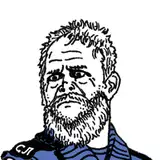
A really impressive thing to me is that this is the history of a rather small concentration camp, Płaszów. And the Krakow ghetto wasn't even the worst case... if you ever get to read about the history of the Warszaw ghetto, or camps like Auschwitz-Birkenau, or Ravensbrück, or Dachau and Majdanek... Göth was a monster of great proportions, but frankly, Rudolf Höss was worse. Way worse. (We saw him briefly in the Auschwitz scene, asking one of his men who this Oskar Schindler was when the women said they were 'Schindler Jews'). And the Einsatztruppen. And the Totenmarschen. And...
In the end, it always humbles me to think that this movie showed us only a part -- a significant part, but a small one -- of the whole catastrophe. And it was made because, in the end, Schindler succeeded, so it was a hopeful story. What do we say about other cases that were, let's say, not so successful?...
Sergio Meira
2025-08-01 18:34:09 +0000 UTC
And Schindler is a curious character himself -- a loser who never got any business to work (he wasted too much money being a ladies' man and a bon-vivant)... yet somehow he ended up doing what you'd expect more virtuous people to do (I keep thinking of him trying to convince that other industrialist who was also secretly helping Jews to let all escape together to Brünnlitz, but to no avail...). And after this enormous act of courage and selflessness, he went back to being bad at business, and ended up living on money the Jews he saved gave him.
How can such a thing happen? How can so much courage and a real understanding of the situation, and a disposition to act in order to help a tortured people, came out of such a strange source?
Especially in these days, when we see so many supposedly virtuous guardians of democracy cave to Trump, Schindler's List reminds me that courage often comes not from those you expect it from, but from others. And that imperfect people are perfectly capable of doing one perfect thing, or, as Yitzhak Stern put it, "an absolute good."