XaiJu
tgtrinity
tgtrinity

patreon


The AI Post

Hey SuperNinfriendos!

So, I've been wanting to write about this for a while now, and with yesterday's comic I feel it's time.

What do y'all think about the emergence of Generative (Imitative) AI?

Here's my take: I love imagining a future where anyone can go into a "Holodeck" and make a scene of their liking. Wine with Cleopatra, Drinking with Mark Twain on a River Boat or having a lightsaber battle with Darth Vader. I think that's an exciting future we could all enjoy... but the idea of anyone selling those experiences doesn't feel right.

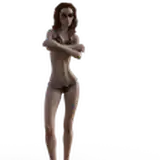
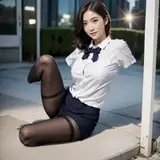
Right now I can make an image of Trinity come to life like I could never do in reality:

Yes, I legally own the image and all the assets used in it, but selling this feels wrong to me.

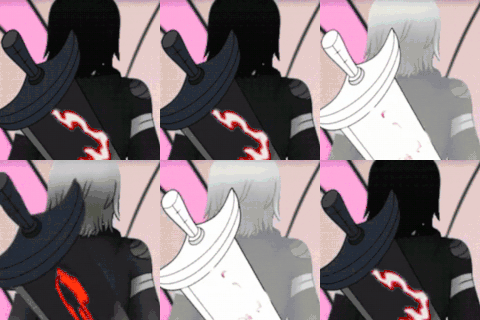
Now, there are instances where I think AI is very handy. The reason I'm writing this today is because I used an Imitative AI image in yesterdays' post:

There was nothing in DAZ that I could find to make this image, and stock sites now charge crazy prices for images or make you buy in bulk. I feel using an image like this is fair use as it's a pretty nothing image, but I'd love to hear your thoughts on this.

I signed up for a few AI sites to study up on it for an upcoming comic, "Aisha," but I have a ton of "currency" left over and want to know if you'd like to see more of my characters come to life with AI. It would never be something I charge for, but even then there are ethical questions I'm not sure I have an answer for.

Anyway, I'd love to hear your thoughts on this, and thanks for being amazing Patrons!

Tyler :)

The AI Post

Comments

Three paragraphs in I realized this was made in conjunction with AI, and it does show the ways it can be helpful :)

Tyler Adams

The integration of AI-generated imagery into artistic composition represents another step in the long evolution of creative tools—a continuation rather than a revolution in how artists work with technology to express their vision. AI image generation is fundamentally a sophisticated tool—a mathematical system trained to understand patterns and create new compositions based on those patterns. Throughout history, artists have embraced new technologies, from the camera obscura to digital software. Each technological advancement faced initial resistance before becoming accepted as legitimate artistic tools. 3D rendering engines provide perhaps the most relevant existing parallel to AI image generation. Modern 3D rendering software uses complex mathematical models to simulate light, materials, and physics—mathematical processes the artist doesn't personally code or fully understand. Fluid simulations in VFX rely on advanced algorithms to replicate how water, fire, or smoke would behave—the artist directs parameters but the actual simulation follows mathematical rules. Procedural texture generators in 3D software create complex materials based on algorithms, not direct painting. Character rigging systems use mathematical interpolation to create movements between keyframes. These technologies are universally accepted as legitimate artistic tools despite being mathematically complex and partially autonomous. The artist directs the overall vision, defines parameters, and curates results—exactly as with AI image generation. Art has never been created in a vacuum. Artists have always relied on tools, techniques, and influences. Painters depend on pigments developed by others and brushes they didn't manufacture. Photographers use cameras with complex algorithms they didn't program. Digital artists use software with pre-built textures and effects. Traditional artists study and internalize the techniques of past masters. The artistic merit lies not in avoiding tools but in the vision, curation, and creative decisions that shape the final work. The skill of modern artists often includes knowing which tools to use and how to combine them effectively. Throughout history, artistic innovation has involved adopting and adapting new tools. The camera obscura helped Renaissance painters achieve realistic perspective. Photography initially faced claims it wasn't "real art" before becoming recognized as a legitimate medium. Digital painting software introduced layers, filters, and procedural effects that weren't possible with traditional media. And let's be clear: digital art is real art—they can pry my Ctrl+Z from my cold, dead hands. Motion capture technology transformed animation by mathematically processing real movements into digital form. The legal framework around AI training is still evolving. Not all models are trained on unlicensed work—some use public domain images, licensed datasets, or specifically cleared content. Many established legal doctrines (like fair use) potentially apply to transformative learning. Viewing, learning from, and synthesizing visual information is fundamentally how human artists develop as well. Current copyright law doesn't recognize AI-generated images as copyrightable without substantial human creative input. This represents a transitional phase, not the final word on AI art's legal status. Legal frameworks inevitably adapt to technological change, as they did for photography, sampling in music, and digital art. Legal systems will likely evolve to recognize the nuance in AI-assisted art, distinguishing between purely automated generation and human-directed creative expression using AI as a component in a larger artistic process. There's an important moral distinction between copying an artwork (which deprives the original artist of potential revenue) and learning from artwork (which is how all artistic traditions advance). AI training more closely resembles the latter—it's learning patterns and concepts rather than reproducing specific works. This process parallels how human artists develop by studying existing art, absorbing techniques, and creating new works influenced by what they've learned. The difference here is that ai is able to express that 'learning' as a mathematic equation. While AI model training does consume significant energy, the environmental impact must be compared to the full lifecycle of traditional art materials such as oil paint production, canvas manufacturing, and shipping. Once trained, using AI models consumes relatively modest energy. The technology is rapidly becoming more efficient, and many AI companies are investing in renewable energy or carbon offsets. Those who condemn AI art as inherently unethical often apply a zero-sum mentality to creative expression—a fundamentally capitalist framework that treats artistic opportunity as a limited resource. The idea that making art more accessible "devalues" existing art comes from market thinking, not artistic thinking. Throughout history, democratizing creative tools has expanded artistic expression, not diminished it. When photography became accessible, it didn't eliminate painting—it freed painting to explore new directions. Digital tools didn't replace traditional art—they expanded the total landscape of creative expression. AI tools are fundamentally democratizing—they reduce technical barriers to creative expression. People with creative vision but limited technical training can now visualize their ideas. Artists with disabilities may find AI tools more accessible than traditional media. Those without financial resources for expensive art education can explore visual expression. Professionals can rapidly prototype concepts before investing time in full execution. Making creative expression more accessible isn't "stealing" from established artists—it's expanding humanity's creative potential. Nothing could be further from evil than giving more people the ability to express themselves. AI art at its best represents a collaboration between human and machine. The human artist provides the vision, prompt engineering, curation, and context. The artist selects, refines, combines, and contextualizes the outputs. The final work often integrates AI-generated elements with other techniques as part of a larger composition. Just as a 3D artist doesn't manually calculate every pixel of a render but rather directs the rendering engine toward their creative vision, the AI artist guides the generative process toward their intended expression. AI-assisted art represents an evolution in artistic tools, not a replacement for human creativity. Like 3D rendering engines and VFX simulations before it, AI will find its place as another legitimate tool in the artist's expanding toolkit. The legal framework will adapt, as it always has with technological innovation, and the creative landscape will grow richer—not poorer—for having more voices, more tools, and more possibilities. What matters is not the tools used but the creative vision, intention, and execution behind the work. The artist remains the driving force, with AI serving as a powerful but ultimately subordinate tool in the creative process. This explanation was co-authored through collaboration—the human driving the core thought process and conceptual direction, with the AI tool helping to refine, articulate, and structure these thoughts into a cohesive argument. In a way, this collaboration itself demonstrates the very partnership between human creativity and AI assistance that the text describes. I think its also vital to differentiate between SPECIFIC AI models, and the TECHNOLOGY behind them as a whole. as much as nay-sayers would like you to believe that all AI technology is unethical because of JUSTIFIED ethical concerns around SOME prevalent AI models, you cant just paint the entire technology as a whole with the same brush because its convenient to your argument. its disingenuous. And parallel to those ethical concerns, take into account that the LEGALITY is a separate issue that isn't settled. Let me further clarify that MARKET , LEGAL and ETHICAL concerns aren't INVALID or should be ignored, but they aren't sufficient to CONDEMN the technology and its use. they are questions to be asked and problems to be dealt with, but while they're often attempted to portray AI as evil or unethical or harmful, they are really just highlighting the shortcomings of the market and legal systems, as the 'harms' are more related to capitalism and its faults, than to the inherent technology. that doesn't mean these issues shouldn't be addressed, but they aren't a poison pill for the technology , and those that treat them like they are are acting from ignorance, unintentional at best to malicious at worst.
Carasibana

Hugz

Adamma


More Creators