The Insomniac Platformer Level Design Paradigm from 1999 to 2016
Added 2021-09-09 02:01:00 +0000 UTCI want to talk about one of the first forms of consistent design I ever noticed growing up. Probably about 2003? That'd be when Ratchet and Clank 2 came out (Going Commando in the U.S. may have been changed to Locked and Loaded in Europe unless my recall is faulty). While Insomniac's games had never been my favorites they were solid polished games that I'd play every year as they came out. By this point though I began to notice a pattern, the level structure was templated enough that as a child I was still able to pick up the core design pattern.
Now to start off, Insomniac's been designing platformers for decades, they are very very good at it. While I personally find the design approach they take to produce something that can feel very same-y that isn't really the core thesis here. This is more about noticing how companies construct games in order to produce them consistently. We got that? This is obviously an opinion piece but my thoughts on good or bad aren't the point here.
Maybe a bit of contrast will help me make my point. I say contrast because Spyro 1 doesn't actually adhere to this as much so it should make a good start point to compare against when we examine Spyro 2 or Ratchet and Clank. So how does Spyro 1's level design contrast with the sequels and Insomniac's future work, and why did they make this shift in design (aside from possibly different people being in charge, I haven't checked)?
In Spyro 1 levels tend to lack a core "goal" except to find as many gems, dragons, and eggs as possible. Exploration of the world is marked this way but none of the collectibles take total primacy because the game requires different ones for different progression gates. In retrospect it's an oddly scattershot system. Finding dragons is the most obvious goal, they are rarer, they are gigantic, they make a big deal when you find them, a voice acted scene happens every time which was a rarity on the PS1. The first progression gate in the game is to find a certain number of them before you can move to the next area. Then in the second world the game asks for a certain number of gems. Gems are scattered all over the levels, they come in values of 1 to 25 and are ubiquitous enough it almost feels like asking you to collect all the coins in a Mario level. The game does signal to you that you want to collect as many as possible but to this point they are really only collected for their own sake. It's an odd setup, but in the gate from world 2 to world 3 you need a few thousand of them. World 3 to world 4's progression is then blocked by how many dragon eggs you have, these are found in out of the way areas carried by thieves. They are harder collect as the thieves move very quickly, and there isn't even guaranteed to be one in any given level. All three of these collectibles thematically fit the game's narrative, but they don't really add much structure to how the player explores levels, except that the game tells the player the total number to be found in a level and so finding all of each marks the level as completed. As such, Spyro 1's levels tend to be more open and exploratory than its sequels. This is charming but technically demanding and likely lead to many complaints that any given level lacked impact or that the last few collectibles a player missed were too hard to find when they had already explored most of a level.
Enter Spyro 2: Ripto's Rage (or Gateway to Glimmer in PAL territories). A big shakeup seems to have happened with this game's development in terms of philosophy here because it kind of grounds the Insomniac level design pattern for decades. Levels in this game are quite linear, with concrete goals accompanying a spelled out mini-narrative specific to that level. In general the narrative's a simple "help, our people are being terrorized by monsters Ripto conjured, please defeat them" with some minor level specific gimmick like escorting baby turtles or somesuch. The veneer painted over it is good and not to be dismissed, but it's basically what all of them boil down to. At the end of these Spyro 2 levels you are rewarded with a level specific relic. These exist to mark the end of the level and give the player a sense of permission to move on if they desire. The game requires all of them to reach the end so they exist almost entirely for player psychology and completion flagging reasons.
Fast forwarding a bit to look at the company's future work. In the Ratchet and Clank games these mini-narratives would be laid out by a character or piece of info given by another character in a prior level, but functionally they worked the same. Game relays a brief "why you are here" and then at the end of the fairly linear main level path you will reach a goal point. Trip that on each proceeding level to open more levels until you reach the end. In essence a linear platformer with a small narrative chunk at the end of each stage. There's rarely times where the player is asked to search, R&C's shooter genre stylings make this undesirable. The gameplay thus having evolved to more directly compliment the level design. Along the beaten path, or especially right at the beginning of a level in later iterations, there will be small areas to branch off and do a short side goal rewarded with small but necessary bonus objects. In Spyro 2 these would have been Orbs, fortyish of which are needed to complete the game. In Ratchet and Clank it's typically gadgets which will bar progress in further levels if the player hasn't obtained them. These exist, on some level, to dress up how linear the core gameplay actually is. Few levels have a major element of verticality or major path splits.
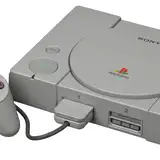
To return to our previous point of comparison though, this paradigm was almost tailor made for the PS1's limitations. More detailed environments that can be loaded in more discretely. It also resolves the Spyro 1 problem that your only real goal was "collect all objects" with little delineation on their individual importance and relatively few "goals" that would unlock more of what you were collecting. You had obstacles and goals but no challenge gates that felt like they connected them. By sticking to this pattern designs were able to always feel like they had a satisfying beginning to end run. You'll always talk to a comedic character who will tell you exactly what needs doing. You'll move through a handful of arenas that have things tucked away in the corners but few actual path branches, you'll reach the conclusion, nudge the plot along a bit and resolve the individual plot here, then maybe go back and check the one path branch where you can use your new move or gadget for a more slow paced cooldown. This fits very well with the Platformer/Shooter hybrid Insomniac were very busily pursuing with R&C. This is also very specifically and intentionally paced. It is crafted with incredible precision. It's just possible to start noticing the diagram when you see it enough.
I don't mean to claim all these levels feel identical, the designers involved clearly did a lot to keep them as varied as they could, many will have a mini-game that breaks up the linearity, side paths will utilize more puzzle based segments, but the consistency does a few things. It makes it rare to find a truly bad, boring, or frustrating individual level, but it also makes it harder for any one level to stand out. They are all just on a fairly even curve of quality and how rare it is that one deviates from this linear with short branches structure starts to stand out game over game. You follow the design rulebook and you produce a good, consistent, smooth level. In many ways it presages a lot of modern AAA design patterns, friction is the enemy, but that's an essay for another day. I cannot speak for the most recent Ratchet and Clank, Rift Apart as of this writing, though it looks like it may finally break this mold with a few stages that adopt a more hub and spokes design that I'll also get into later in another essay.
So that's the common Insomniac level design rulebook as I see it for the better part of two decades. You create a largely linear core action level, you draw branches off near the beginning and/or about the half to two-thirds mark. Those branches loop back to their start points and contain mini-games or more slow paced exploratory segments that give secondary bonuses. It's not a bad pattern, but it's definitely a safe one.