
Everything Everywhere Once A Week (9/15/2023)
Added 2023-09-15 22:41:33 +0000 UTCHello and welcome to Everything Everywhere Once A Week, a weekly newsletter about the goings on in the video game industry over the last week. A lot to talk about this week and I have a plane to catch in a few days and I’ve not packed at all, so let’s get into it.
Unity Blows Itself Up with New Fees

This week, game engine Unity — on which games like Hollow Knight, Cuphead, Beast Saber, Among Us, and many others are built — dropped a new fee structure on all licensees. Previously, developers could tool around with Unity for free with a personal license, but paid for subscriptions and yearly costs to keep the tech company improving the product. Now, Unity said, they wanted to charge a 20 cent fee per game install, a demand that is on its face egregious and made even more ridiculous by the lack of any other details at the time.
After significant consternation in the game development community, all of which was directed at Unity and entirely deserved, the company came out with caveats that it seemed like they had only just thought about: exceptions for charity bundles and Game Pass, distributors paying the fees, Unity would investigate fraud in the form of malicious game installations, etc. It was as if they had been woken up from a drunken stupor and were just saying anything to get people to stop yelling at them.
There’s a lot of already good writing on why this is a terrible idea, but I want to hit on a few notes that have been brought up less.
One, while Unity doing this is obviously bad for them, it’s also just bad in general for all engine licensors. They’ve effectively burned a bridge of trust between game developers and the for-profit engine creators that they license from. It won’t change anything overnight, but it’s now apparent that companies like Unity or even say Epic could just completely change the deal in which their engines are used one morning out of nowhere. Tim Sweeney could, if he really wanted to, wake up and demand that all UE licensees have to give 75% of their gross to Epic. It wouldn’t work, but in the best case scenario that he’s not tackled to the ground before he announces this, the most you could hope for is that there’s an alternative engine that isn’t doing this to you that works similarly. And as a general rule there probably isn’t.
This isn’t to say Epic will or would do this, but the possibility they might or could has now entered into people’s brains in a way that previously would have been unfathomable. And that’s bad for Epic, because now they have to make overtures they previously would never have to acknowledge.
That also puts a lot more attention and pressure on open-source engines like Godot, which has become the alternative of choice for a lot of developers fleeing from Unity’s new rules. These engines, by virtue of not being for profit like their more popular alternatives, are funded primarily through things like Patreon and goodwill, which means they’re always probably going to struggle when it comes to being reactive and agile. But on the other hand, by definition no one can come down and change the rules on you one day.
It’s also important to note that Unity has not, and seemingly will not, explain what their methodology is for quantifying the number of game installs and also then carving out exceptions for things like charity bundles. Moreover, the idea that Unity will work with developers to determine outside fraud is straight up laughable. They’re going to sit there and try to say they’re going to be proactive rather than reactive, judicious, and fair about a thing that gives them money. I’d have a bridge to sell you if Unity hadn’t burned them all.
The bit about distributors — Nintendo, Valve, Microsoft, Sony, etc. — being the ones to foot the bill is also a particular bit of pure lunacy. I cannot imagine any result other than Valve getting a bill from Unity because a game on the store that sold well uses the engine and then just crumpling it up and throwing it in the trash. None of the distributors are going to agree to pay Unity for a contract they never signed and Unity is completely nuts for thinking they would or should.
As for why Unity is doing this, there’s a lot of theories out there. Money is obviously the major motivator, but it begs the question of why push an initiative that will drive away most developers and lessen their overall revenue in exchange for massive administrative overhead. The answer is that Unity doesn’t see the Team Cherry’s or the Innersloth’s of the world as their customers. They see the copy-and-paste mobile games that have offbrand Elsa playing Match-3 to not crush a king who is drowning in lava as their customers. They want money from those people and will do anything to cut a slice off Hoyoverse’s block of cheese.
I spoke with a few people who work at Unity this week and was informed that this plan was brought to employees a month or so ago for feedback, which was unanimously panned within the company. The executive team took that feedback, decided it was worthless, and went ahead with it.
Anyway, John Riccitiello is a hack and I think I, with no business experience whatsoever, could probably run Unity better than him. But in Unity’s defense, I think I could have also run EA better than him.
New Final Fantasy VII Rebirth Trailer
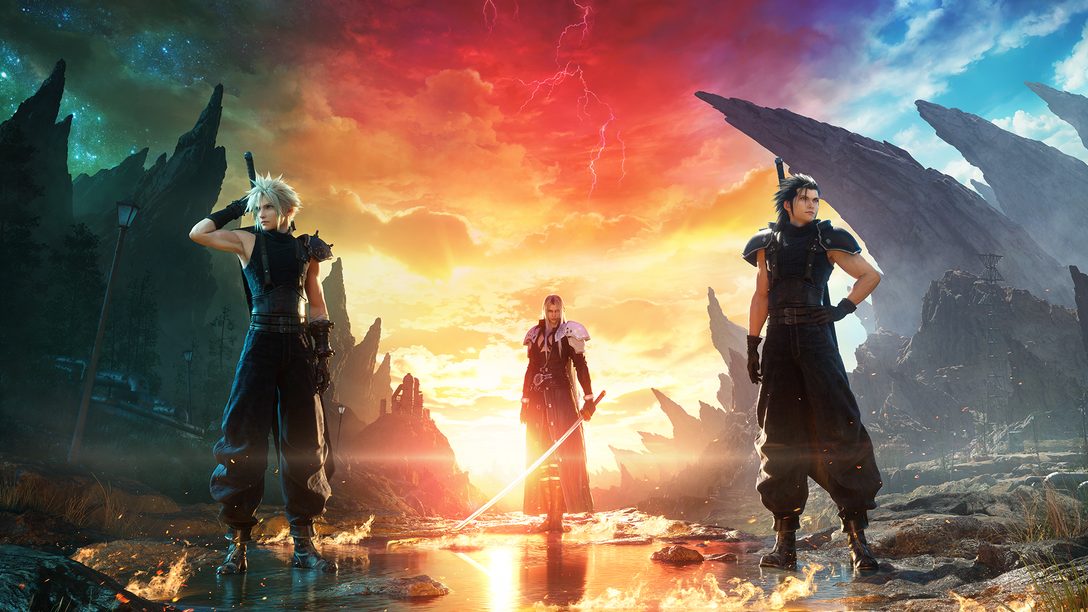
At the State of Play this past Thursday, Square Enix showed a new trailer for Final Fantasy VII Rebirth, the second installment of the FF7R series for modern platforms. This trailer focused mostly on things you remember from the post-Midgar section of Final Fantasy VII Remake, with director Tetsuya Nomura confirming that the game ends where Disc 1 of the original game ended.
The first Rebirth trailer, beyond the initial announcement footage of Cloud and Sephiroth walking into Nibelheim, seemed to have a theme of “You don’t actually know what is truth and what’s false,” a message that makes sense considering the ending of the first game. This trailer, however, decided to go full nostalgia and showcase a number of moments fans can point at and remember, from awakening Vincent to climbing mountains with chocobos.
Which makes me suspect that the things they aren’t showing us are going to be wildly divergent and weird.
In addition, Square Enix also revealed that Final Fantasy VII Remake in both its original and Intergrade forms sold a combined seven million copies since launch. I think Square Enix is hoping for more of that from the new title. That it’s only exclusive to the PlayStation 5 for three months might be an indication that they’re looking to get it to PC sooner rather than later this time around.
Final Fantasy VII Rebirth is releasing on February 29th, a date that perhaps reinforces the ephemeral message the game is trying to convey. Or maybe they just wanted to get it in before March, who knows.
Other Things:
- Would there be interest in me taking videos in Tokyo and posting them on the Patreon?
- I’m absolutely baffled at how the new Pokemon DLC runs. It somehow looks worse than the main game and I cannot understand why.
Comments
is the podcast still continuing?
2023-09-30 19:04:35 +0000 UTCI too would be interested in Tokyo videos!
Joshua Jarvis
2023-09-16 19:29:06 +0000 UTC