
Hi everyone, long time no see!
The 2025 Chinese New Year has almost passed, and I’m sure you’ve all had your fill of festive greetings by now, but since this only happens once a year, Scripter here still wants to wish you a belated Happy New Year!
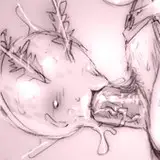
The promotional art for the Blue Route update is a masterpiece by Lushifu, inspired by the sculpture Laocoön and His Sons.

While Cop faces strangulation, let’s enjoy a perfectly reasonable Year of the Snake petrification scenario (original image attached—note the fair-skinned serpent’s eye shadow, identical to a certain fox’s)!

Let’s get the usual apology for slow progress out of the way first.
With the three melodramatic storylines unfolding in parallel while complementing each other, the lore of one route often draws from the other two. This makes "freeform writing" increasingly challenging as the story expands.
Even though I have a clear ending and key plot points to guide me, the fear of accidentally leaving contradictory clues—potentially derailing the whole narrative—keeps me on edge.
Fully aware of my lack of overarching narrative control, I've resorted to repeatedly patching up shaky plot points while organizing existing clues, just to soothe my anxiety.
Additionally, as the story's theatrics ramp up, I've started experimenting more openly, putting some effort into creating a few simple animations.
Combine all this, and it's no surprise that productivity has taken a nosedive—apologies for the slowdown.
Speaking of narrative patches, Chapter 3’s Blue line finalizes the shift from the concept of "Deity of Death" to the "Deity of Fate (Siming Shen)".
"Deity of Fate (Siming Shen)" 大司命 picture from Wikipedia
This ancient deity, originating from The Nine Songs in the Chu Ci, has sparked many intriguing theories during my research.
Guided by the widely accepted theory that 'faith evolves with societal and structural changes,' we see how the role of the deity, originally overseeing life and death, has undergone a more distinct specialization in both its divinity and powers:
From its origins in the lofty, abstract worship of the stars;
To the personification of star officials within bureaucratic mythology;
And finally, to its decentralization and localization after merging with folk beliefs;
The scope of its power over fate also underwent a more detailed adjustment over time:
From controlling the life and death of all humanity;
To governing the life and death of ordinary mortals (with primal deities and emperors excluded from this domain);
And eventually becoming a deity who controls fate through the reporting of human deeds to heaven—essentially a divine informant (note: this part is based on my own speculative musings, so don’t take it too seriously!);
Even after these shifts, remnants of its original domain linger in titles like the Kitchen Deity(Zao Jun), a fusion of fate, fire, and earth deities under Taoist cosmology. Imagine a god who tattles on your misdeeds during annual rituals, threatening to shorten your lifespan—terrifying, right?
"Kitchen Deity(Zao Jun)" 灶王司命真君 picture from Wikipedia
By the way, in Taoist 'Three Corpses' lore, the Upper Corpse allegedly flies to heaven at specific times to report a sleeping cultivator’s wrongdoings, shortening their life. My personal theory? Since both systems belong to the same Taoist tradition, their punitive mechanisms naturally overlap. Similarly, the City God(Chenghuangshen) belief, which blends Confucianism, Buddhism, and Taoism, follows a similar logic.
Although in the story, the protagonist Sang describes this shift using a tone of 'falling from divine grace,' it's really just a structural change brought about by societal and historical shifts. If anything, it’s more like 'the need to make a comparison because of the differences that emerged.' The exaggerated tone is really just to emphasize the protagonist's irreverence toward the gods, setting the stage for what's to come in the story.
That said, a deity who snitches would inspire fear more than genuine affection.
Meanwhile, Cop—with his flexible superstitions—appears "devout."
Or rather, he fears the punishment for breaking rules, yet avoids any deeper reflection on the rules themselves. This survivalist mindset, shaped by lifelong social conditioning, influences how he approaches everything—from his hobbies to his career, and even his marriage. Born into a peaceful time and raised in a happy family, he lacked the external struggles or conflicts that might have redirected his focus, making his internal lack of drive all the more evident.
Hence his only defensive remark to Sang is: "I’m sure your family has similar plans for you?"
[Disclaimer: Scripter here merely skimmed a few videos and academic papers—please forgive my armchair theorizing!]
*Shirai, Tomoyuki. エレファントヘッド (Elephant Head). Tokyo: KADOKAWA, 2023. ISBN 978-4041141786.
Attached:

This is a set of DogXBloods-themed mouse cursors proposed by 黑虚, with actual production by 瑞破 and 博敖.


You can download it from the attachment. You can manually select your preferred cursor to replace, or find the file named 'autosteup.inf' in the compressed folder and right-click to install it. After replacement, click 'OK' to confirm!
------------------------------------------------------------
大家好,好久不见!
谓之岁除,想必吉祥的片汤话已经听得腹饱肠满了,不过一年也就这么一次,所以脚本儿在这里还是要给各位拜个晚年!
为了更新而准备的蓝色线宣传图,是鲁师傅用那座《拉奥孔和他的儿子们》的雕塑作为Ref而完成的杰作。
在Cop受到绞杀的同时,享受合情合理的蛇年石化PLAY(原图随附件,白肤貌美的蛇眼角还有着与某狐同样的眼影)!
还是老生常谈的,先为进度过慢而道歉。
由于狗血的三条主线是以一种平行又互相补完的状态不断地堆叠,其中一条路线的设定必须要通过另外两条线剧情去解释,想要自由书写的难度会因故事展开的缘故而越来越高。
虽说是有着明确的结局,与预先订好的重要事件等节点充当指南,但一想到即将写下的内容会不小心抖错包袱,还是会担心故事因此崩溃而感到惶恐。
清楚得理解了自己缺乏剧情统筹力的脚本儿,只能一遍遍整理着目前已公开线索的同时,对着已经露怯的设定进行缝缝补补才能稍稍安心。
另外在游戏的演出方面,也开始越来越放得开,所以也投入了部分精力去制作可一些看起来有些简陋的小动画。
综合上述,才是真正让效率一蹶不振的原因。
说到这个设定上的缝补,在第三章蓝色线的具体情节中,算是完成了以“司命神”替换“死神”这一概念的转折。作为出自《楚辞·九歌》中登场的古老神祁,脚本儿在查阅相关资料时听闻了不少有趣的说法。
"大司命" picture from Wikipedia
基于“信仰会随时代与社会结构变迁”这一相对受到认可的理论展开讨论,会发现原本执掌着生死命运之职的“司命神”,其神格与神力不断地接受着更为明确的分工化:
从最初高高在上的星辰崇拜的本身;
到接受编制所成的星辰人格化(星官);
再到信仰下放,进入民间后形成的本土化;
大少司命其掌握命运的范围也经历了更加细致的调整:
从掌控全人类的生死;
到掌控一般人的生死(拥有原始信仰的神,与皇帝不在此范围);
再到将人生前所做之事对天进行汇报成为了掌控情报(命运)与告密的神(当然这部分有脚本儿自己的臆测与妄想,千万别当真);
经历各种变迁,依旧能从神名看出其原先保留着的部分神格。比如最有名的,司长厨房,灶火,与一定程度上与美食有关的“灶王司命真君”就是结合了司命、火神、地神等一些列原本神格纯粹,神力强大的神祁,以道教的体系进行消化吸收而诞生的家神。想想看,如果一家人有谁做了坏事,到了年底送神时想到对方会在天上打自己的小报告而受遭受削减寿命的惩罚,多少会有点恐慌吧?
"灶王司命真君 " picture from Wikipedia
顺便一提,道教三尸系统中的上尸也有会在特定的时间从睡着的修士体内飞上天去告状的习性,并根据内容削减宿主的寿命的说法。个人臆测,大概因为都是同一教派体系内的惩罚机制,所以才会看起来与灶王如此相似。同样的,结合了儒释道的城隍信仰也差不多是同一套体系。
虽然在剧中小桑在用一种“跌落神坛”的语气在描述这个变迁事件,但这是时代与社会的变化引起的结构改变而已。硬要说的话,充其量不过“因为有了区别,所以去做对比”的程度。只是为了方便表现出主人公这般“不敬神”的态度,好为接下来的故事做铺垫,必须得表现得夸张一点了。
不过确实,再怎么说这都是背地里打别人小报告的行为……这样的神会被人敬畏,但实在说不上是真心喜欢吧。
反观具有弹性迷信判定的Cop,似乎是个“敬神”的人。
或者说,他相信违反规则会带来惩罚,然而对待规则本身,即便不信也保持着尽可能不去思考的态度。
这份明哲保身般的习性源自他从小就受到的社会化规训,清楚的理解“因为别人都这么做了,所以我最好也这么做”的好处。兴趣的事如此,职业的事如此,婚约的事也是如此。也正因为出生在和平时代下的幸福之家,无法通过残酷的外部环境或矛盾来转移,导致内心驱动力不足的情况才更加显著。
所以为得开脱,才会有与小桑针对家庭上的那番说辞:“我相信你家里对你也有类似的安排吧?”
哎当然,脚本儿充其量就是看了几个相关视频,瞄了几眼相关论文的程度,还请原谅我般大放厥词!
*Shirai, Tomoyuki(白井智之). エレファントヘッド (Elephant Head). Tokyo: KADOKAWA, 2023. ISBN 978-4041141786.
附:
这是一套由黑虚提案,瑞破和博敖实际制作的DogXBloods主题鼠标光标:
可从附件中下载,可手动挑选心仪的光标进行替换,也可找到压缩包内名为”autosteup.inf“的文件,右键安装即可,替换后选择确定!
Deyon Whittaker
2025-02-05 18:43:25 +0000 UTCDeyon Whittaker
2025-02-05 18:42:13 +0000 UTCRouvenDesc
2025-02-05 16:14:58 +0000 UTC