(click here for an alva & batu sketchdump!)
--------------------
Many centuries ago, there was civil war between the City and the Nomads. Peace was brokered and an alliance was formed when the Lady of the City and the Queen of the Nomads fell in love. Their marriage marked the reinstatement of the Empire, since united under their guardianship.
As part of the peace treaty, the nomadic clans maintain their independence. They are self-governing political entities that co-exist with and within the Empire, on equal terms and according to a mutually beneficial agreement. Each clan is led by a Khan, aided by trusted officials who oversee various aspects of life. One such official is the Warden of Truth, who is essentially a lawyer, prosecutor, judge, and diplomat all in one. They mediate and negotiate conflicts; help solve disputes and arguments; oversee contracts and agreements; investigate accusations of criminal offences; and pass judgement in trials. Wardens of Truth are concerned with matters of justice and fairness within their own clans, but also play a role in inter-clan affairs and maintaining a good relationship with imperial settlements.
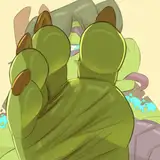
The sphinx Alva is the Warden of Truth of clan Zahradam.
Though rare in and of themselves, it’s not rare to see a sphinx in a position of responsibility. Thankfully it’s not ambition or hunger for power that drives them there -- sphinxes are noble, just, and honourable beings, naturally inclined to take on roles where their wisdom can improve the lives of others. See, the four eyes of these shapeshifters are not just for show. After the sun god Shamassah created the first sphinxes, his sister Daiva saved them from her brother’s unfortunate insanity by lending them her Sight. This gift from the goddess of clarity and insight allows sphinxes to see through all kinds of illusions and trickery -- to perceive much that others can’t or won’t. Loath to squander this gift, they view it as their duty to use it for good, serve their chosen communities, and try to leave the world a better place than they found it.
During traditional pilgrimages that can last for years or even decades, sphinxes amass knowledge and skills and search for their Calling. Most of them are inherently intelligent, analytical, and logical, ruled by the mind far more than the heart. Of course, no two sphinxes are alike; personal talents and preferences ultimately dictate where they make their mark. It’s definitely seen as good luck if a sphinx makes their home in your community. Just remember -- it’s impossible to lie to a sphinx.
Sphinxes are, unsurprisingly, very feline in personality, mannerisms, and body language. Alva is a supreme example, with his regal demeanour, commanding presence, and a penetrating gaze that’s as sharp as his mind. Thanks to being incredibly perceptive, observant, and a great judge of both character and situations, Alva is an excellent Warden of Truth. He’s thoroughly esteemed and respected not only in clan Zahradam but within the wider nomadic community, even though his icy personality isn’t everybody’s cup of tea. While it’s true that Alva can come off as cold, aloof, intimidating, and arrogant, he’s really far more caring and empathetic than his detached manners might imply. Part of it is simply that he’s difficult to read -- even close friends may describe him as something of a mystery.
Speaking of mysteries, let’s rewind to when Alva was little. He wasn’t born in clan Zahradam -- in fact, his appearance in their midst remains unexplained. One quiet night a sentinel had thought they caught a glimpse of an eerie, tall figure dressed in whispy cloth floating away in the dark, but discarded it as a trick upon the eye. Next morning, however, a small bundle of cloth was discovered in the middle of the camp, surrounded by indecipherable glyphs scratched into the ground by sharp claws. Once the gathering crowd peeled away some of the fabric, four large, golden eyes blinked up at them all.
Nobody expects to find a baby sphinx left on your doorstep. Nobody knows who his parents were, if they abandoned him, if he was taken from them, or why he was left in the care of clan Zahradam. But nobody hesitated, either -- they immediately took him in, and named him Alva.
No matter the circumstances, the sphinx child grew up with a family that loved him. A shaman named Diah cared for him together with their partner Ofra Khan, the leader of the clan. The two are proof that opposites attract. Diah is eccentric, quirky, and scatterbrained. They have zero attention span except for when it matters and regularly sweep through any room or conversation like a whirlwind on legs. But don’t let their charming whimsy fool you into thinking they don’t know what they’re doing -- they’re the clan authority on all things spiritual, religious, and magical. In a sense, they embody multiple aspects of Ubdyi -- the god of chaos, magic, unpredictability, the desert, and nomads.
Ofra Khan, meanwhile, is level-headed, down to earth, and sensible. She’s calm under any kind of pressure and listens more than she speaks -- but when she does, everybody listens. People trust and respect her not because she commands it, but because she’s earned it. Being a leader is a responsibility, not a privilege; with a steady and reliable hand, she steers the proverbial ship through peace and hardships alike. Like many other elves she’s nimble and short, measuring only a couple of inches taller than five feet. She looks like a gust of wind could carry her away -- yet gives the impression that not even a hurricane could budge her feet from the ground.
Adopting Alva was neither the first nor last instance of clan Zahradam giving a home to someone who had nowhere else to go. In fact, they have a long-standing tradition of being a shelter from the storm for those who need it most, of taking in people who are stigmatised and ostracised by society for various reasons. For example, common superstition has it that “broken” clayborn (such as Tsaga), individuals with albinism, or wielders of light magic (like Akhuru’s partner Ilan) are bad omens who bring misfortune wherever they go. With clan Zahradam, such pariahs are offered a safe haven free of judgement, where they can lead a worthwhile life. The same goes for criminals who want to change their ways, who genuinely want to repent, redeem, and rebuild. The judicial system of the empire at large is very harsh and archaic, but clan Zahradam takes a different stance. They focus on rehabilitation -- nobody is irredeemable, and everyone deserves a second chance. (Remember Jin’s villainous father, for example?)
Alva’s best childhood friend was an elf named Renza, nephew of Ofra. His parents were seasonal merchants who would spend months on end travelling with trader caravans, but during storm season and summer pasture the family made camp with Zahradam. Other kids would sometimes find Alva unapproachable -- even back then he was serious and frigid in ways that could come off as scary if you don’t know how to read such a feline person. But Renza never cared, and it brought out a more lighthearted side of Alva; they’d play and laugh, come up with mischief together, and simply have fun.
One day, Renza’s family failed to return as planned. Months later clan Zahradam found the massacred remains of the caravan they’d been journeying with, half buried among the dunes. A couple of the weathered corpses looked like Renza’s parents and Alva desperately scrambled through the carnage looking for his friend, hoping that maybe he’d be alive somewhere, hidden away … But Renza was nowhere to be found. Either his body had been lost to sand and scavengers, or someone had taken him away for a fate that might be worse than death. A funeral was held for the victims of the brutal attack and as of that day, Alva smiled even less. If Renza had still been around to make him laugh, perhaps he wouldn’t have turned so cold.
A few years later, shortly after his fifteenth birthday, Alva embarked on the traditional sphinx pilgrimage during which they set out to explore the world, learn from the wise, hone their skills, and find their Calling. Having grown up without sphinx parents, it’s also an important way for Alva to reconnect with others of his kind. They help him develop his Sight, teach him about their heritage, and guide him towards discovering his own path.
Alva dedicates much time and effort to tuning his Sight to the finest possible degree, proving himself incredibly attentive to detail and adept at turning observations into deductions and judgements. He also has another talent that may seem contrary to the sphinxes’ focus on truth and clarity, but remember that they are beings of the sun -- after Shamassah became Hel’wusah, he turned into a master of illusions. See, Alva is capable of weaving mirages and visions that can make people experience things that aren’t there, or render them blind to what’s right in front of their eyes.
When he was little he’d amuse Renza by conjuring images of silly creatures, playing harmless pranks on friends and family. But when one of his visions scared another child to tears, Diah sat him down for a serious chat. They explain that in theory, such Hel’wusahn magic can easily be used for malicious purposes, to lie and deceive and turn other people’s minds into tools and playthings. In short, the power to influence people’s perception of reality can be a terrible weapon. He promises to only ever use his talent responsibly and even as a child, Alva was sensible enough to avoid experimenting until he found reliable mentors who could teach him to use his magic safely. During his pilgrimage he finds these teachers in the form of various sun spirits, including the fox Harun (the same who breaks Lei out of prison).
Travelling all across the empire doesn’t keep him from regularly visiting his clan, to catch up and spend time with his family. Every time he returns he’s another inch or two taller, a little more serious, and a lot more experienced. He’d been a precocious child and an overly somber teen; a few years into his pilgrimage he’s matured into a self-assured adult, rightfully confident in his own abilities but with no need to brag about it.
A dozen or so years after Alva first left, the sitting Warden of Truth announces their retirement and nobody is surprised when the sphinx is proposed as their successor. After the clan members vote in overwhelming favour, Alva knows his pilgrimage is over. His Calling is right here, at home, and he steps into the role as if he was made for it.
Another thing he learned while travelling was to fight. Life in the desert can be dangerous; there’s predatory monsters and raiders, worst of which are the Galtai werewolves. Though hardly a warlike clan, Zahradam is no stranger to defending itself from attackers, coming to the aid of allies in need, or protecting caravans and settlements from bandits. Regardless of the circumstances, Alva makes a capable addition to their line of defenders. In hand-to-hand combat he relies on agility, speed, and precise strikes to swiftly and efficiently neutralise a foe. In his humanoid form he’s skilled with a blade, while as a sphinx he’s armed with the fangs and claws of a big cat. Regardless of form he merges physical combat with creating mirages, twisting reality around him to gain the upper hand.
But diving headfirst into a fight is not his primary modus operandi. In any type of conflict, his goal is to bring it to as quick, painless, and decisive a conclusion as possible. Using his illusion magic to target a group of foes is usually more efficient than physically engaging one opponent at a time. He’ll seek out a vantage point to get an overview of the battle and create mirages that cheat the senses of the enemy. The more people he targets and the larger and more intense the illusion, the more it drains his energy. In other words there’s practical limits to his capabilities, but in theory he can make people see, hear, feel, smell, and taste almost anything he can imagine.
For example, Alva can cloak his allies from the enemy’s eyes, trap them in imaginary obstacles, create decoys to distract their attention, and change their perception of the surrounding landscape. He can surround an enemy with dozens of illusionary foes, or make it seem like they’re suddenly all alone. He can conjure unreal fire, fog, light, and darkness, and other tricks of the mind. While he doesn’t need any tools or items to work his magic, using amulets and sigils saves more of his energy; he ties them to arrows that can be shot into the ground and function as anchors for the mirages.
When weaving such illusions his primary aim is to confuse and unmoor the enemy, so that his allies can outmaneuver, disarm, and capture them rather than having to shed unnecessary blood. If necessary, he can create horrific visions that induce fear and panic, but only if the situation calls for it. Sphinxes can be ruthless, if need be -- but prefer not to.
It takes a perceptive mind, a keen eye, and strong willpower to see through Alva’s illusions. It doesn’t happen often, but while defending a trade caravan from a Galtai attack, Alva gets a reality check. He climbs a nearby cliff and starts forging mirages to disorient the enemy, shrouding them in illusion. The werewolf general and his raiders suddenly find themselves fighting spectres, while Zahradam warriors flank them from the sides. But the general starts to figure out what’s happening as he sees the arrow shot into the ground and glimpses a tall figure perched on the rocks.
Alva’s focus is abruptly shattered when the Galtai werewolf sneaks up on him from behind, and the two engage in a fight. It’s a clash of feline agility against raw lupine power that leaves them both with scratches and scars. Alva ultimately retreats from the duel by cloaking himself in an illusion, and the raider general soon orders his soldiers to fall back. That was the first time Alva met Batu.
The Galtais are different from other raiders in that they’re as much a cult as a clan. Galtai himself rose to prominence by carving his way through a field of corpses and deviously cultivating an army of loyal fanatics. In his domain cruelty and violence reign supreme; if you’re strong, nobody cares what you do to the weak. Galtai doesn’t know mercy, not even for his own children. They are raised to follow his footsteps, to carry on the legacy of his dynasty -- to be just as ruthless as him. Nokai’s story illustrates what it’s like to be born as a Galtai, and their treatment of Qaragan gives a good idea of what they’re capable of.
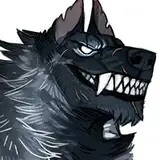
Batu is Galtai’s oldest son. He is infamous in his own right and makes a terrifying figure, stern and tall and broad-shouldered. As a general of the clan, Batu led the Galtais in countless raids and battles, seemingly loyal to his father. But while his siblings revel in terrorising the desert, it makes Batu’s heart heavy. Not that he had been completely immune to being indoctrinated by the very environment he was raised in, surrounded by toxic and hateful people -- but somehow, Batu never became as blind to suffering as his siblings and fellow warriors.
As he grew up and started realising the extent of how fucked up it all was, he also understood that open defiance against Galtai’s tyranny would only end with his own pointless execution. Instead he tried to make a difference from within and from a position of power, where he could subtly mitigate the excessive malice exercised by his clan. Batu was always more intelligent than he’d let people believe, capable of influencing the decisions and actions of other Galtais without them ever realising. Had it not been for Batu subtly manipulating his family and anyone under his command, even more blood would have been shed, more lives would have been taken, and more people would have been enslaved. Not that it excuses Batu’s part in the many crimes committed by the Galtais, but he did what he could at the time to lessen the damage.
So many people viewed him as a monster, but Batu fell in love with a man who insisted that he had a kind heart. Trying to be a voice of reason and moderation without raising suspicion was weighing on his soul, but it became a bit easier once he married that man -- and harder still a few years later, when his husband died.
It’s the first of three events that makes everything start to fall apart. The second is the murder of Galtai at the hands of Batu’s brother Minghan, who claims the throne for himself. Minghan twists the slaying of Galtai into a triumph, saying it’s proof that he’s even stronger than his father and installing himself as the new object of worship in the Galtai cult of personality. Minghan is even more malicious than their father, and far less predictable -- Batu had been able to skillfully temper Galtai’s cruelty, but there’s no reasoning with Minghan. Paranoid, disturbed, and obsessed with surpassing their progenitor, Minghan vows to write his name into the history books with blood. He begins a reign of terror even worse than Galtai’s, gradually spiralling down a path of insanity, and Batu finds himself unable to do anything about it.
The third event is the rebellion of hundreds of people that the Galtais had enslaved, an uprising led by a nomad named Jawid and Batu’s half-brother Khen. They successfully rise up against their captors and lead the majority of their peers to freedom, which leaves Minghan even more unhinged. In a fit of rage he orders the summary execution of every captive on Galtai land, and that’s when Batu can no longer keep silent.
In outright defiance of his rule, Batu stands up against Minghan. In that moment he’s branded a traitor, and his brother siccs his closest circle of loyal warriors on Batu. They chase him into the desert and once he has lost or defeated the last pursuer, Batu finds himself lost among the dunes, with no rations or equipment or means to find his way.
All he can do is wander aimlessly and do his best to survive. A werewolf can shapeshift, hunt for food, and try to sniff their way to water, but even then the desert is an unforgiving place for a lone person. Days turn into weeks as he rambles through the dunes, knowing that he deserves punishment and yet unwilling to simply lay down and perish. Something keeps him moving, even as his body starts to wither away from malnourishment, dehydration, and lack of rest. As he almost starves to death in the desert, all he has is time to think.
One day he crests a dune, and upon seeing a herd of sheep thinks that it must be a mirage -- but then hunger sets him in motion. He scrambles to catch one of the sheep, when suddenly his legs are knocked out from underneath him. Someone puts their foot on his chest and a shepherd’s staff against his throat.
Alva barely recognises the emaciated Batu, but then his eyes narrow in disdain.
“What are you doing here, dog?”
Batu is clasped in chains and brought before Ofra, where Alva -- the Warden of Truth -- questions the former Galtai general.
It’s impossible to lie to a sphinx, and Batu doesn’t even try. In fact he’s painfully honest in answering each inquiry and telling them everything, acknowledging his sins to clan Zahradam as much as to himself. At this point, he’s a pretty broken man, mentally and emotionally even more so than physically. Years and years of trying to contain the damage but feeling like he never did enough, losing his husband, becoming painfully aware of just how twisted his clan is… Any family members he ever cared for have lost their lives or escaped the madness; those who remain are dead to him. Now that all he has is remorse, regret, and guilt there’s no point in hiding anything. He doesn’t try to lie, avoid responsibility, or resist. The former Galtai warlord has no fight left in him and so he’s ready to accept punishment for his crimes -- but on some level he’s grateful for the chance to at least tell his story.
Thanks to his Sight, Alva knows that Batu’s is telling the truth. He can see all the pain and sorrow that plagues the man, how exhausted he is of the blood-soaked life he was born into. In light of their past meetings, Alva harbours a personal disdain for Batu -- but as a sphinx and Warden of Truth he acknowledges the werewolf’s genuine remorse.
After confirming as much to the clan leadership, they debate what to do with the prisoner. Given all the harm the Galtais have done to the empire at large, they could hand him over to royal officials next time they pass by a town. Alternatively, he could face the judgement of all the gathered nomadic clans during their next assembly. But something about the defeated man makes Ofra and Diah lean towards a third option: giving Batu a chance to redeem himself. It wouldn’t be the first time clan Zahradam offers a genuinely remorseful criminal the opportunity to repent, rehabilitate, and rebuild. If even a son of Galtai can turn his life around it would set a good example for others trying to escape similar circumstances -- not to mention that his insight into the Galtai clan and his skill as a warrior would make him a valuable asset, should he choose to cooperate.
Ultimately, it’s up to the Warden of Truth. The decision rides on his judgement of the werewolf’s character, and naturally he won’t endanger the safety of his clan. After what feels like an eternity of staring into Batu’s hollow eyes, peeling away each layer of his soul in search of something rotten, Alva begrudgingly agrees to the suggestion -- but on the condition that Batu is put under his watch.
The former general is stunned by the idea, having sooner expected to be executed on the spot. After all, such mercy is underheard of among the Galtais. He accepts the hand that’s reaching out to him, but admittedly has some complicated feelings about it. Batu doesn’t want to die -- but he’s not sure he deserves to live. Can he actually build a new, better life for himself and others? Could the people of Zahradam really accept him?
Indeed, everyone in the clan has heard of Galtai’s fearsome general and many have seen him in action during skirmishes with the raiders. He’s met with an understandable amount of caution and fear, but at the end of the day, the people of clan Zahradam trust their sphinx. Alva wouldn’t let Batu walk among them if he posed a threat, and it’s not like he roams around unsupervised. In fact, Alva hardly lets Batu out of his sight.
The werewolf does not squander his new lease at life. As he regains his health and puts muscle back on, he proves willing to perform any task and earnestly work hard for the good of the clan. One might have thought that a former general would have issues doing everyday work and taking orders instead of giving them, but Batu is nothing but compliant and cooperative. He humbly does whatever he’s asked, almost as if he’s relieved to no longer shoulder the burden of decision making. He’s handy and capable, quickly picking up new skills when necessary, and happy to settle into a peaceful, domestic life.
The atmosphere in clan Zahradam is so different from what Batu is used to, but he attentively adapts to his new circumstances and learns the unwritten rules of a normal, healthy clan. The contrast only further hammers home the point that the father he once admired was a true monster and that the “great” Galtai clan is even worse than he thought. At times, a quiet sorrow makes his shoulders droop, but there’s no mistaking his gratitude for being given a second chance. Any man who’s spent his life in a stormy sea would be relieved to finally reach a safe harbour, and for the first time in his life Batu sleeps without a knife under his pillow. All that said, he’s respectful of people’s reservations towards him. In fact he mostly keeps to himself, loath to make anyone feel uncomfortable or unsafe due to his presence.
With Alva keeping a watchful eye on him, though, he’s never alone. Not that the sphinx has any interest in fraternising -- having deemed Batu worthy of the opportunity to atone does not equal having to like the man on a personal level. During this time, his attitude towards Batu is much like a cat’s displeasure at having to share their home with an unwelcome new dog. However, it’s hard to spend so much time with someone without getting to know them better -- which in turn usually means you understand them better. The more Alva learns about Batu’s past, the more he realises it’s a wonder that he never gave up. Despite everything he’s been through, Batu is much more caring and thoughtful than one might have guessed from his fearsome exterior and infamous reputation, and Alva gradually warms up to him. Little by little, he starts to know Batu’s kind heart.
The kids of Zahradam can’t contain their curiosity forever, and work up the courage to approach the ex-general before any of the adults. One fateful day Batu is swarmed by a horde of children asking questions, and even though his human form has no tail Alva can tell that it's wagging. Apparently he’s as great with kids as he is with animals, and with time the parents follow, cautiously accepting Batu into more and more facets of daily life in the clan. The more they get to see his true self, the easier it is to trust him. Month after month he proves himself reliable, helpful, and useful, and Alva still cannot detect an ounce of deceit or malice in his behaviour. Every day, life with Batu feels more and more normal -- even domestic.
Once Alva determines that the werewolf no longer needs constant supervision, he starts leaving him to his own devices, trusting him to behave. To Alva’s surprise, however, Batu keeps seeking him out. Sometimes it’s to report on finishing a job and asking for new tasks, but other times he simply seems to want his company. The people of Zahradam begin to notice the shift from Alva watching over Batu like a hawk, to Batu trailing after the sphinx like a loyal shadow. They’re already used to seeing the two of them together more often than apart, but why does Batu stick to Alva’s side now that he no longer has to …?
All of a sudden, a ghost from Alva’s past seemingly rises from the grave. Two weary travellers take shelter with clan Zahradam on their way back from a completely different adventure. One of them is a sun knight named Iskandar -- and the other is his boyfriend, Renza. It might not look like it, but the reunion with his childhood friend rattles Alva to the core. Later that night Batu checks in on him, and Alva -- who’s loath to show vulnerability to anyone -- opens up about how much Renza’s disappearance had hurt.
It happens one day at a time, slowly and steadily. Working together is one thing, and doing recreational activities is quite another. It’s often Batu’s idea -- he asks Alva to come hunt with him, or practise archery, or hand-to-hand sparring. Alva has gone from merely tolerating the werewolf’s presence to missing him when he’s not around; from hardly ever letting him out of his sight to leaning up against his shoulder for a nap. They eat together around the campfire and when they get tipsy Alva tends to drape himself across Batu, who reacts to having a cat in his lap by sitting still and listen to his purring. Alva has always been sparse and selective with expressions of affection, but you can tell he likes someone if he’s tactile with them -- for example rubbing his temple against them, playing with their hands, or using them as a bed. They’re both shapeshifters, and a wolf and panther roaming the desert together gradually becomes a regular sight around the nomadic camp. Every now and then they bring home dinner for the whole clan, but one botched hunt hilariously leads to playfighting instead. Who would have thought that a former raider warlord would help Alva rediscover fun?
Batu’s presence is a shock to many of the other clans during the next nomadic assembly. Sure, Zahradam’s willingness to forgive almost rivals Mezfirah’s, but accepting someone like Galtai’s oldest son into their midst is unprecedented. Alva steps up to make it known that “Any criticism of Batu’s presence is criticism of my decision. Who here would question my judgement?” At that, everyone is silent.
The assembly takes place by Ubdyi’s Rest, along with a grand festival to honour the god of nomads. Each Warden of Truth has duties to fulfill, but in his free time Alva guides Batu through all the sights and sounds and flavours of such an event. There’s rows of food stalls, music on every street corner, dancing at every plaza, fireworks in the sky, merchants plying their wares, and countless lamps lighting up the town. But it’s not just the heat from the roaring fires and the sweat from the dancing that makes Alva and Batu feel warm when they’re next to each other.
At long last, one night under the starbirds, Batu asks if he might kiss him. With a rare smile, the sphinx replies that “If you’re good enough at it I might even let you kiss me twice.” At the end of the day Batu kisses him many more times -- and in many different places.
The werewolf is put through a trial of fire when the Galtais suddenly attack clan Zahradam. Without a moment’s hesitation he joins Alva and the others in the fight against his former comrades, driving them back and protecting his new home -- his new family. Everyone is grateful for his efforts, and Ofra decides that he’s more than earned Zahradam’s trust. In fact, his military skills would be useful not only to protect the clan from future attacks, but to fight back against Minghan’s ambitions of expanding the Galtai’s sphere of influence. It’s a deeply concerning development indeed, and serious conflict is brewing on the horizon. Clan Zahradam has no need for a general -- but a captain, perhaps…?
Batu takes his new duties very seriously. Part of him would have liked to peacefully herd sheep and hunt and babysit the clan children for the rest of his life, without ever having to return to the battlefield. But if his military knowledge can help dismantle the increasingly dire threat posed by Minghan and the Galtais, then so be it.
Alva and Batu’s relationship becomes official (not that everyone didn’t already know) when the latter moves into the former’s tent. The evening before he’d kissed the sphinx good night, only for Alva to say “Where are you going? My tent is that way.” And then Batu just … never left.
Months later, Clan Zahradam has formed a tentative alliance with clan Majhul and the Scoundrels, willing to put all their differences aside in order to unite against a common enemy. Each group has gathered their forces and prepared for weeks, determined to put an end to Minghan’s tyranny. People like Sagra, Iskandar, Renza, and Lei likewise join the decisive confrontation with the raiders that have terrorised the desert for so long.
On the eve of the battle, the werewolf asks if Alva would marry him. “Yes,” Alva murmurs, arms wrapped around Batu’s neck, “so don’t you dare to die.”
As the battle rages on, Alva scales a heap of rocks and scans the frontline for Minghan. For a sphinx with Daiva’s Sight, it’s not hard to find such a monster -- a man whose aura is teeming with hatred stands out in any crowd. Alva draws his bow and fires an arrow into the deranged warlord’s arm. The wound is far from fatal, but he didn’t shoot to kill -- the arrow shaft is wrapped in talismans, and before Minghan has even located the archer, living hell erupts in front of his eyes.
Every soldier around him crumbles into ash, leaving only wispy shadows with hollow holes instead of faces. A thousand mouths whisper at him, and a thousand bony fingers pull at his skin. The earth crumbles under his feet, fissures open that crawl with devils, all of whom speak his name in voices like fingernails on a chalkboard. He can feel the grinding of their teeth in his bones, and then there’s laughing, the ghost of his father, of everyone he’s killed --
Minghan’s followers had been confused to see their commander swing his sword at thin air, and perplexed to hear him cuss at something that wasn’t there; then he attacks his own men, and they stumble back in shock. The oaths turn into blood-curdling howls of rage, and then into sobbing. After a frenzied fight against the invisible nightmare that nobody can see but him, Minghan stumbles to the ground, clawing at his face and curling into a ball. Anyone who hears the warlords scream himself coarse with terror feels cold dread gasp their hearts.
Such is the horrific potential of Alva’s illusion magic.
With Minghan driven mad from the visions, the fanatical Galtai forces start to crumble. At the end of the day Clan Zahradam and their allies defeat the raiders once and for all, though nobody feels like celebrating such a hard-fought victory. Alva doesn’t like talking about what he did that day, but the desert is finally free from the Galtais.
Many of the people who fought beside them gather anew for their wedding a few months later, once everyone has had some time to heal. It’s an infinitely more joyful event which -- much like the union between the Lady of the City and the Queen of the Nomads -- somehow seems to mark a new era.
--------------------
y’know, i’m starting to see a pattern. be gay, do crimes + redemption + enemies to lovers is one of our favourite story formulas and i wouldn’t have it any other way. this is also a classic cat person + dog person pairing dynamic, which is always so much fun. the galtai raiders have been the villains of several other stories and it feels good to finally explain how they’re defeated! i hope you enjoyed the read and if you have any questions about alva, let me know in a comment :>
// art + alva © me; batu © kubi.