This is the full version — exclusive for you, my beloved Patreon subscribers — of the abbreviated interview you can find on my YouTube channel.
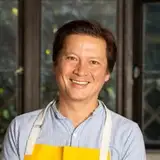
“It’s not a passion!” Toshi Kasahara insists, waving off the suggestion as I sit outside his Mill Creek teriyaki shop — the one where, at 76 years old, he still trims, marinates, and grills chicken thighs five nights a week. It’s just a business. For someone who has been grilling what’s arguably Seattle’s most iconic dish for nearly half a century, it’s a striking thing to hear.
I recently had the chance to meet him — the man who pioneered chicken teriyaki as we know it — and to taste his version of it, made by his own hands.
I say “had the chance” like it’s some rare, elusive experience. It’s not.
All you have to do is drive up to Mill Creek and walk through the door — as long as Toshi’s not on vacation, he’ll be there, behind the counter, quietly doing what he’s done for decades.
It's incredible to me that this dish that's so iconic to Seattle, a dish that you can find in every corner of every neighborhood, a dish that has been the livelihood of hundreds of immigrant families over the years, a dish that feels like it's been around forever, a dish that has left the boundaries of Seattle to all corners of the country, can still be tasted, made by the same hands that created it.
To be clear, chicken teriyaki as a concept does pre-date Seattle style teriyaki.
Teriyaki as a cooking method has deep roots in Japan, where it traditionally refers to grilling or broiling fish or sometimes meat with a glaze made of soy sauce, mirin, and sugar. It's characterized by its sweet-and-umami flavor and glossy finish (teri means shiny and yaki means grilled). When Japanese immigrants brought the concept of teriyaki to the West Coast of the United States in the late 19th Century, it was adapted first to suit local ingredients. But it wasn’t until the 1970s, when Toshi Kasahara opened Toshi’s Teriyaki in Seattle, that something entirely new emerged.
Kasahara first restaurant served small pieces of chicken that were skewered and grilled–not vastly different from its Japanese counterpart, yakitori. His idea to focus on just chicken was a practical and economical one. Chicken was inexpensive, and serving only one kind of meat made preparation for a one-man operation simpler. It was also popular. As Toshi noted, "if I like chicken, I think everyone will like chicken." He paired his teriyaki with rice and a cabbage salad, making his sauce a little bolder, thicker, and sweeter than its Japanese counterpart.
In 1980, Toshi opened his second, takeout only, location at Green Lake. At this location, he began serving larger pieces of chicken, and the modern style really started to take form. Serving larger pieces of chicken not only cut down his prep time, which allowed him to sell his teriyaki at higher volume and at a more affordable price, but it also suited the local Western palate (and appetite) better. Half chickens with rice and salad sold for $2. The dish was fast, affordable, and deeply satisfying. Seattle-style teriyaki became its own category — not just a dish, but a genre.
Kasahara used this Green Lake location as a template for growth—opening more branches in Ballard, Aurora, Lynnwood, Bellevue, Kirkland and beyond by flipping each prior location and reinvesting. Green Lake was crucial: it proved to him that take-out-only teriyaki was a viable, beloved format, laying the groundwork for the ubiquitous grab‑and‑go teriyaki culture that dominates Seattle today.
Over time, the original half-chicken portions gave way to boneless, skinless marinated chicken thighs — a more convenient, faster-cooking cut that helped define the dish as we know it today. Throughout the years, Toshi Kasahara opened, sold, and franchised numerous restaurants across the Seattle area, most of them to fellow immigrants. Many still display his name and original logo, a testament to his enduring influence. While some shops stay close to his minimalist blueprint, others have expanded the menu to include Korean and Chinese dishes — a welcome evolution for customers. Korean immigrants, in particular — notably restaurateur John Chung — played a major role in spreading teriyaki throughout Seattle and its suburbs and neighboring cities, helping transform it from a single concept into a full-blown regional cuisine.
For the past twelve years, Toshi Kasahara has been quietly, consistently making his signature teriyaki at his Mill Creek location, just north of Seattle. Now in his seventies, he still cooks solo, five nights a week — marinating, grilling, plating — just as he always has. There are no line cooks or assistants. If Toshi is on vacation, the shop is closed. It’s a rare kind of operation: personal, unchanging, and deeply rooted in his own hands-on philosophy of hospitality.
And yet, his reach extends far beyond that small storefront. Toshi’s original vision sparked a teriyaki boom that reshaped Seattle’s fast-casual dining culture. Today, teriyaki shops are as common as coffee stands in the Pacific Northwest — woven into the fabric of neighborhoods across every demographic and income bracket. While hundreds of restaurants have added their own spin — thicker sauces, spicier marinades, fusion sides — the basic blueprint remains unmistakably his: grilled meat, rice, salad, and a bold, sweet-savory sauce served fast and affordable. Toshi didn’t just popularize a dish — he created a genre, and his legacy lives on in every smoke and soy-scented clamshell.
James Kenji Lopez-Alt
2025-06-10 11:05:20 +0000 UTCAnnette Bedard
2025-06-09 22:23:45 +0000 UTCSara B
2025-06-09 13:39:24 +0000 UTCBrianna
2025-06-09 05:13:05 +0000 UTCJustin Metzinger
2025-06-09 03:26:51 +0000 UTCetherdog
2025-06-09 02:29:02 +0000 UTCKyle Clerc
2025-06-08 23:47:32 +0000 UTCJohn Jenson
2025-06-08 23:26:18 +0000 UTCElizabeth Rider
2025-06-08 22:36:11 +0000 UTCJeff Goldner
2025-06-08 22:06:16 +0000 UTCDoris Yonker
2025-06-08 20:05:18 +0000 UTCZan
2025-06-08 18:37:16 +0000 UTCStephen Phayre
2025-06-08 18:22:49 +0000 UTC