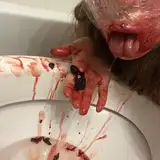
A lot of people ask me what it's like to remove all this shit off my body. Truthfully, it's a pain in the padded ass. Scar wax can be such an unforgiving product to work with, and if you aren't using the correct materials--you're in for a world of hell.
I'm going to give you all three top tips for working with scar wax. It can be a challenge to learn, but it's not impossible at all.
Less Is More
And I mean that. When you're working with scar wax you have to take into account the amount of material you plan on using. When I first started using it, I underestimated how far it could go. Now, for simple scars applied on the face or arms, you can get away with a very minimal amount. I would refrain from using scar wax on parts of the body that are bendable.
Unfortunately, because I don't know how to make latex molds yet, I'm stuck using scar wax as a prosthetic maker. Unless I'm making brow ridges (like in Assa Mater) or epicanthic folds, I don't really like to use this stuff on the parts of my body that move around. Even if you're applying a shitload of spirit gum and latex to bind the edges--it will still come off. Your best bet is to apply the least amount possible and work with that. Plus, the less you use the better it looks overall.
Water-Based Paints Are No Bueno
And what I mean by this is, they don't stick for shit. Seriously, I've tried everything in my power and it just doesn't work. The best thing to apply to a scar wax mold or wound is an alcohol-activated palette. My favorite, of course, is the Skin Illustrator Bloody Five (now that I finally know how to use it), but you can use whatever colors you like. The reason that alcohol-based palettes are best is because scar wax is a naturally oily material. If you mix water and oil--well, you know the old saying. Alcohol does not slide off the scar wax, and in fact, it will adhere and create the color you apply the paint to.
I will admit, when I first bought a palette like this, I was blissfully ignorant and enjoyed cream-based paints. Well, I've evolved since then, and will recommend you start playing around with things like this.
You can very much use a creme-based paint like Mehron or Ben Nye, too. Oils will stick to oils very beautifully, so if you aren't quite so familiar or are unsure of alcohol-based paints--these are great alternative.
Blend, BLEND, BLEEEND!
Blend the shit out of your scar wax! Unless you live in Florida and it comes up every two seconds from extreme heat lol.
But seriously, don't be afraid to get your hands dirty and ditch the metal spatula. Your hands, after all, are your best tools (In the words of Alton Brown) and sometimes it's necessary to get in there and really blend out those rough edges.
Blending your edges not only creates a seamless look, but also helps keep the wax stuck to your skin. Now, as you all, SHOULD know from previous posts I've made. It is recommended that you dab your fingers in a little bit of Vaseline in order to get the material moving. You can use bare, clean hands, but the issue is the material will lift and stick to your skin, causing the wound or mold to lift and become destroyed. Be aware, though, that the more Vaseline you use, the more risk you run of also preventing the scar wax from sticking. It's a tricky situation, but you'll now the right ratio with a little bit of practice.