XaiJu
NurdRage
NurdRage

patreon


Patreon Preview - Find the Concentration of Hydrogen Peroxide by Titration

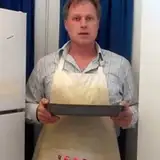
Rough cut preview of my hydrogen peroxide titration video. Once again i'm starting with the computer voice just to test the script. I'll replace with my trademark sexy voice later.


here is the link to the script if you want to read it directly: https://docs.google.com/document/d/1i7ns_7ZOIRhgmJ64NxVyRpoWGHMS3dt-loylNE4shqg/edit?usp=sharing


Let me know what you think. Is the chemistry easy to follow? I feel the highly mathematical explanation at the end about error propagation is excessively dry and dull. Let me know if and how i can improve it. 

Patreon Preview - Find the Concentration of Hydrogen Peroxide by Titration

Comments

it really depends on the context. if you're titrating a highly redox active metal with an electrochemical potential within the range of permanganate then you might be able to use hydrochloric acid. Your objective is to see the color change, so if that happens before the acid reacts then you're still getting good data.

NurdRage

the titrant actually does decay with time. you're suppose to standardize every morning, and do your work the same day you standardize. Sometimes labs might go for a week if they don't require very high accuracy, but its definitely something that needs to be repeated often.

NurdRage

I'm a bit curious about your comment about hydrochloric acid. I have a description of an analytic procedure which starts with digesting a metal sample in sulfuric acid, then diluting with "dilute hydrochloric acid", eventually ending with a permanganate titration. Perhaps their acid is dilute enough that the amount of acid doesn't significantly affect the result for the range of expected values? I'm not entirely sure why they don't just dilute with water; perhaps this is to ensure acidic conditions for the titration, or perhaps the chloride forms soluble complexes with the metal ions (tin and/or antimony in this case).

Kevin Martin

Would it be useful to track the strength of titrants over time? It seems to me this would give some hint as to how often one has to re-do the standardization, depending on the required precision of the final result on any particular test. The assumption of course would be that the degradation of the titrant is a smooth (and near-linear) function of time.

Kevin Martin


More Creators