DELVE: PATRICK JONSSON - Practical Stories on Soundtracking with Patrick Jonsson
Added 2022-06-17 16:01:04 +0000 UTC
DELVE: PATRICK JONSSON
Practical Stories on Soundtracking with Patrick Jonsson
In this Lux Cache interview series, we talk to innovative creators in the experimental music production space to discover the integral creative and practical aspects of their work. For this chapter, we spoke to Emmy nominated composer Patrick Jonsson on his creative and professional practice, his acclaimed work on Netflix documentary ‘The White Helmets’ & practical advice on entering the media composition industry.
This article is available as both a Patreon text post and a preferred-viewing .pdf document format. We ask you kindly to not share Lux Cache content outside of the Patreon, our contributors rely on your donations.
~

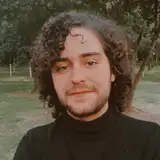
Patrick Jonsson, image provided by Air Edel
LC: Can you tell us about how you got started in the industry? Was it always your ambition to work in film music?
PJ: I knew from pretty early on that I wanted to study music and that I wanted to go to Berklee College of Music. So I worked hard to get in and was fortunate enough to get accepted. When I first arrived there I was studying performance, but after a few months we were asked to choose a major to focus our studies on. I always had such a passion for film ever since a young age - I loved watching films, and going to the cinema was such a big fascination of mine. So when I learned that film composition was a possibility it was a pretty automatic choice for me. I was always in awe of the scores from my favourite films, so the idea of learning more about that side of things really pulled me in and I was hooked. I think I got my real break when I was here in London several years later though. I was working in recording studios and crossed paths with some really talented filmmakers who trusted me enough to give me a chance to score their short films.
LC: How would you describe the role of an assistant composer? Did you take any assistant positions and did you find those useful?
PJ: I think an assistant composer is someone who has the job of helping the main composer in whatever way they can, sometimes that can be really being involved in the actual writing of the music and aiding the composer in shaping the score, while other times it can be more of a technical job. It also depends who you’re working for. I definitely took some assistant positions early on, which I was really lucky to get. And I learned a lot, because it’s an opportunity for you to see behind the scenes what it really takes to be a head of department on a film production, but without having the pressure on your own shoulders at that stage, which is very valuable.
It can also evolve into writing additional music for films/TV, which can also be an invaluable learning experience. I’ve been lucky to work with some amazing composers that I’ve learned so much from, both in terms of craft, but also process.

Rise of of the Planet of the Apes soundtrack, composed by Patrick Doyle & assisted by Patrick Jonsson, 2011
LC: Can you tell us about your work at Ignition Studios as an engineer? What kind of solo work were you producing at the time and what did you learn from those collaborative processes with other musicians?
PJ: At Ignition I learned so much, it’s crazy. I would be googling things like ‘how do you record an accordion’ 20 mins before an accordion session for a band who had booked the night before. Or ‘how do you compress an electric guitar’ while the band was tracking in the live area. I was thoroughly thrown into the deep end as a result of a series of incredibly fortunate events, I went from assistant to head engineer in about a year (clearly without being entirely qualified). It was such a great learning experience though. I got hands-on experience from so early on and it really boosted my confidence and ability to problem solve. I’d be very open with the bands and we’d experiment together, and so many amazing happy accidents emerged. It was a whirlwind of a time, but such a blast. I learned about working with artists, tracking bands/vocals, mic technique, production chops, editing. I became very fast technically, and this was something which I’m sure helps me now every day still. I’m so thankful for the time I had there, it was also just a really special life experience to be the head engineer at a small recording studio in London. I met so many people - some of whom I still keep in touch with today.
LC: And can you talk a little about your work at Spitfire Audio? What kind of work were you doing there, and how does that position of being a developer within a team help
PJ: I was a developer at Spitfire. I started when the company was only seven people or something like that, so I know the original team there very well. Nowadays the company is very big and I don’t quite know as many people. But I think everyone that works there is so talented and such a wonderful group of people, and Paul and Christian are just the greatest guys. They’ve helped me a lot in my career. The work I was doing there was very technical, but they wanted people who were also musical and who were aware of how the tools would be used in the real world. So I guess I fit in pretty well. A day could consist of editing samples for like a half day, and then switching over to building macros/tweaking existing systems/planning instruments/testing instruments/tuning/de-noising where necessary/etc. There were actually quite a few aspects to the job, so it’s definitely not something you can just be up to speed on from day one. It’s a gradual learning process and because they’ve done so much trial and error over many years, their systems are pretty air-tight. It’s a wonderful company, and I think you can tell from the quality of their instruments. Oh, and being on the recording sessions was a great learning experience too of course.
I learned a whole lot from everyone there, and now I can of course build sample instruments of my own too whenever I need to, which is invaluable knowledge I learned thanks to them. It’s something that’s become so integral to my process. I’m a big believer in having a distinct sound palette for each project, so building instruments is a key part of this early exploration stage for me.

Patrick Jonsson for Spitfire Audio’s Ones To Watch, 2018
LC: What are the first things that go into your head when you begin working with an image? And do those ideas tend to be things you develop, or are they eventually rejected in favour of new things?
PJ: I think my process has changed a fair bit over the years. I think it’s pretty natural to evolve when you do this job, because you learn a lot as you move forward. And you get a pretty good idea of things that work and don’t work as well, and a lot of the job actually probably becomes a certain degree of digging deeper and deeper into your creative well and challenging yourself not to repeat yourself in many ways. So when I see an image, in the past I may have just immediately gone with my first instincts, but nowadays I am a bit more careful about what I’m trying to achieve/say. So I tend to try and think in bigger storytelling arcs as much as I can, and sometimes really go against what we’re seeing on screen when it’s called for. One interesting aspect of all of this, is that I’m actually finding it harder and harder to write music, because in order to find a place where the marriage of what you want, the director/producers want, and the attempt to subvert expectations/cliches meet is a very difficult place to find and to then balance - and until you find it, and you of course always hopefully do, it is a really complex road where you are your own toughest critic. That’s probably a really convoluted long answer, and it’s actually a difficult thing to explain, but I hope that makes sense on some level. Basically, to answer your question more simply - yes, those initial ideas are gold and should be listened to very carefully, either in order to ignore them to a large extent, or to follow them. But the journey of bringing them to their proper fruition is a longer process than just relying on your gut instincts I think. One thing that doesn’t change though, when scoring a picture, is that story and character always come first. Music should come from a place of authenticity in terms of telling the story. In that sense I’ve always seen myself more as part of the filmmaking team, rather than solely a musician.
LC: Is there a common practice for you in terms of how a film project gets started? At what stage of the process do you usually start working with other musicians?
PJ: It actually really depends, but lately something I’ve often been doing is to write a fair bit of material early on which captures my initial response to the story/script/film. I find that those early ideas often have something interesting to them and even if things evolve, that essence tends to be really valuable. And as mentioned in my answer to the previous question, this is when a lot of thinking and work goes into the process of trying to find your own way into the film and establishing the language of it.
Then, when I can, I’ll get in a room with some players and try to experiment on those ideas and see if we can bring some further life to the ideas and try and find some happy accidents which can trigger further ideas and exploration. There’s just something really special about sharing the music with live performers to interpret. It always ends up sounding better in reality than it does in my head, thanks to the wonderful collaborators I have the privilege of being able to work with. Then oftentimes we’ll get a slightly bigger group of players into a studio further down the line, towards the end of a project, as necessary, to realise the final bits before diving into the final mix. That’s also such a special part of the process when you hear it come alive.
LC: How does your collaborative process with a director work? How much can that change film-to-film?
PJ: The process actually changes massively from project to project, even with the same director it can be drastically different. For example I worked on a film called EVELYN, where I basically sent the director and editor a suite of initial ideas before there was even a cut, and it turned out that pretty much exactly what I initially sent over ended up in the film. It was a really unique experience, but things just seemed to work for whatever reason. Oftentimes when I do that it will be that a majority of things are working, but that there will be additional material to write when you get further down the line, as the film evolves and you learn more and more. But then on another film VIRUNGA for instance, it was a much more traditional approach to scoring. Where the film was sent to me with a temp score on it to a large degree, and I just set about creating a sound world and language for the film at the stage which was my own. But the cut was far along when I came on board to actually begin working, and that was such a different way of working. Both those films were directed by the same director (Orlando von Einsiedel), but it’s amazing how different the processes were for each one! So I don’t even try to second-guess anymore how things will go on any given project, because you can always be surprised by the process and what a film is ultimately asking from you in terms of process, let alone score. It’s like the film or show is just telling you what it wants and you try to follow
EVELYN soundtrack, composed by Patrick Jonsson, 2018

LC: Do you find your process differs on documentary projects as opposed to fiction? And in shorts vs features?
PJ: I don’t really approach things differently on fiction projects to how I approach docs, because I think ultimately it’s all about character and story. And those things are fundamental to everything I’ve come across, without exception. The conversation we’re always having with the filmmakers is based around motivation, where we’re at in the story, are we playing from the audiences/characters perspectives, and those sorts of ideas. It very rarely strays into actual conversations about the specifics of the notes of the music, but rather how the music is making us feel. And I haven’t found much difference between those conversations between fiction and doc projects. The only thing I can think is different is that sometimes you probably want to be more delicate on documentaries in certain moments, because you’re dealing with real people with real lives, so you always want to err on the side of caution and respect for sure. But having said that, I always try to treat the characters and audience with respect anyway, so I guess that’s why I don’t differentiate too much between docs and fiction.
When it comes to features vs shorts there are some slight differences though I think yes. I find it’s much more important to create unity in features than it is in short films, simply by nature of them being longer and requiring more music. You need to think about music in broader arcs, how themes are introduced and recur, etc. Short films don’t require the same sort of overall structural consideration as features do, as they’re usually a bit less reliant on thematic unity as a whole. Features are a really interesting thing to learn from, and energy and tone are something I’m constantly striving to learn to understand and be more in command of.
LC: How has your own musical training shaped the way you think about playing techniques now? And how did you begin to develop on experimentation, in terms of harmony, sonics and instrumentation?
PJ: I’ve studied music in the classical sense in university which was hugely helpful in so many moments of my journey afterwards, but I was also sort of thrown in the deep end when I became an engineer in a recording studio in London. So I really feel like my approach is a fusion between the two approaches (traditional vs self-taught). I have huge respect for the traditional aspect of composition/orchestration/etc, because frankly I think it would be a real missed opportunity to ignore several hundred years of collective learning which has honed so many of the things we understand today in music. But at the same time we now have access to computers and technology which opens up sound design possibilities which I personally find to be immensely inspiring. The idea that you can create timbres and energies which are really only limited by your own imagination is pretty incredible. I spend a lot of time trying to make synths and plugins behave like traditional instruments, and vice versa, and to introduce imperfections to bring life to things often too. I like sounds that make you lean in and you’re not quite sure what you’re hearing. So that fusion of the two worlds is where my personal interests lie, at least currently.
At my studio I have a pedalboard which my friend Tim custom built for me which I use all the time. I found that I could access a completely different world of sounds when I took electronic sounds and fed them into circuitry that was outside the computer. And because guitar pedals are relatively more affordable than many other bits of outboard gear, it was a great gateway into a world of analogue hardware effects, without breaking the bank, which you could gradually scale up. Similarly, I love to take live instruments I record and run them through very digital sounding plugin effects, it’s these contradictions that sort of make the ear perk up and give a sensation that it’s something you recognise but at the same time not quite. That’s the space which I love to operate in. It’s easier said than done, but always something I like to strive for, and a very inspiring way to find a way into a project.
Patrick’s pedalboard - courtesy of the artist.

Continuum Kontakt Instrument: If you go to this page you can download a bunch of Kontakt instruments which I made and released for free during the pandemic.
I hope they’re useful! But one I’d like to single out in particular is the one titled ‘continuum’ because it illustrates my above point in a good way I think. That instrument is built out of the tiniest little ‘plink’ sound on a Wurlitzer if I remember correctly. So it has that organic element to it inherently baked in, while at the same time clearly being mega effected, and transformed into something else.
LC: In your interview with Spitfire, you talked about ‘sound collection sessions’ when working on ‘Suddenly We Look Like Giants’. Can you talk a bit more about that process and how you make and find sounds?
PJ: Yeah, like I sort of mentioned earlier, this is a big part of my process. I find that sonics are such a big part of how I think, so it’s almost like how things sound are just as important to me as the notes themselves. I try to come at it from a story and character perspective - to create a sound palette that reflects how a character feels, or the story world they inhabit, etc. I think an audience feels emotion not just through whether a chord is major or minor for instance, but also how it’s orchestrated. And sometimes it’s the duality of dressing very uplifting ideas in a darker frame which creates a complexity which relates to the storytelling of a project in a unique way. When I’m working on a film, I always try to use the picture to inspire me. It’s an opportunity to invite the possibility of finding something, without too much of a pressurised environment. It’s a tough balance to strike, because there’s money at stake when booking sessions/players, but if you can find the balance of having a bit of pressure to push you along, but not enough to stifle your creative freedom, then that can be a pretty special combo. I try to do that when I can.
‘The White Helmets Original Motion Picture Soundtrack’ composed by Patrick Jonsson, nominated for Outstanding Dramatic Original Score in 2017 Primetime Emmy Awards

As an example, I worked on a series of films with Orlando (von Einsiedel), and on one of them, ‘Into the Fire’, there was this instrument I really wanted to incorporate called the yaybahar. I’d stumbled upon it on YouTube, and immediately thought the sound was perfect for this story - it has microtonal inflections which are characteristic of music from the region the film takes place in, but it’s a completely unique instrument built by a guy named Görkem Sen so fairly nondescript in terms of geographical specificity. But it has this ancient and yearning, pained quality to it that just felt so appropriate to the story we were telling. So I asked a fixer I know in London to help me get in touch with him, and asked him to record some thematic material I’d written. The result ended up being such an integral part of the sound of the score.
And here’s a track from Into the Fire, where you can clearly hear the yaybahar and how characterful it is, so you can hear the final result of my collaboration with him -
More recently for an upcoming film, I got in a studio with an incredible percussionist Paul Clarvis, and I asked him to bring loads of scrap metal and things which sounded like they were from a scrap yard - and it’s one of the most amazing sounding percussion sessions I’ve been a part of. It was such a blast, and the material which we got out of it has become such an integral part of the score for the film.
You don’t always have to go to a studio to do this sort of thing of course. It’s something you can do in your own bedroom studio - but the important thing is that for that day you approach the room with an open mind and that you question how you typically use that space, and see if you can invite new ways of doing things, and of how you approach using gear that you’re so used to already but in a different way. Sometimes when I can’t see the woods for the trees I’ll do weird things like lie down on the floor, listen from the bathroom, put it on my phone and listen elsewhere. Anything to change perspective a bit and hit the ‘refresh’ button for your brain and ears.

LC: How has music software, and your experience working with digital instruments changed your approach?
PJ: Massively. When I was first starting out, I wasn’t technical at all. Ever since I discovered guitar pedals I feel like it unlocked a sonic world which I was always searching for. It invited a whole host of ‘happy accidents’ and ‘aha’ moments which have helped me shape the sound I strive for. Only more recently I find myself being really deliberate about sound and intellectualising stuff more, but I do think it’s really important to go through that experimentation stage where you don’t really know what you’re doing and just being led by what feels right emotionally.
It’s interesting, because despite going in circles with the classic conversations about digital vs analogue pieces of gear, these days I try much more to appreciate them for what they are - just different types of tools which you either do or don’t want to use in your productions. I love early digital synths that have a gritty lo-fi quality to them and I also think that some digital VIs are so clean it’s crazy and something which could never happen in the natural world - and there’s something wonderfully unnatural about that which can be a really interesting storytelling device. And even down to things like using Ableton for one thing, Pro Tools for one, and Cubase for another. Just different tools.
The short answer to your question is absolutely - now that I know about the beauty of working in the box and out of the box in tandem, I can’t unlearn that. So I guess at first I was not a very technical person, then got technical, then tried to de-tech myself and go simple, now I think both things have a sweet spot. It depends on what you’re trying to achieve I guess. We’re amazingly lucky to live in a time when every month it feels like there’s a new piece of technological innovation, it’s pretty amazing. As long as we don’t get carried away and forget that the music comes first and the technological tools are a definite second! At least imho.
LC: With a solo album like ‘Suddenly We Look Like Giants’, do you still think cinematically/visually about the work you produce? How did you think about the purpose of that music, when it wasn’t working with an image?
PJ: Honestly, with that project I struggled so much with purpose at first. I’m so used to being given a story and characters, and delving into their lives, motivations, etc, as a starting point. I knew I wanted to write music away from the picture but when I found myself getting started, I really struggled initially. I sort of had to take a step back, think about what it was I wanted to say, and from that point I sort of tried to mimic my process on film/tv projects where the story is the driving force behind all decisions. I tried to create a set of boundaries which would help steer me in a direction, otherwise it was so difficult to make any decisions at all. The deeper I got into the process, the more the purpose emerged and just sort of informed the album and what it wanted to be. It became much more instinctive, which is when I think I do my best work. For better or worse, I’m very proud of it and I learned so much which I carry with me until today.
Patrick Jonsson’s ‘Suddenly We Looked Like Giants’, released 2018 by Phases Records

LC: Whose work in film music do you admire at the moment?
PJ: This is the question I always dread! Because it’s ever evolving and there are just so many artists which I’ve loved over the years who have shaped me as a musician and challenged me. Currently, off the top of my head a few composers whose work I love are:
Mica Levi, Cristobal Tapia De Veer, James Newton Howard, Nicholas Britell, Johnny Greenwood, Juliana Barwick (not sure she actually writes for film, but her work is very cinematic).
An eclectic mix for sure, but honestly, it feels crazy to put a list of names together because there are just so many and if you asked me tomorrow I’d probably say 20 different names. I just love inventive and character-filled music made by people who seem to care, so I try to be as open-minded as I can. And I love different composers for different reasons as well. Mica Levi and Cristobal Der Veer I think are amazing for the sonic worlds they create, whereas with James Newton Howard and Nicholas Britell - their lyricism and command of the classical orchestra I find just incredible.
One composer whose work I can never get enough of though, and who’s music resonates to my core is Astor Piazzolla. It’s my dream to learn to play the bandoneon, and that’s thanks to him. I can’t imagine I’ll ever realise that dream, it’s too difficult, but his music has had a profound effect on me throughout my life, even back in the day when I was listening mostly to skate punk. I have NO idea how I first heard of him, but I was blown away when I did.
LC: What advice would you give to junior producers and composers in the industry, in terms of networking and meeting collaborators?
PJ: In terms of getting your work out there, the people I’ve learned the most from are filmmakers (directors and producers). I’ve worked with really inspiring filmmakers who don’t wait for work to come along - they’re just constantly creating, constantly learning and making things happen for themselves. And this is an attitude that I’ve found really inspiring and applicable to what we do as musicians. Just do the work, don’t wait for it to happen and don’t be too precious with it. Just keep working and learning, and keep getting better. It’s a lifelong journey.
And if you’re trying to be a film composer specifically, then my advice would be to find filmmakers to collaborate with who you really admire and who are at a similar stage of their career as you. Building relationships with people whose work you genuinely love, is not only rewarding, but gives you a chance to learn and grow together. It’s something I really believed in early on, so I would juggle working on short films with my recording studio job. I’m still writing music for directors whose first or early shorts I scored and who have become really good friends.
Another quite different route (which ideally you can try and do at the same time as building your own relationships with filmmakers) is to get in touch with established film composers to see if you can assist them in any way. It’s a great way to get experience at recording sessions etc too, which might be tricker on short films. Oh lastly, watch as many films as you can! To be a film composer, I find it’s so valuable to understand the actual craft of film and storytelling. I don’t really talk to directors about instruments and notes, we talk about character and story. These are the things I think are crucial to understand, and the best film scores are so clearly interlinked with the stories they’re helping to tell. I hope that’s helpful in some way to someone out there. It takes time, so be patient and just always remember to try and strive for making things sound like something you yourself would want to hear.

Patrick Jonsson photographed by Alex Kozobolis, 2018
~
Patrick Jonsson is a Swedish film, documentary and TV composer based in the UK.
You can explore his work and free production tools at patrickjonsson.com or follow them on Instagram @pjonssonmusic
2022 © Whiston Digital / Lux Media | luxcache.com