![[Drone Mask x Plushie Layering] Another layer of cuteness is added on top of the skin...](https://img5.xaiju.com/storage/4/xe/vn/d38796-019e85c8-5347-7d32-adb4-b19efbcb436e.jpg)
![[Drone Mask x Plushie Layering] Another layer of cuteness is added on top of the skin...](https://img5.xaiju.com/storage/8/so/yy/d38796-019e85c8-5360-7eb2-9e6b-2d9f078c40ed.jpg)
![[Drone Mask x Plushie Layering] Another layer of cuteness is added on top of the skin...](https://img5.xaiju.com/storage/12/aw/jn/d38796-019e85c8-536f-78dd-a6ce-7fb3a98a91f6.jpg)
![[Drone Mask x Plushie Layering] Another layer of cuteness is added on top of the skin...](https://img5.xaiju.com/storage/9/io/se/d38796-019e85c8-5374-7f8e-851e-1b30208a528d.jpg)
![[Drone Mask x Plushie Layering] Another layer of cuteness is added on top of the skin...](https://img5.xaiju.com/storage/9/ev/if/d38796-019e85c8-537d-7d4d-9031-34dee92a7b04.jpg)
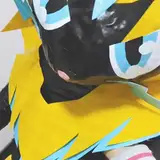
A human dog in a crawling position.
The body is already tightly wrapped in latex human dog suit, with the limbs bent and locked in place.
Over that, a drone mask—a dog's face with no eyes or nose.
Only the mouth, opened like a muzzle, barely allowed breathing.
"Alright... then, let's finish this.”
Saying that, something large and soft is brought over.
There is no vision.
Only, beyond the skin, beyond the latex, I feel the air.
—A stuffed animal…?
I feel the soft texture.
I immediately realize it’s the feel of urethane.
The outer layer of the suit is being wrapped in thick, fluffy fabric.
On my shoulders, chest, and buttocks, the “stuffing” was piled on one after another.
Inside, the cotton was packed tightly, and while it was soft at first, as it was layered, the density increased, and I gradually felt the “pressure.”
The sensation of my body being squeezed inside the latex.
It wasn't just that I couldn't move.
The air—even the air inside the mask—was slowly changing.
“Hehe, you're properly wrapped up now... almost done."
The oxygen remaining in the mask, which only has an opening for the mouth, is further reduced as the plush fabric covers it, slowing the exchange of air with the outside.
You can breathe. But it's ‘delayed’ air.
You can no longer tell if the air you're breathing is truly fresh.
"Mmh… hhah… aah… hh… nnh… ahh…"
Unable to move, speak, or see—only breathing faintly, like the stuffing inside a stuffed animal.
The only part of the body that moves is the tongue, which reflexively traces the protrusion.
The throat moves slightly up and down, and with each breath, my own heat builds up inside the mask.
Rubber, urethane, saliva, breath—all return as “my own private space.”
My voice, my breathing, even the air itself—none of it is mine anymore.
That was what it meant to be “trapped inside a stuffed animal.”